




The digital landscape of 2026 presents unprecedented privacy challenges. From sophisticated state-sponsored attacks to pervasive corporate surveillance, protecting your online communications requires robust security measures. A secure VPN has evolved from a niche tool to an essential component of digital defense, creating encrypted tunnels that shield your data from interception, manipulation, and unauthorized access. Understanding what makes a VPN truly secure-from protocol selection to operational practices-determines whether your privacy remains protected or becomes another statistic in the growing list of compromised communications.
What Defines a Secure VPN in 2026
A secure VPN must satisfy multiple technical and operational criteria that extend far beyond basic encryption. The foundation starts with cryptographic strength, but modern threats demand comprehensive security architecture.
Core Security Components
Modern VPN security relies on layered protection mechanisms working in concert. Strong encryption protocols form the first line of defense, with AES-256 remaining the industry standard for symmetric encryption. However, encryption alone proves insufficient without proper key exchange mechanisms and perfect forward secrecy implementation.
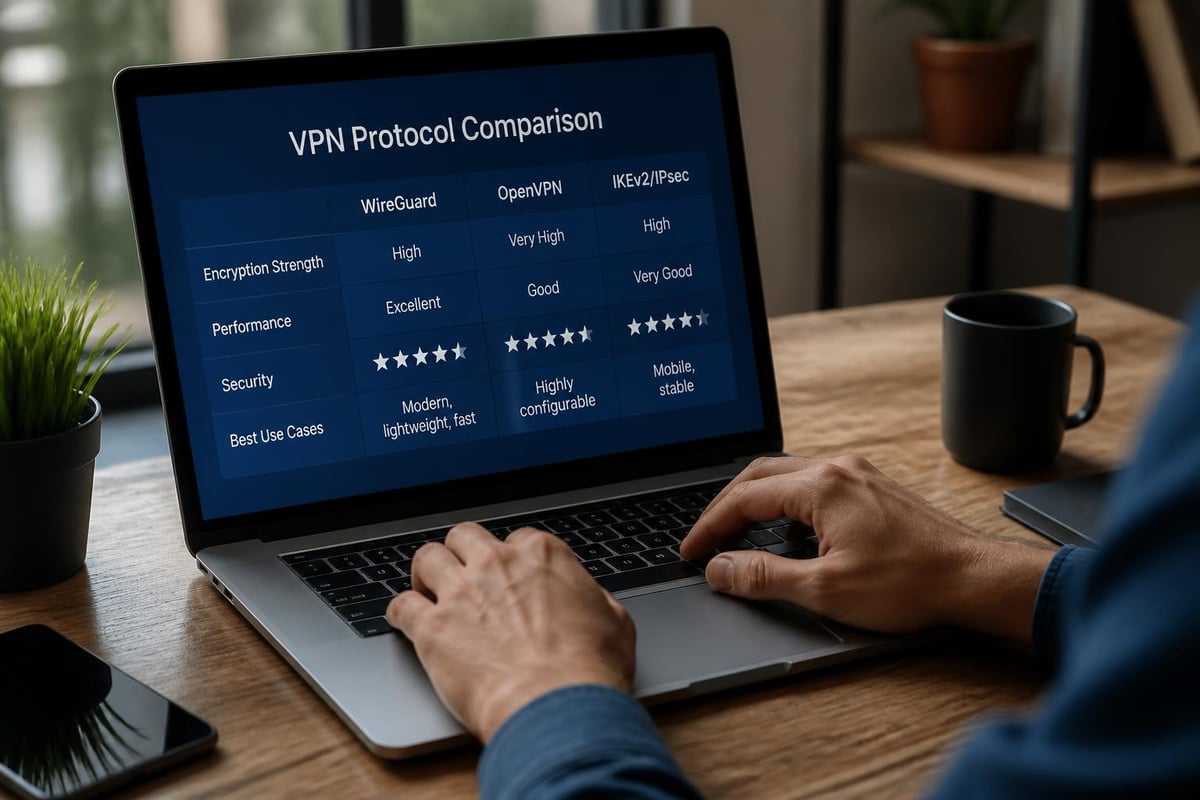
The protocol layer determines how effectively your VPN resists both passive surveillance and active manipulation. WireGuard has emerged as the preferred protocol for many security-conscious users, offering a smaller attack surface through its lean codebase of approximately 4,000 lines. OpenVPN maintains widespread deployment due to its proven track record, while IKEv2/IPsec provides excellent mobile performance with built-in reconnection handling.

Authentication mechanisms prevent unauthorized access to VPN infrastructure. Multi-factor authentication adds critical protection against credential theft, while certificate-based authentication provides stronger verification than password-only approaches. Recent research published in arXiv demonstrates sophisticated session-manipulation attacks that can compromise VPN connections, highlighting why proper authentication remains paramount.
Infrastructure Security Requirements
The servers hosting VPN endpoints require hardening measures that match encryption strength. Physical security of server locations, regular security audits, and rapid patch deployment cycles all contribute to overall security posture.
| Security Layer | Implementation | Purpose |
|---|---|---|
| Encryption | AES-256-GCM | Data confidentiality |
| Protocol | WireGuard/OpenVPN | Secure tunneling |
| Authentication | Certificate + 2FA | Access control |
| DNS Protection | Encrypted DNS queries | Prevent leaks |
| Kill Switch | Automatic disconnection | Failsafe mechanism |
Network architecture matters significantly. CISA guidance on hardening communications infrastructure emphasizes port minimization, strong cryptographic configuration, and TLS 1.3 deployment. These recommendations apply directly to VPN gateway configuration and operational security.
Privacy Protections Beyond Encryption
Technical security measures prove meaningless without corresponding privacy protections. A secure VPN must protect user privacy through operational policies and technical enforcement.
No-Logs Policies and Verification
Claims about data retention mean nothing without verification. Independent audits provide the only credible validation of no-logs commitments. ZioFree's strict no-logs policy demonstrates this commitment through transparent privacy practices that prevent data collection at the infrastructure level.
Jurisdictional considerations significantly impact privacy protection. Service providers operating under surveillance-friendly legal frameworks face pressure to implement backdoors or retain user data. Understanding where your VPN provider maintains legal incorporation, server locations, and operational control determines real privacy protection.
RAM-only server architecture prevents persistent data storage by design. When servers run entirely from volatile memory, they cannot retain user activity logs even if compromised. Power cycles automatically erase all temporary data, creating inherent privacy protection.
DNS Leak Prevention and IPv6 Protection
DNS queries reveal browsing patterns even when connection data remains encrypted. Secure VPN implementations route all DNS requests through encrypted tunnels, preventing your internet service provider from monitoring domain lookups.
IPv6 leaks represent a critical vulnerability in many VPN deployments. Without proper IPv6 handling, your real IP address may leak outside the VPN tunnel despite IPv4 traffic routing correctly. Comprehensive protection requires either full IPv6 support or complete IPv6 blocking at the VPN client level.
Advanced Security Protocols and Implementation
Protocol selection dramatically affects security, performance, and compatibility. Understanding the strengths and trade-offs of each protocol enables informed security decisions.
Protocol Comparison and Selection
WireGuard delivers exceptional performance through modern cryptographic primitives and streamlined code. Its fixed cryptographic suite eliminates configuration complexity while providing state-of-the-art security. The protocol's efficiency makes it particularly well-suited for mobile devices and high-throughput applications.
OpenVPN remains highly versatile, supporting various configurations and operating across nearly any network environment. Its maturity provides confidence through decades of security research and real-world deployment. The protocol supports both TCP and UDP transport, enabling operation in restrictive network environments.
IKEv2/IPsec excels in mobile scenarios, automatically reconnecting when users switch between cellular and Wi-Fi networks. Native support in most operating systems eliminates additional client requirements. RFC 8922 provides technical details on protocol interactions and security considerations.
- WireGuard: Best overall performance, modern cryptography, minimal attack surface
- OpenVPN: Maximum compatibility, proven security, extensive configuration options
- IKEv2/IPsec: Excellent mobile support, fast reconnection, native OS integration
Cryptographic Strength and Cipher Selection
Cipher selection requires balancing security requirements against performance constraints. AES-256-GCM provides authenticated encryption with associated data (AEAD), combining confidentiality and integrity protection in a single operation. ChaCha20-Poly1305 offers equivalent security with better performance on devices lacking hardware AES acceleration.
Perfect forward secrecy ensures that compromise of long-term keys cannot decrypt previously captured traffic. Each session generates unique encryption keys that exist only for that session's duration. This property proves critical when facing adversaries with data retention capabilities.
Key exchange mechanisms require careful implementation. Diffie-Hellman parameters must use sufficient key sizes-2048-bit minimum, with 4096-bit recommended for long-term security. Elliptic curve variants like X25519 provide equivalent security with smaller key sizes and better performance.
Threat Landscape and Attack Vectors
Understanding current threats helps prioritize security measures and evaluate VPN provider capabilities. The threat environment continues evolving with increasingly sophisticated attack methodologies.
State-Sponsored and Advanced Persistent Threats
Nation-state actors deploy sophisticated capabilities against VPN infrastructure and users. Deep packet inspection attempts to identify and block VPN traffic, while traffic correlation attacks try to link encrypted flows to specific users. These threats require VPN providers to implement obfuscation techniques that disguise VPN traffic as regular HTTPS connections.
Session manipulation attacks, as detailed in recent academic research, exploit timing vulnerabilities and protocol state machines. Attackers may inject packets, desynchronize connections, or force protocol downgrades. Defending against these attacks requires robust protocol implementation and connection monitoring.
ZioFree specifically addresses threats from Israeli hacking attempts, demonstrating awareness of geopolitically motivated attacks. This protection matters for users facing targeted surveillance from well-resourced adversaries.
Man-in-the-Middle and Traffic Analysis
Despite encryption, traffic analysis can reveal significant information through metadata. Connection timing, packet sizes, and traffic patterns enable sophisticated adversaries to infer browsing behavior. Secure VPN implementations incorporate traffic padding and timing obfuscation to resist these attacks.
Certificate validation prevents man-in-the-middle attacks but requires proper implementation. Certificate pinning adds another protection layer by accepting only specific certificates rather than any certificate signed by trusted authorities. This approach prevents attacks using compromised or malicious certificate authorities.
Operational Security Best Practices
Technical capabilities mean nothing without proper operational security. Users and administrators must follow security best practices to maintain protection.
Client Configuration and Hardening
Client-side security starts with keeping VPN software updated. Security vulnerabilities discovered in VPN clients can expose users to attacks despite server-side protections. Automatic updates ensure timely patch deployment while reducing user burden.
Kill switch functionality provides critical protection against connection drops. When VPN connectivity fails, the kill switch blocks all network traffic, preventing data from transmitting outside the encrypted tunnel. This failsafe prevents momentary exposure during reconnection events.
Split tunneling decisions require careful security consideration. While routing only specific applications through the VPN improves performance, it creates complexity that can lead to data leaks. For maximum security, routing all traffic through the VPN proves safest.
Multi-Hop and Additional Privacy Layers
Multi-hop VPN configurations route traffic through multiple servers before reaching its destination. This architecture provides enhanced privacy by separating the server that knows your real IP address from the server accessing destination websites. Performance trade-offs include increased latency and reduced throughput.
Tor over VPN combines VPN encryption with Tor network anonymity. The VPN hides Tor usage from your internet service provider while Tor provides additional anonymization layers. This combination suits users requiring maximum anonymity despite significant performance impact.
Enterprise and Cloud VPN Security
Organizations deploying VPN infrastructure face additional security requirements beyond consumer VPN services. Enterprise deployments must integrate with existing security infrastructure while supporting larger user populations.
Cloud VPN Configuration and Best Practices
Cloud-based VPN deployments require specific security considerations. Google Cloud VPN best practices outline configuration hardening, monitoring requirements, and operational procedures for cloud environments.
High availability configurations prevent single points of failure but introduce complexity. Active-active deployments distribute load across multiple VPN gateways while providing redundancy. Proper session management ensures seamless failover without connection disruption.
Network segmentation limits blast radius when breaches occur. VPN users should access only necessary network segments rather than gaining full internal network access. Zero trust principles apply even to VPN-authenticated users.
Migration from Legacy VPN Infrastructure
CISA guidance on modern network access security recommends transitioning from traditional VPN architectures toward zero trust network access (ZTNA), secure access service edge (SASE), and security service edge (SSE) models. These frameworks provide more granular access control and reduced attack surface.
Legacy VPN deployments often exhibit configuration drift and accumulated technical debt. Security audits identify outdated protocols, weak ciphers, and excessive network permissions. Systematic remediation addresses these vulnerabilities before migration.
Compliance and Regulatory Considerations
Organizations must navigate complex regulatory requirements while maintaining security. Different jurisdictions impose varying obligations on VPN providers and users.
Data Protection Regulations
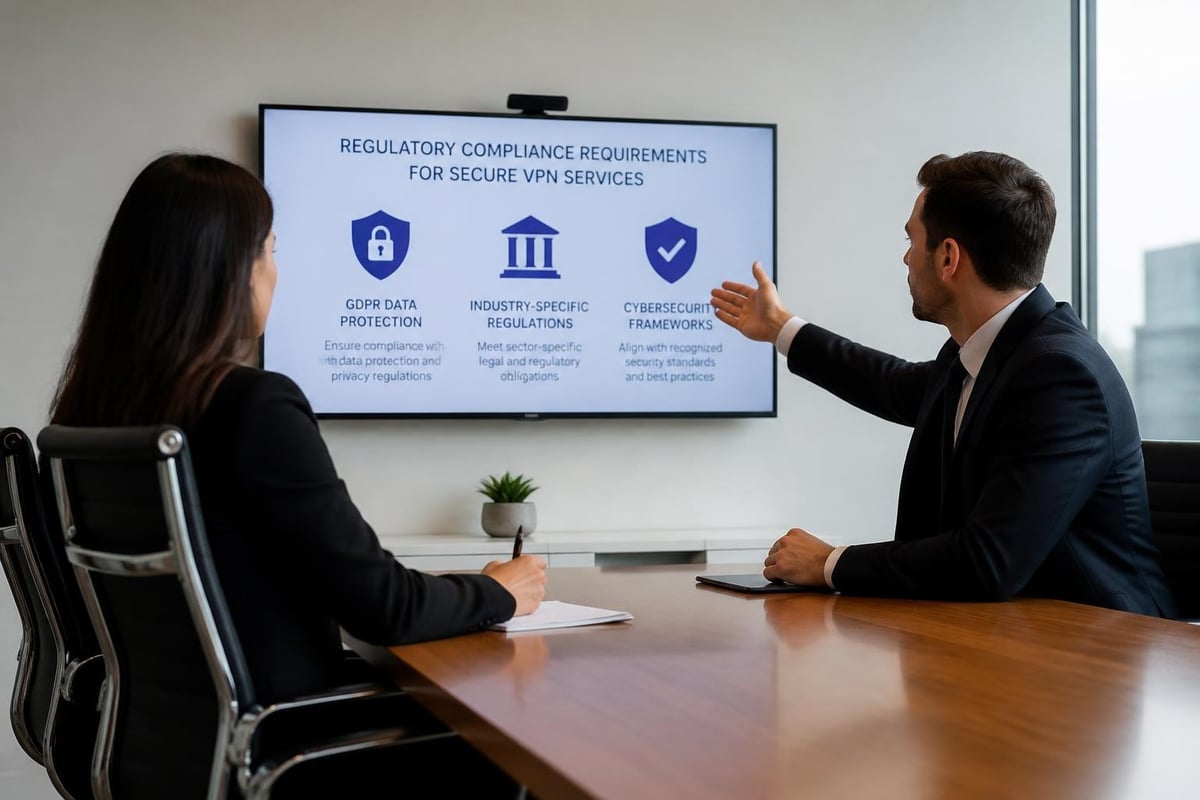
GDPR requirements affect VPN providers serving European users, mandating specific data handling practices and user rights. Privacy by design principles require building data protection into VPN architecture rather than adding it as an afterthought.
ENISA technical implementation guidance provides detailed recommendations for cybersecurity risk management measures, including secure network controls applicable to VPN deployments. These guidelines help organizations implement comprehensive security programs.
Industry-specific regulations impose additional requirements. Healthcare organizations handling protected health information must ensure VPN implementations meet HIPAA security requirements. Financial institutions face similar obligations under various banking regulations.
Audit and Certification Requirements
SOC 2 Type II certification demonstrates commitment to security controls through independent verification. These audits examine security practices, availability guarantees, and confidentiality protections over extended periods.
Penetration testing identifies vulnerabilities before attackers exploit them. Regular testing by qualified security professionals validates security controls and reveals configuration weaknesses. Responsible disclosure programs encourage security researchers to report vulnerabilities privately rather than publishing zero-day exploits.
Performance Optimization Without Security Compromise
Security measures inevitably impact performance, but careful optimization minimizes this overhead while maintaining protection.
Server Selection and Network Optimization
Geographic proximity between users and VPN servers significantly affects latency. Global server networks enable users to select nearby endpoints, reducing round-trip times while maintaining security.
Server load balancing distributes users across available infrastructure, preventing performance degradation from oversubscription. Automatic server selection algorithms consider current load, network latency, and available bandwidth when routing connections.
Protocol optimization balances security and performance. UDP-based protocols typically deliver better throughput than TCP variants due to reduced overhead. However, some network environments require TCP fallback for reliable operation.
Bandwidth Management and Throughput
High-speed VPN access requires adequate server capacity and efficient protocol implementation. Throttling and bandwidth caps degrade user experience while providing minimal security benefit. Quality VPN services provision sufficient capacity to handle peak loads without artificial limitations.
Compression can improve throughput on slower connections but introduces security considerations. Compression before encryption creates side-channel vulnerabilities exploitable through attacks like CRIME and BREACH. Modern secure VPN implementations typically disable compression or compress after encryption.
Selecting a Secure VPN Provider
Choosing a VPN provider requires evaluating technical capabilities, operational practices, and business incentives. Marketing claims often exceed actual security delivery.
Evaluation Criteria and Red Flags
Transparency about infrastructure, policies, and ownership provides confidence in provider claims. Providers refusing to disclose basic operational information raise immediate concerns. Published privacy policies and terms of service should clearly explain data handling practices.
Free VPN services typically monetize through data collection, advertising, or selling bandwidth. These business models fundamentally conflict with privacy protection. The pricing structure should reflect actual operational costs rather than relying on problematic revenue sources.
Ownership structure matters significantly. VPN providers owned by data analytics companies or intelligence-linked organizations face inherent conflicts of interest. Research the corporate structure before trusting sensitive communications to any provider.
Key evaluation factors:
- Independent security audits and transparency reports
- Proven no-logs policy with technical enforcement
- Strong encryption protocols and modern implementation
- Jurisdiction outside surveillance alliances
- Clear business model aligned with user privacy
- Responsive security incident handling
Testing and Verification
Before relying on any VPN for sensitive activities, conduct independent testing. DNS leak tests verify that DNS queries route through the VPN rather than directly to your ISP. WebRTC leak tests check for IP address exposure through browser-based communications.
Connection monitoring tools reveal whether kill switch functionality operates correctly. Intentionally disconnecting the VPN should immediately block all network traffic rather than falling back to unprotected connections.
Third-party reviews provide valuable perspectives, but treat provider-sponsored reviews skeptically. Independent testing by security researchers and privacy advocates offers more credible evaluation than promotional content.
Advanced Features and Future Technologies
The secure VPN landscape continues evolving with new technologies and capabilities addressing emerging threats.
Post-Quantum Cryptography
Quantum computers threaten current cryptographic systems, potentially breaking widely deployed encryption algorithms. Post-quantum cryptography research develops algorithms resistant to quantum attacks. Forward-looking VPN providers begin implementing hybrid approaches combining classical and post-quantum algorithms.
Transition planning requires balancing current security needs against future threats. While large-scale quantum computers remain years away, data harvested today could be decrypted when quantum capability arrives. Long-term sensitive data requires post-quantum protection now.
Decentralized VPN Architectures
Decentralized VPN models distribute infrastructure across peer networks rather than centralized server farms. These architectures provide censorship resistance and eliminate central points of failure. Trade-offs include unpredictable performance and more complex trust models.
Blockchain integration enables verifiable no-logs claims through cryptographic proofs rather than trust-based assertions. Smart contracts can enforce privacy policies at the protocol level, making violations technically impossible rather than contractually prohibited.
Integration with Broader Security Strategies
VPNs represent one component of comprehensive security strategies rather than complete solutions. Understanding how VPN protection fits within broader security architecture maximizes effectiveness.
Defense in Depth Layering
Multiple security layers provide redundancy when individual controls fail. VPN encryption protects network communications, but endpoint security, application hardening, and access controls all contribute to overall protection. A secure VPN cannot compensate for malware-infected devices or weak authentication.
Security awareness training helps users understand VPN capabilities and limitations. Many users assume VPN protection extends beyond actual capabilities, creating false security confidence. Clear communication about what VPNs do and don't protect against enables informed security decisions.
Complementary Privacy Technologies
Browser privacy extensions reduce tracking even within encrypted VPN tunnels. Tracker blockers, fingerprinting resistance, and cookie management provide additional privacy layers. Combined with VPN protection, these tools create comprehensive privacy protection.
Encrypted messaging applications protect communication content independently of network security. End-to-end encryption ensures only intended recipients can read messages regardless of network interception. VPNs complement rather than replace application-level encryption.
Understanding what makes a secure VPN requires evaluating encryption strength, privacy policies, protocol implementation, and operational security practices. The threat landscape of 2026 demands comprehensive protection against sophisticated adversaries deploying advanced attack methodologies.
ZioFree delivers high-speed VPN access through strong encryption protocols and a global server network while maintaining a verified no-logs policy. With advanced security measures specifically designed to protect against targeted threats, ZioFree provides the privacy and security your communications deserve in an increasingly hostile digital environment.