



Online gaming demands speed, security, and reliability. As cyber threats evolve and regional restrictions limit access to game servers, players increasingly seek VPN solutions to protect their connections and expand their gaming options. The appeal of a vpn for gamers free option is undeniable, but understanding what free services can realistically deliver versus their limitations is critical for making an informed choice. This comprehensive guide examines free gaming VPNs, their performance characteristics, security considerations, and whether they meet the demanding requirements of modern multiplayer gaming.
Understanding VPN Technology for Gaming Applications
Virtual Private Networks encrypt your internet traffic and route it through remote servers, masking your real IP address and location. For gamers, this technology offers several potential advantages beyond basic privacy protection.
How VPNs Impact Gaming Performance
When you connect to a VPN, your data packets travel an additional distance through the VPN server before reaching the game server. This extra hop can introduce latency, measured in milliseconds (ms), which directly affects your gaming experience. According to research from Glasgow Caledonian University evaluating VPN protocol performance, different VPN protocols and server configurations create varying degrees of overhead.
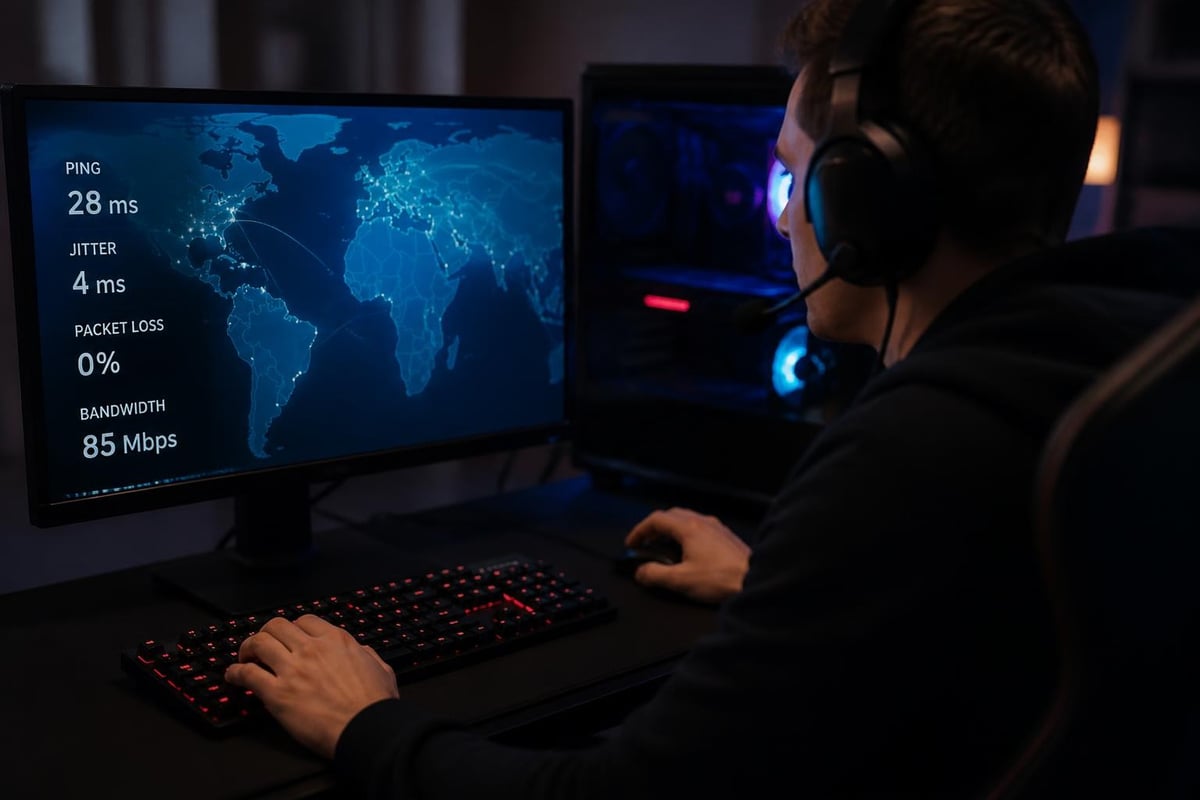
Key performance metrics for gaming VPNs include:
- Ping/latency: Time for data packets to travel round-trip (ideally under 50ms)
- Jitter: Variation in latency over time (lower is better)
- Packet loss: Percentage of data packets that fail to reach their destination
- Bandwidth: Download and upload speeds available
- Server proximity: Physical distance between you, VPN server, and game server
The configuration and quality of VPN infrastructure significantly impacts these metrics. Premium services typically invest in optimized routing, dedicated gaming servers, and higher-capacity networks that minimize performance degradation.
Security Benefits for Gaming Sessions
Beyond performance considerations, VPNs provide substantial security advantages for gamers. DDoS (Distributed Denial of Service) attacks remain a persistent threat in competitive gaming, where opponents may attempt to flood your connection with traffic to force disconnections.
A VPN masks your real IP address, making it significantly harder for attackers to target your home network directly. Additionally, encryption protects your login credentials, payment information, and personal data from interception on unsecured networks.
Modern gaming platforms and services face increasing scrutiny over data collection practices. A VPN adds a layer of privacy by preventing ISPs, game publishers, and potential eavesdroppers from monitoring your gaming habits, voice chat content, and online behavior patterns.
Evaluating Free VPN Options for Gaming
The market for vpn for gamers free services has expanded considerably, but significant differences exist between providers. Free VPNs typically monetize through alternative methods, which can impact both performance and privacy.
Common Limitations of Free VPN Services
Free VPN providers face economic realities that shape their service offerings. Without subscription revenue, these services must balance operational costs against user experience, often resulting in specific constraints.
| Limitation Type | Impact on Gaming | Typical Restriction |
|---|---|---|
| Speed caps | Increased latency, lag | 2-10 Mbps maximum |
| Data allowances | Session interruptions | 500 MB - 10 GB monthly |
| Server access | Limited regional options | 3-5 locations |
| Connection priority | Slower speeds during peak times | Deprioritized traffic |
| Ad injection | Privacy concerns | Third-party tracking |
According to Gizmodo's hands-on testing of free VPN plans for gaming, most free services exhibit ping increases of 40-150ms compared to direct connections, with significant packet loss during congestion periods. These performance characteristics make free VPNs challenging for competitive gaming where milliseconds matter.
When Free VPNs Make Sense for Gamers
Despite limitations, certain gaming scenarios align well with free VPN capabilities. Single-player games with minimal latency sensitivity can work adequately through free VPN connections. Games that rely more on strategy than reflexes-turn-based titles, casual mobile games, or story-driven experiences-tolerate higher latency without degrading the experience.
Free VPNs also serve as useful tools for:
- Testing regional access before committing to a paid service
- Accessing geo-restricted game releases in single-player mode
- Protecting casual gaming sessions on public WiFi networks
- Evaluating VPN compatibility with specific games or platforms
The key is matching your gaming needs to the capabilities free services realistically provide. Tom's Guide's practical explainer on using VPNs while gaming emphasizes understanding your priorities before selecting any VPN solution.
Technical Considerations for Gaming VPNs
Choosing an effective vpn for gamers free option requires understanding the technical factors that influence gaming performance. Not all VPN implementations are equal, and specific features determine whether a service can support demanding applications like online gaming.
Protocol Selection and Performance
VPN protocols govern how data is encrypted and transmitted. Different protocols offer varying balances between security strength and speed, with direct implications for gaming latency.
Common VPN protocols and their gaming suitability:
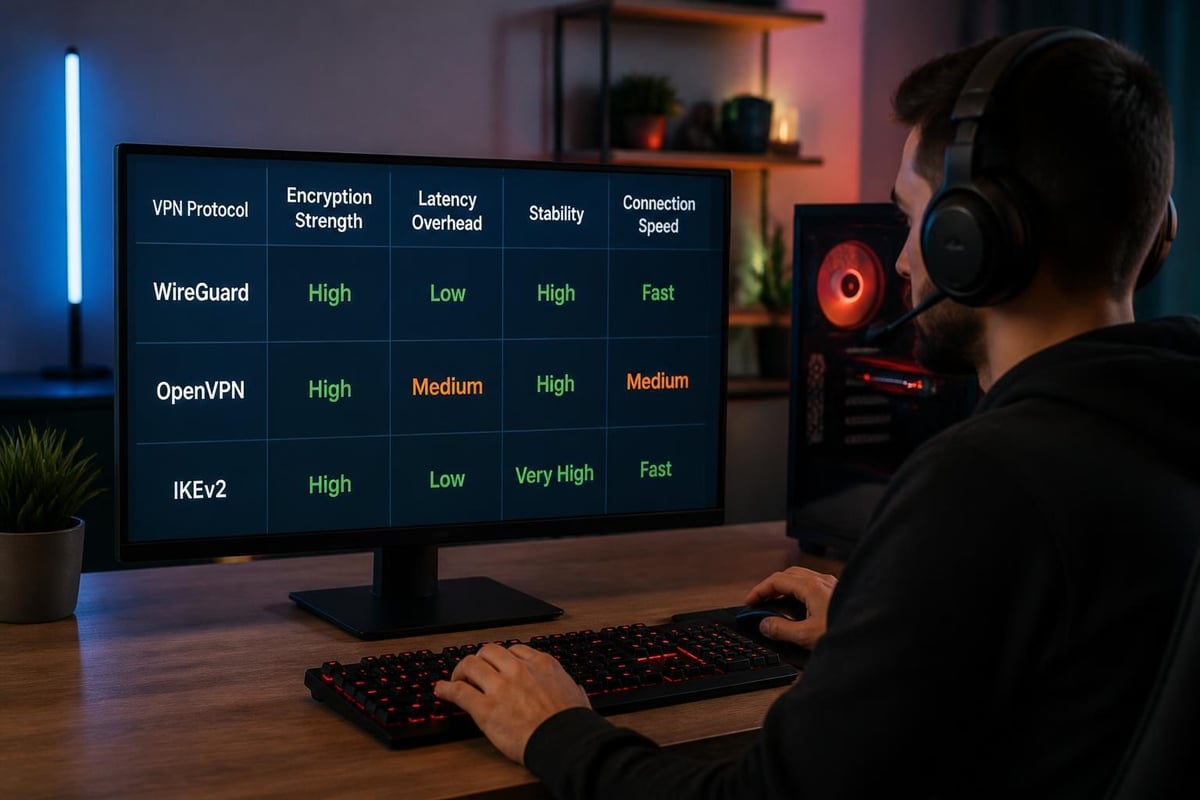
- WireGuard: Modern, lightweight protocol with minimal overhead; excellent for gaming when properly configured
- OpenVPN UDP: Reliable and flexible; moderate performance impact; widely supported
- IKEv2/IPsec: Fast connection establishment; good for mobile gaming with network switching
- L2TP/IPsec: Older protocol with higher overhead; generally slower for gaming applications
- PPTP: Outdated and insecure; not recommended despite low latency
Research published on ArXiv characterizing the global VPN ecosystem demonstrates how protocol choice and server infrastructure affect real-world performance across different network conditions and geographic regions.
Server Network and Geographic Coverage
The physical location and density of VPN servers directly impacts latency for gaming connections. Ideally, you want VPN servers positioned between your location and the game server in a way that minimizes additional distance.
Free VPN services typically maintain smaller server networks concentrated in major markets. This limitation means you may not find servers optimally positioned for your specific gaming needs. Premium services often maintain hundreds or thousands of servers across 50+ countries, providing more routing options.
Geographic considerations include:
- Server proximity to your location for minimal additional latency
- Server proximity to game servers for optimal routing
- Server load and capacity affecting performance during peak hours
- Network quality of the data centers hosting VPN servers
Understanding server placement helps you make strategic choices. A server geographically distant but connected via high-quality network infrastructure may outperform a closer server on congested routes.
Security and Privacy Trade-offs
While searching for a vpn for gamers free, security considerations extend beyond just connection encryption. The VPN provider's business model, data policies, and technical implementation all affect your actual privacy protection.
Privacy Policies and Data Logging
Free VPN services must generate revenue somehow. Some maintain strict no-logs policies and support operations through premium tier subscriptions. Others monetize through data collection, selling anonymized browsing data to third parties, or injecting advertisements into your traffic.
Before trusting any free VPN with your gaming sessions, examine their privacy policy carefully:
- What data is collected during your sessions?
- How long is this data retained?
- Is data shared with third parties or advertisers?
- What jurisdiction governs the company's operations?
- Has the provider undergone independent security audits?
The IEEE whitepaper on internet traffic protection provides broader context on how VPNs fit within traffic protection technologies and the inherent trade-offs between different approaches to online privacy.
Encryption Standards and Implementation
Strong encryption protects your gaming traffic from interception, but implementation quality matters as much as the algorithm selected. Most reputable free VPNs use AES-256 encryption, considered military-grade and effectively unbreakable with current technology.
| Security Feature | Minimum Acceptable | Preferred for Gaming |
|---|---|---|
| Encryption | AES-128 | AES-256 |
| Authentication | SHA-1 | SHA-256 or better |
| Handshake | RSA-2048 | RSA-4096 or ECC |
| Perfect Forward Secrecy | Optional | Required |
| DNS leak protection | Required | Required |
Even with strong encryption, DNS leaks can expose your gaming activity. Quality VPN services include DNS leak protection that ensures all DNS queries route through the VPN tunnel rather than your ISP's DNS servers.
Performance Optimization Strategies
Maximizing gaming performance with a vpn for gamers free requires strategic configuration and realistic expectations. Several optimization techniques can minimize latency impact and improve connection stability.
Server Selection and Testing
Rather than connecting to the nearest or recommended server automatically, test multiple server options to identify the best routing for your specific games. Many games use dedicated server clusters in particular regions, and optimal VPN server selection depends on these game server locations.
Testing methodology for server selection:
- Connect to a potential VPN server
- Launch your game and note the in-game ping display
- Play several matches to assess stability and consistency
- Test at different times of day to account for congestion
- Document results and compare across multiple VPN servers
PC Gamer's feature on VPNs for gaming emphasizes the importance of this testing process, noting that counterintuitive routing sometimes produces better results than geographically nearest connections.
Network Configuration and Quality of Service
Your local network configuration affects VPN performance. Gaming on WiFi introduces additional latency variability compared to wired Ethernet connections. When using any VPN for gaming, a wired connection to your router minimizes jitter and packet loss.
Network optimization checklist:
- Use Ethernet cable instead of WiFi when possible
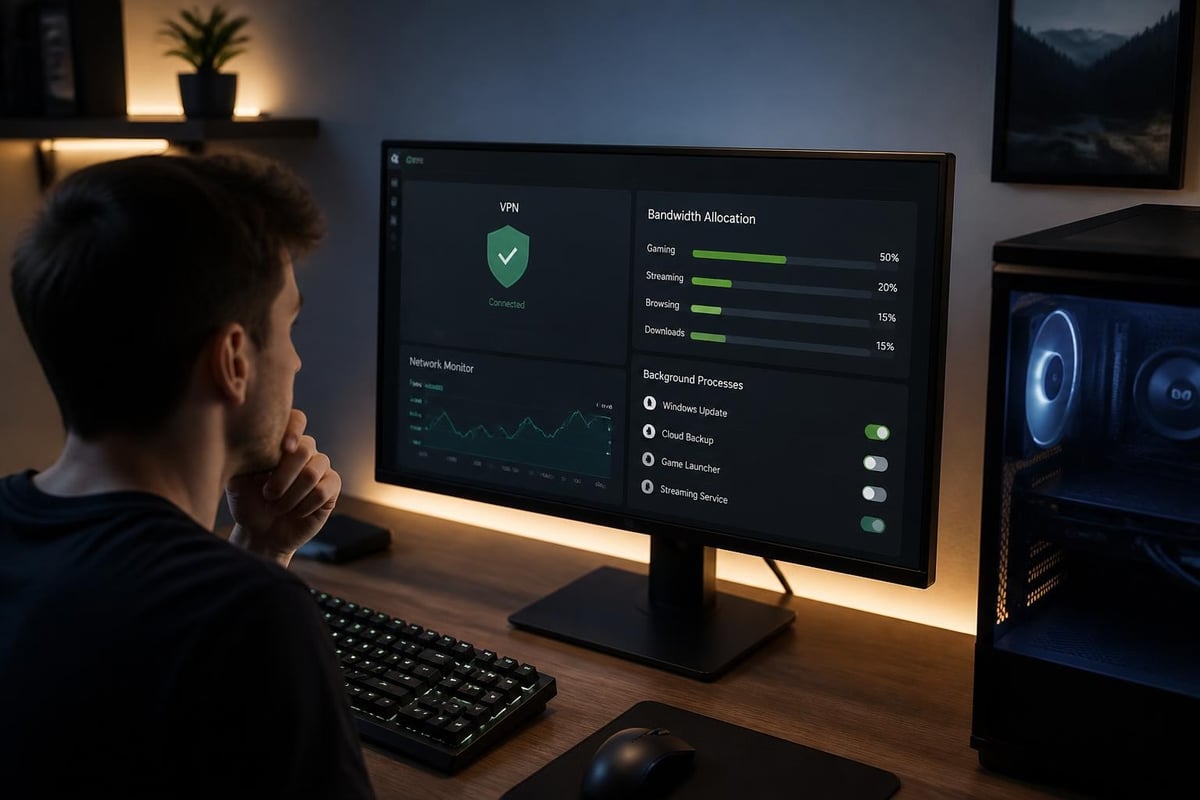
- Close bandwidth-intensive applications during gaming
- Configure router QoS (Quality of Service) to prioritize gaming traffic
- Disable bandwidth-heavy background processes and updates
- Monitor network performance with tools like PingPlotter or WinMTR
Some advanced routers support VPN connections at the router level, allowing all devices on your network to benefit from VPN protection without individual client software. This approach can reduce overhead on gaming devices but requires compatible router firmware.
Practical Use Cases for Gaming VPNs
Understanding when and why to use a vpn for gamers free helps determine whether free options meet your specific needs. Different gaming scenarios benefit from VPNs in varying degrees.
Regional Access and Game Releases
Publishers often implement staggered release schedules, making games available in different regions at different times. A VPN allows you to connect through servers in regions where the game has already launched, potentially accessing content hours or days earlier.
This practice exists in a gray area of most game publishers' terms of service. While typically not enforced for single-player access, using VPNs to circumvent regional pricing differences or access region-locked multiplayer servers may risk account penalties.
Protection Against DDoS Attacks
Competitive gaming, particularly in games with peer-to-peer connections or visible IP addresses, exposes players to DDoS attack risks. Frustrated opponents or malicious actors may attempt to flood your connection with traffic, forcing disconnections or severe lag.
A VPN provides substantial protection by hiding your real IP address. Attackers can only see the VPN server's IP, and even flooding that connection won't directly impact your home network. This protection proves especially valuable for streamers, competitive players, and anyone participating in high-stakes gaming environments.
ISP Throttling Mitigation
Some Internet Service Providers implement traffic shaping that identifies and throttles gaming or streaming traffic, particularly during peak usage hours. While ISPs rarely acknowledge this practice, many users report improved gaming performance when connected through VPNs.
By encrypting your traffic, VPNs prevent ISPs from identifying specific applications or protocols, making targeted throttling impossible. The AV-Comparatives lab report on VPN performance includes objective measurements demonstrating how VPNs can sometimes improve connection speeds when ISP throttling is present.
Comparing Free vs. Premium Gaming VPNs
The decision between free and paid VPN services for gaming ultimately depends on your priorities, budget, and gaming habits. Understanding the concrete differences helps you make an informed choice.
Performance and Reliability Differences
Premium VPN services typically invest heavily in server infrastructure optimized for performance-sensitive applications. This investment translates to lower latency overhead, better routing, and more consistent performance during peak hours.
Free services allocate limited resources across many users, often resulting in congestion and deprioritized traffic. During evening hours when gaming activity peaks, free VPN servers may become overloaded, causing lag spikes and connection instability that make competitive gaming impractical.
Realistic performance expectations:
| Aspect | Free VPN | Premium VPN |
|---|---|---|
| Latency increase | +40-150ms | +10-40ms |
| Speed consistency | Variable, congestion-sensitive | Generally stable |
| Packet loss | 1-5% during peak hours | <1% typical |
| Available bandwidth | 2-10 Mbps capped | Unlimited or 100+ Mbps |
| Server uptime | 95-98% | 99.5%+ with redundancy |
Feature Set and Support
Premium VPN services provide features specifically valuable for gamers: dedicated IP addresses that prevent game server anti-VPN detection, split tunneling that routes only specific traffic through the VPN, and 24/7 customer support for troubleshooting connection issues.
Free VPNs typically offer basic functionality with limited support resources. Troubleshooting connection problems often requires self-service through community forums rather than direct technical assistance.
Long-term Cost Considerations
While free VPNs require no monetary investment, they impose costs through data caps, speed limitations, and potential privacy compromises. If you game regularly or competitively, these limitations may prove more frustrating and limiting than the cost of a premium service.
Many premium VPN providers offer money-back guarantees, allowing you to test their gaming performance risk-free. Annual subscription plans often cost less than a single new game, making them economically reasonable for dedicated gamers who benefit from consistent VPN access.
Making an Informed VPN Choice for Gaming
Selecting the right vpn for gamers free option requires balancing technical requirements against realistic expectations. Not all free VPNs deliver equivalent performance, and your specific gaming needs determine which service suits you best.
Evaluation Criteria and Testing
Before committing to any VPN service, establish clear criteria based on your gaming priorities:
- What games do you primarily play, and where are their servers located?
- How latency-sensitive are your favorite games (competitive FPS vs. casual puzzle games)?
- Do you need constant VPN protection, or only occasional access?
- What data allowance do you require monthly?
- Which platforms do you game on (PC, console, mobile)?
Test potential VPN services systematically. Many free providers allow immediate testing without payment information, making it easy to evaluate performance with your actual games and network conditions. Document ping times, connection stability, and subjective gameplay experience across multiple sessions.
Red Flags to Avoid
Certain warning signs indicate a free VPN service may compromise your security or provide unreliable performance:
- Unclear privacy policies or vague language about data collection
- Intrusive advertisements injected into your browsing or gaming sessions
- Extremely generous free tiers with no clear business model
- No information about company ownership or jurisdiction
- Outdated software or lack of recent updates and security patches
- Poor user reviews consistently mentioning performance or security issues
Trust your instincts. If a free VPN offer seems too good to be true-unlimited bandwidth, no data caps, premium features at no cost-investigate carefully before trusting it with your gaming traffic and personal data.
Platform-Specific Considerations
Gaming platforms impose different requirements on VPN usage. PC gaming offers the most flexibility, with VPN client software running directly on your gaming system and complete control over connection settings.
Console gaming (PlayStation, Xbox, Nintendo Switch) requires alternative approaches since these platforms don't support VPN clients natively. Solutions include router-level VPN connections or using your PC as a VPN-enabled hotspot, both adding complexity and potential performance overhead.
Mobile gaming on smartphones and tablets supports VPN apps directly but faces the most significant battery drain and performance impact from VPN encryption overhead. Free mobile VPNs often include even more restrictive data caps given the bandwidth mobile users consume.
Free VPN options for gaming serve specific use cases effectively while imposing real limitations on performance and functionality. Understanding these trade-offs helps you match your gaming needs to realistic VPN capabilities. For gamers seeking reliable protection without performance compromises, ZioFree delivers high-speed access through a global server network, strong encryption protocols, and a strict no-logs policy that protects your privacy and gaming sessions from threats including sophisticated hacking attempts.