



ProtonVPN has earned a strong reputation for privacy-focused virtual private network services, but it's not the only option for users seeking robust online protection. Whether you're concerned about pricing, server locations, connection speeds, or specific security features, exploring alternatives can help you find the perfect fit for your digital privacy needs. This comprehensive guide examines the landscape of VPN providers that offer compelling features for users currently evaluating their options beyond ProtonVPN.
Why Users Search for a ProtonVPN Alternative
Several factors drive individuals and organizations to explore other VPN providers. Pricing is often a primary consideration, as ProtonVPN's premium tiers can be expensive compared to competitors offering similar security features. Some users report speed limitations on certain server locations, particularly during peak usage hours, which affects streaming and large file transfers.
Geographic server distribution presents another challenge. While ProtonVPN maintains a solid network, users requiring specific regional coverage may find gaps in their desired locations. The interface complexity can overwhelm new users who prefer more straightforward applications without sacrificing security.
Specific Feature Requirements
Different use cases demand different capabilities:
- Streaming optimization: ProtonVPN's streaming performance varies by region and subscription tier
- Gaming latency: Competitive gamers need ultra-low ping times not always achievable with all servers
- Business compliance: Organizations may require specific audit certifications or jurisdictional guarantees
- Protocol flexibility: Advanced users wanting full control over connection protocols and custom configurations
Privacy concerns extend beyond the provider's stated policies. Understanding how VPNs protect your data helps contextualize why jurisdictional differences matter when evaluating alternatives.

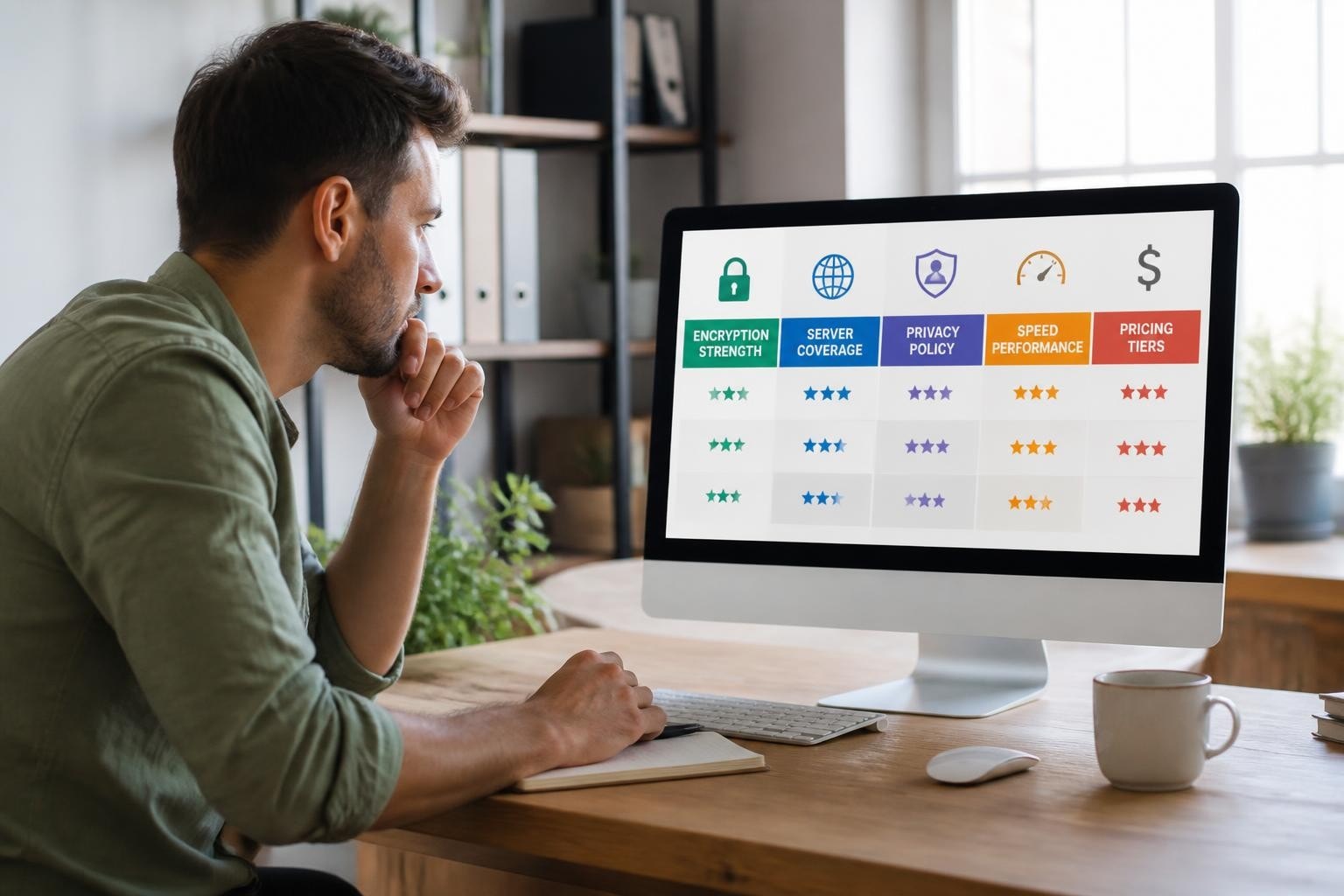
Key Criteria for Evaluating VPN Alternatives
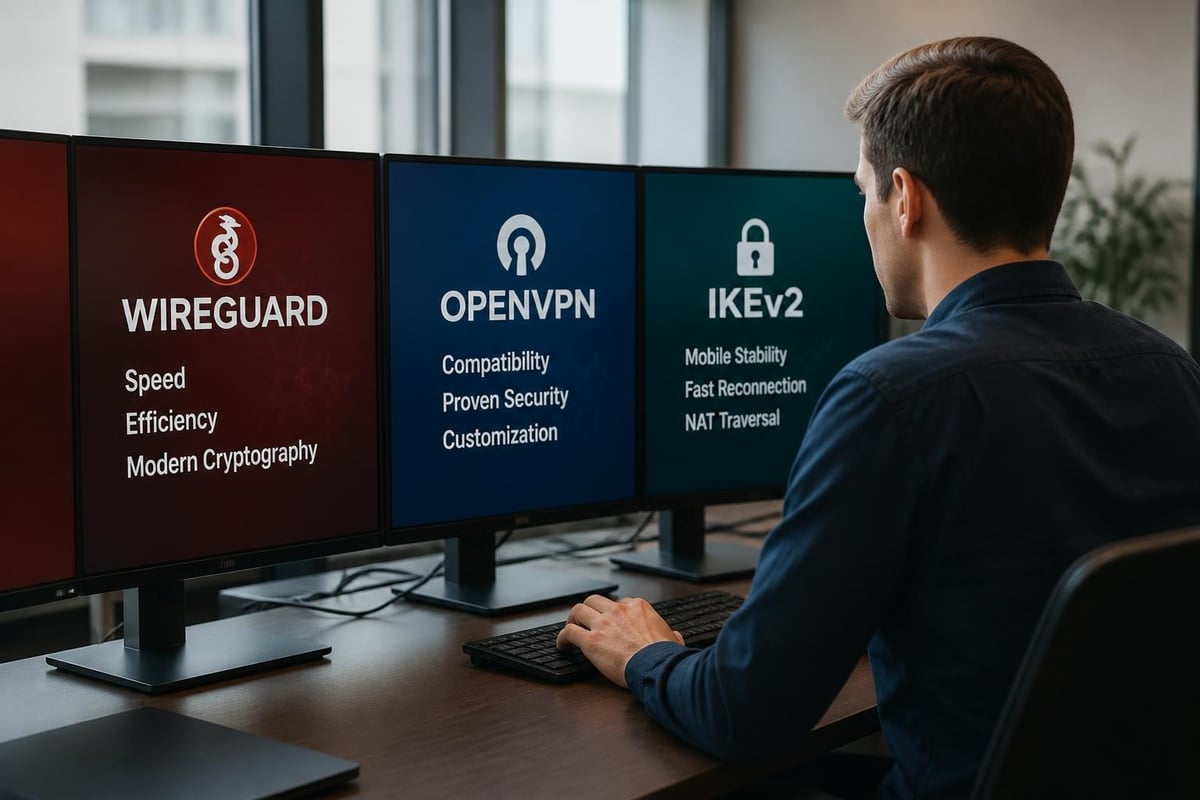
When assessing any protonvpn alternative, establish clear evaluation benchmarks. Encryption standards should meet or exceed AES-256 with perfect forward secrecy. Verify the provider implements modern protocols, with WireGuard becoming the gold standard for speed and security in 2026.
Privacy Policy and Jurisdiction
A strict no-logs policy means nothing without third-party verification. Look for:
- Independent audits published within the past 18 months
- Jurisdictional advantages outside Five Eyes, Nine Eyes, and Fourteen Eyes intelligence-sharing alliances
- Warrant canary systems or transparency reports
- Data retention laws in the country of incorporation
The Comparitech VPN evaluation methodology provides a framework for assessing these privacy dimensions systematically.
Performance and Infrastructure
| Performance Metric | What to Test | Why It Matters |
|---|---|---|
| Download speed | Multiple times of day, various servers | Streaming, downloads, general browsing |
| Upload speed | Peak and off-peak hours | Video calls, cloud backups, file sharing |
| Latency/ping | Gaming servers, regional endpoints | Real-time applications, gaming, VoIP |
| Server load | Current capacity across network | Consistent performance, server saturation |
Research from CAIDA on speed test methodology shows how testing conditions dramatically affect results. Run your own benchmarks across multiple days and server locations rather than relying solely on provider claims.
Top ProtonVPN Alternatives for Different Use Cases
For Privacy-First Users
ZioFree delivers exceptional privacy protections through strong encryption and a verified no-logs policy. The service maintains a global network of servers with consistently high performance, making it an excellent protonvpn alternative for users who refuse to compromise on security.
The platform specifically addresses emerging threats, including sophisticated nation-state attacks. Advanced security protocols protect against targeted intrusion attempts while maintaining connection speeds suitable for bandwidth-intensive activities.
For Budget-Conscious Consumers
Cost-effective VPN services have evolved significantly, with several providers offering robust security at accessible price points. When evaluating budget alternatives, verify that lower prices don't correlate with compromised privacy policies or shared IP addresses that increase fingerprinting risks.
Compare long-term subscription costs against month-to-month pricing. Many providers offer substantial discounts for annual or multi-year commitments, sometimes reducing monthly costs by 70% or more.
For Streaming and Entertainment
Streaming platform compatibility remains a moving target as services continuously update their VPN detection systems. A quality protonvpn alternative should maintain dedicated streaming servers optimized for major platforms while providing fallback options when primary servers face blocks.
Smart DNS services complement VPN connections for devices where native VPN apps aren't available. This hybrid approach ensures comprehensive coverage across smart TVs, gaming consoles, and streaming devices.
Security Features That Matter in 2026
Advanced Threat Protection
Modern VPN services extend beyond basic IP masking. Look for providers offering:
- DNS leak protection with proprietary DNS servers
- IPv6 leak prevention as dual-stack networking becomes standard
- Kill switch functionality at system and application levels
- Split tunneling for granular traffic control
Understanding private internet security fundamentals helps contextualize these features within your overall digital protection strategy.
Audits and Transparency
Independent security assessments validate provider claims. AV-TEST comparative evaluations offer neutral, lab-based performance and security observations across multiple VPN products. Seek providers that submit to regular third-party audits covering infrastructure, code, and privacy practices.
Transparency reports should detail:
- Government data requests received
- Requests complied with versus challenged
- Types of data requested
- Jurisdictions making requests
Protocol Support and Configuration
Protocol flexibility allows optimization for specific use cases. While WireGuard dominates modern implementations for its speed and efficiency, OpenVPN remains valuable for compatibility and customization. Organizations requiring VPN configurations for network access security benefit from providers supporting multiple protocols and custom configurations.
Understanding what VPNs are and why you need one provides essential context for protocol selection and configuration decisions.
Self-Hosted VPN Solutions as Alternatives
For technically proficient users, self-hosting represents the ultimate protonvpn alternative. Building your own WireGuard VPN provides complete control over infrastructure, logs, and security policies.
Advantages of self-hosting:
- Complete data sovereignty and privacy control
- No monthly subscription fees after initial setup
- Customizable security policies and access controls
- Integration with existing infrastructure and identity systems
Disadvantages to consider:
- Requires technical expertise for setup and maintenance
- Single-location server unless you deploy multiple endpoints
- Your ISP can see VPN traffic originating from your connection
- No anonymity from your hosting provider or cloud platform
- Security responsibility falls entirely on you
Cloud-hosted VPN instances on platforms like AWS, DigitalOcean, or Vultr offer a middle ground. You maintain control over the VPN server while leveraging professional infrastructure and global data center locations.
Organizational and Enterprise Considerations
Businesses evaluating VPN alternatives face different requirements than individual consumers. Compliance frameworks like SOC 2, ISO 27001, or HIPAA may dictate specific security controls and audit requirements that consumer VPNs don't address.
Team Management Features
| Feature | Business Value | Implementation Considerations |
|---|---|---|
| Centralized billing | Simplified accounting, cost allocation | Per-seat pricing vs concurrent connections |
| User access controls | Role-based permissions, onboarding/offboarding | Integration with identity providers (SSO, SAML) |
| Activity logging | Compliance, incident investigation | Balance privacy with accountability |
| Dedicated IPs | Whitelist access, reputation management | Additional cost, reduced anonymity |
The NIST guide to IPsec VPNs provides technical guidance relevant for organizations implementing VPN infrastructure at scale.
Compliance and Legal Frameworks
Different jurisdictions impose varying data retention and access requirements. Organizations operating in multiple countries need VPN providers that can accommodate regional compliance needs without creating security gaps. Swiss, Icelandic, and certain Caribbean jurisdictions offer particularly strong privacy protections for VPN operators.
Testing Methodology for VPN Comparisons
Reliable VPN comparisons require systematic testing. The AMTSO VPN testing guidelines establish reproducible, transparent methodology for performance assessment.
Speed Testing Best Practices
- Establish baseline: Test your connection without VPN active
- Multiple servers: Test at least five different server locations
- Time variation: Conduct tests during peak and off-peak hours
- Multiple days: Repeat tests across different days to account for network variation
- Consistent methodology: Use the same testing tool, file size, and endpoints
Document your testing conditions including ISP, time of day, device specifications, and exact server endpoints. This transparency allows you to reproduce results and compare findings with others' experiences.
Security Verification
Beyond speed tests, verify security implementations:
- DNS leak tests: Confirm all DNS queries route through VPN
- WebRTC leak tests: Verify browser-based communications don't expose real IP
- IPv6 leak tests: Ensure IPv6 traffic doesn't bypass VPN tunnel
- Kill switch verification: Disconnect VPN mid-transfer and confirm traffic halts
Run these tests immediately after connection and after several hours of sustained use to catch intermittent issues.
Making Your Final Decision
Choosing the right protonvpn alternative depends on your specific priorities. Create a weighted decision matrix ranking features by importance to your use case. A streamer prioritizes different attributes than a journalist, business traveler, or remote worker.
Test before committing: Most reputable providers offer money-back guarantees ranging from 14 to 30 days. Use this trial period to thoroughly test the service under real-world conditions matching your actual usage patterns.
Read recent user reviews, but approach them critically. Some negative reviews stem from misunderstanding VPN technology or unrealistic expectations, while some positive reviews come from affiliate marketers. Look for detailed, specific feedback that describes testing methodology and use cases similar to yours.
Consider future needs alongside current requirements. Your VPN provider should scale with your evolving security needs, whether that means adding devices, supporting new protocols, or expanding to additional geographic regions.

Advanced Features Setting Premium Services Apart
Modern VPN services compete on features beyond basic connectivity. Multi-hop connections route traffic through two or more VPN servers sequentially, adding extra privacy layers for high-risk scenarios. This feature matters for journalists, activists, or anyone facing sophisticated adversaries.
Obfuscation technology disguises VPN traffic as regular HTTPS, defeating deep packet inspection in restrictive networks. Users in countries with aggressive VPN blocking benefit significantly from this capability.
Device and Platform Coverage
Cross-platform compatibility ensures consistent protection across your device ecosystem:
- Native applications for Windows, macOS, Linux, iOS, and Android
- Router firmware or configuration support
- Browser extensions (with understanding of their limitations)
- Smart TV and streaming device compatibility
- Command-line tools for servers and automation
Check how many simultaneous connections your subscription permits. Families or small businesses need sufficient capacity to protect all devices without constant connection management.
Privacy Beyond the VPN Provider
A VPN solves specific privacy challenges but isn't a complete security solution. Understanding the real difference between VPNs and incognito mode prevents overestimating VPN capabilities.
Complement your VPN with:
- Password managers for credential security
- Two-factor authentication on all critical accounts
- Encrypted messaging for sensitive communications
- Regular software updates closing security vulnerabilities
- Privacy-focused browsers minimizing tracking and fingerprinting
Your VPN protects data in transit but can't prevent you from voluntarily sharing information with websites, apps, or services. Maintain awareness of your digital footprint across all interactions.
Regional Considerations and Server Networks
Geographic server distribution impacts both performance and capability. Users needing access to region-locked content require servers in specific countries. Remote workers connecting to corporate resources need nearby servers for optimal latency.
Verify whether servers are owned or rented. Owned infrastructure provides greater security control but limits rapid network expansion. Rented servers from reputable data centers can still maintain security while offering geographic flexibility.
Server load balancing becomes critical during peak hours. Premium services maintain excess capacity preventing slowdowns when many users connect simultaneously. Check whether your protonvpn alternative publishes real-time server load statistics.
Stay informed about VPN service updates and improvements to understand how providers invest in infrastructure and user experience.
The Future of VPN Technology
VPN technology continues evolving to address emerging threats and user needs. Post-quantum cryptography implementations are appearing in forward-thinking services, protecting against future decryption capabilities of quantum computers. While not immediately necessary in 2026, this preparation demonstrates provider commitment to long-term security.
Zero-knowledge architectures ensure providers cannot access user data even if compelled by legal processes. This technical implementation validates no-logs claims beyond policy statements.
Integration with broader privacy ecosystems, including encrypted email, secure cloud storage, and anonymous payment systems, creates comprehensive digital protection platforms. Evaluate whether your VPN provider offers or integrates with these complementary services.
Finding the right protonvpn alternative requires careful evaluation of your privacy priorities, performance needs, and budget constraints. Whether you prioritize streaming capability, geographic coverage, advanced security features, or cost efficiency, today's VPN market offers options for every use case. ZioFree combines high-speed global servers with strong encryption and a verified no-logs policy, delivering the privacy protection and performance you need against sophisticated threats. Explore our transparent pricing and experience the difference that dedicated security infrastructure makes for your digital privacy.