



When you decide to buy VPN service, you're making an investment in your digital privacy and security. The VPN market has grown exponentially, with hundreds of providers competing for attention through aggressive marketing and promotional pricing. However, not all virtual private networks deliver the same level of protection, performance, or value. Understanding what separates a robust, privacy-focused VPN from a subpar service requires examining technical specifications, business practices, and deployment considerations that most marketing materials gloss over. This guide breaks down the essential factors to evaluate before you commit to any VPN subscription.
Understanding Your Threat Model Before You Buy VPN
The first step in selecting the right VPN service is defining what you're protecting against. Different users face different risks, and a VPN that suits a casual coffee-shop browser won't necessarily meet the needs of a journalist working in a hostile environment.
Individual Privacy Needs
Home users typically seek protection from internet service provider (ISP) surveillance, advertiser tracking, and geographic content restrictions. When you buy VPN for household use, encryption strength and server locations matter most. Your ISP can see every unencrypted website you visit, build detailed profiles of your browsing habits, and potentially sell that data to third parties.
A quality VPN tunnels your traffic through encrypted channels, making it unreadable to your ISP. However, the Electronic Frontier Foundation notes that you must understand you're shifting trust from your ISP to your VPN provider. This makes the provider's logging policy and jurisdiction critically important factors in your decision.
Key questions for personal use:
- Do you primarily need to secure public Wi-Fi connections?
- Are you accessing region-restricted content or services?
- Do you face government surveillance or censorship?
- How sensitive is the data you regularly transmit?
Enterprise and Business Requirements
Organizations considering whether to buy VPN for remote access face additional complexity. The CISA joint guidance on network access security highlights that traditional VPN deployments create their own security risks when not properly hardened. Businesses must evaluate whether a commercial VPN service, self-hosted solution, or zero-trust network access (ZTNA) architecture best fits their security posture.

Commercial VPN services like those available at ZioFree can supplement (but rarely replace) enterprise security infrastructure. The right choice depends on your organization's size, compliance requirements, and technical expertise.
Protocol Selection and Encryption Standards
When you buy VPN service, the underlying protocol determines both your security level and connection performance. Modern VPNs use several competing protocols, each with distinct advantages and tradeoffs.
Modern Protocol Comparison
| Protocol | Encryption | Speed | Use Case | Maturity |
|---|---|---|---|---|
| WireGuard | ChaCha20 | Excellent | General use, mobile | Modern (2020+) |
| OpenVPN | AES-256 | Good | Maximum compatibility | Mature (2001+) |
| IPsec/IKEv2 | AES-256 | Very Good | Mobile, auto-reconnect | Mature (1990s+) |
| SSTP | AES-256 | Good | Windows environments | Mature (2007+) |
WireGuard has rapidly become the protocol of choice for forward-thinking providers. The WireGuard protocol documentation demonstrates its lean codebase (approximately 4,000 lines compared to OpenVPN's 100,000+), making it easier to audit for security vulnerabilities. Its performance advantages stem from modern cryptographic primitives and a stateless design that handles network changes gracefully.
OpenVPN remains the gold standard for compatibility and configurability. When you buy VPN service, providers offering OpenVPN ensure you can connect from virtually any device or operating system. Its support for TCP mode allows it to bypass restrictive firewalls that block other protocols.
IPsec/IKEv2 excels in mobile scenarios with automatic reconnection and the MOBIKE extension for seamless network transitions. The IETF RFC 4301 standards documentation provides the architectural foundation that enterprise deployments rely on for interoperability.
Encryption Verification
Don't simply trust marketing claims about "military-grade encryption." When evaluating providers, verify:
- Cipher suite specifics: AES-256-GCM or ChaCha20-Poly1305 for symmetric encryption
- Key exchange method: RSA-4096 or Elliptic Curve Diffie-Hellman (ECDH) with strong curves
- Hash algorithm: SHA-384 or SHA-512 for authentication
- Perfect forward secrecy: New session keys for each connection
Providers who publish detailed technical specifications demonstrate transparency. Those who rely on vague security buzzwords may not implement encryption correctly.
Privacy Policies and Logging Practices
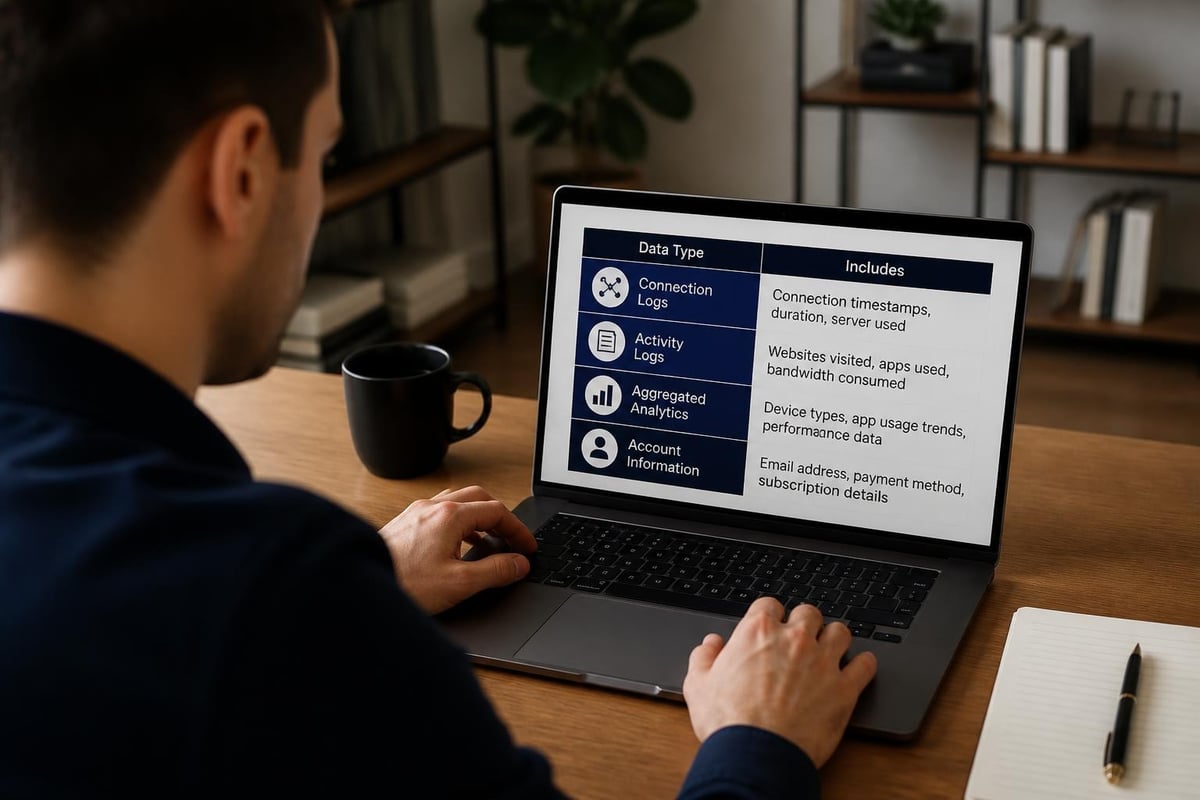
The most critical factor when you buy VPN is understanding exactly what data the provider collects, stores, and potentially shares. Marketing claims about "no-logs" policies require careful scrutiny.
What No-Logs Really Means
A genuine no-logs policy means the provider doesn't record:
- Browsing history or DNS queries
- Connection timestamps (when you connect/disconnect)
- Originating IP addresses
- Bandwidth usage per session
- Server selection or connection metadata
However, most providers do maintain minimal operational data for legitimate business purposes. This typically includes account information (email, payment method), total bandwidth consumed across billing periods, and server load metrics in aggregate.
The distinction matters legally. If a provider claims zero logging but stores connection timestamps and originating IPs, they can be compelled to hand over data that reveals your activity patterns. Research on VPN provider practices found significant discrepancies between privacy policy claims and actual technical implementations.
Jurisdiction and Legal Framework
Where a VPN company is incorporated and operates determines which laws govern data retention and sharing:
- Five Eyes countries (US, UK, Canada, Australia, New Zealand): Potential intelligence-sharing agreements
- Fourteen Eyes countries: Extended intelligence cooperation network
- Privacy havens (Switzerland, Panama, British Virgin Islands): Stronger privacy protections, weaker surveillance mandates
When you buy VPN from providers in privacy-friendly jurisdictions, you reduce the risk of mandatory data retention laws or surveillance court orders. ZioFree operates with strong privacy protections and maintains its commitment to user privacy through technical and operational safeguards.
Infrastructure and Server Network Evaluation
The size and quality of a VPN provider's server network directly impacts your experience. When you buy VPN access, you're purchasing the right to use that infrastructure.
Server Ownership Models
Owned infrastructure gives providers complete control over security. Physical servers in secured data centers mean no third-party hosting provider can access data or hardware. This model costs more but eliminates intermediary risk.
Rented dedicated servers offer a middle ground. The provider controls the software and configuration but leases hardware from data centers. Security depends on the hosting provider's practices and physical security measures.
Virtual servers (VPS instances) represent the lowest-cost option but introduce additional trust requirements. Multiple VPN servers may run on shared physical hardware, potentially exposing traffic to side-channel attacks or hosting provider access.
Geographic Distribution and Performance
Evaluate server networks based on:
- Coverage in regions you need: Business travelers need servers where they travel; content access requires servers in specific countries
- Server density: Multiple servers per location prevent overcrowding and maintain speeds
- Bandwidth capacity: Gigabit or 10-gigabit uplinks per server ensure fast throughput
- Physical versus virtual locations: Some providers use virtual locations that may misrepresent actual server placement
The UK NCSC VPN guidance recommends considering both the security of the VPN endpoints and the network paths between them when evaluating infrastructure quality.
Pricing Models and Value Assessment
VPN pricing varies dramatically, from free services to premium options exceeding $15 monthly. Understanding what you get at each price point helps you buy VPN service that matches your needs without overpaying.
Pricing Structure Breakdown
| Duration | Typical Monthly Cost | Total Cost | Value Factor |
|---|---|---|---|
| Monthly | $10-13 | $120-156/year | Flexibility |
| Annual | $4-6 | $48-72/year | Good value |
| Two-year | $3-4 | $72-96/two years | Best value |
| Three-year | $2-3 | $72-108/three years | Long commitment |
Longer commitments almost always reduce monthly costs, but lock you in with a provider. Before committing to multi-year plans, test the service with a shorter subscription or money-back guarantee period. Check ZioFree's pricing for transparent, competitive options without deceptive promotional tactics.
Free VPN Considerations
Free VPN services face a fundamental business problem: infrastructure costs money. When you don't pay with currency, you often pay with:
- Data collection and sale: Your browsing habits become the product
- Bandwidth limitations: Severe speed throttling or monthly caps
- Limited server access: Overcrowded servers with poor performance
- Compromised security: Outdated protocols or weak encryption
- Malware injection: Some free VPNs have been caught injecting ads or tracking code
The adage "if you're not paying, you're the product" applies directly to VPN services. For less than the cost of two coffee shop visits monthly, you can buy VPN protection that doesn't compromise your privacy.
Technical Deployment and Configuration
Once you decide to buy VPN service, proper configuration ensures you actually receive the security benefits you're paying for.
Client Software Quality
Evaluate VPN clients on:
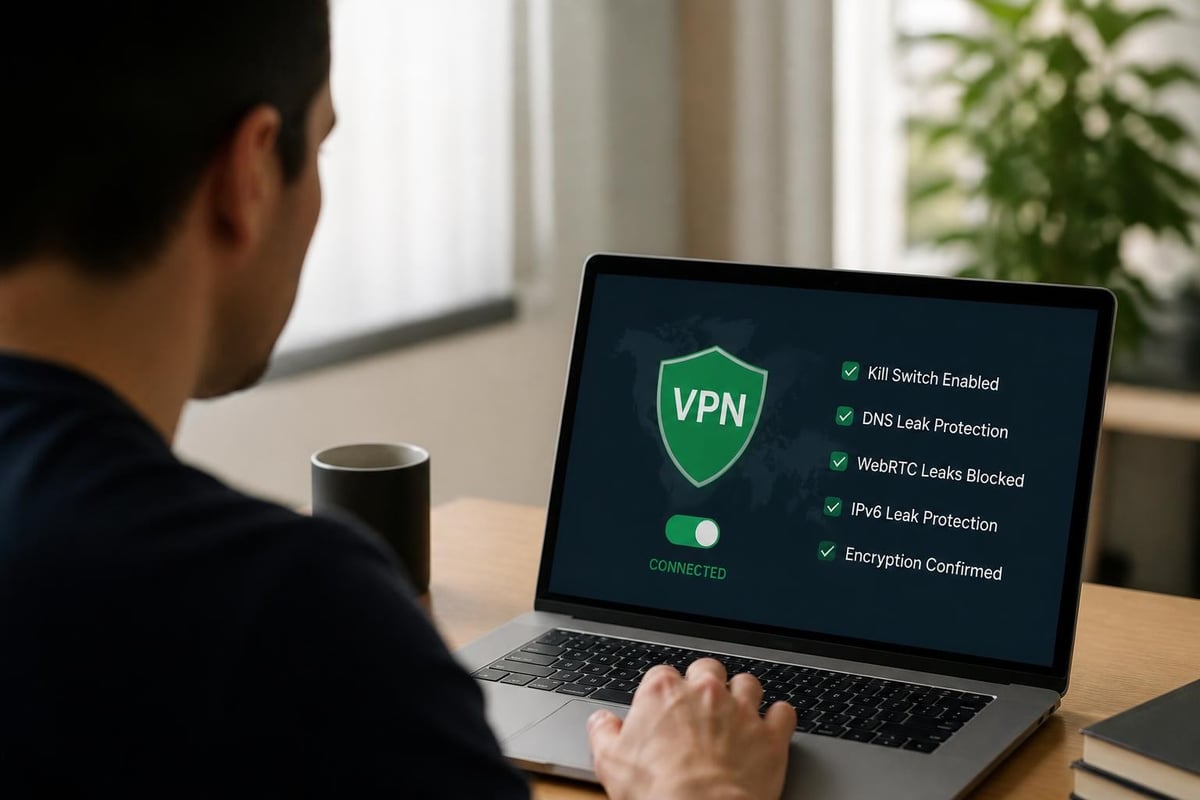
- Kill switch functionality: Automatically blocks internet if VPN drops
- DNS leak prevention: Ensures DNS queries go through the VPN tunnel
- Split tunneling: Routes only specific apps through VPN when needed
- Auto-connect options: Automatically enables VPN on untrusted networks
- Protocol selection: Allows choosing optimal protocol per situation
Strong client software makes VPN protection transparent and automatic. Poor implementations leave gaps where your real IP address or DNS queries leak outside the encrypted tunnel.
Advanced Configuration Options
Technical users should look for:
- Custom DNS servers: Use privacy-focused DNS rather than ISP defaults
- Port forwarding: Enables hosting services behind the VPN (when needed)
- Multi-hop/cascading: Routes traffic through multiple VPN servers
- Obfuscation modes: Disguises VPN traffic in restrictive networks
- IPv6 support or blocking: Prevents IPv6 leaks on dual-stack networks
Understanding private internet security fundamentals helps you configure these features appropriately rather than blindly enabling everything.
Known Vulnerabilities and Limitations
When you buy VPN, you should understand its limitations. Security researcher Bruce Schneier's analysis of VPN attacks highlights that VPNs aren't invincible shields but tools that mitigate specific threats.
Attack Vectors to Understand
Traffic correlation attacks can potentially link VPN entry and exit points through timing analysis, even without decrypting content. This requires sophisticated attackers with access to multiple network points but represents a real limitation for users facing nation-state adversaries.
VPN server compromises occasionally occur. If an attacker gains root access to a VPN server, they could theoretically monitor traffic passing through it. RAM-only server deployments that don't persist data to disk mitigate this risk.
Protocol vulnerabilities emerge periodically. The TunnelVision attack demonstrated how local network attackers could potentially bypass VPN encryption through DHCP manipulation. Staying current with VPN security developments helps you understand and respond to newly-discovered issues.
What VPNs Don't Protect Against
VPNs create encrypted tunnels for your traffic but don't provide:
- Endpoint protection: Malware on your device isn't stopped by VPNs
- Phishing immunity: VPNs don't detect fraudulent websites
- Application-layer anonymity: Login credentials still identify you
- Complete tracking prevention: Browser fingerprinting persists through VPNs
- Social engineering protection: Human vulnerabilities remain
A comprehensive security approach combines VPNs with endpoint security, browser privacy extensions, strong authentication, and security awareness. Compare VPN versus incognito mode to understand how different privacy tools address different threats.
Performance Testing and Verification
Before fully committing when you buy VPN, verify that performance claims match reality.
Benchmarking Methodology
Test VPN speed using multiple servers at different times:
- Baseline speed: Test without VPN using fast.com or speedtest.net
- Nearby server: Connect to geographically close VPN server, retest
- Distant server: Test connection to servers in different continents
- Peak hours: Repeat tests during evening hours when networks are busiest
- Protocol comparison: Test different protocols on the same server
Expect some speed reduction (typically 10-30% on nearby servers with modern protocols). Dramatic slowdowns suggest server overcrowding or poor infrastructure.
Leak Testing Procedures
Use comprehensive leak testing to verify your private internet stays private:
- IP leak test: Verify your real IP doesn't appear (ipleak.net)
- DNS leak test: Confirm DNS queries route through VPN (dnsleaktest.com)
- WebRTC leak test: Check for WebRTC IP leaks (browserleaks.com)
- IPv6 leak test: Ensure IPv6 traffic doesn't bypass VPN
Perform these tests immediately after connecting and after reconnecting from network changes. Intermittent leaks during reconnection are often more dangerous than consistent failures because they're harder to detect.
Enterprise Deployment Considerations
Organizations that buy VPN for business use face additional requirements beyond individual consumer needs.
The NIST guidance on remote access security provides government-grade technical specifications for VPN selection and deployment. Key considerations include:
Centralized management and monitoring: Track which employees connect when, monitor for anomalous connection patterns, and maintain audit logs for compliance.
Integration with existing security infrastructure: VPNs should work with your security information and event management (SIEM) system, identity providers, and endpoint detection tools.
Redundancy and failover: Business-critical remote access requires backup VPN servers and automatic failover to prevent single points of failure.
Compliance requirements: Healthcare (HIPAA), finance (SOC 2), and other regulated industries need VPN providers who support compliance through appropriate controls and documentation.
Many businesses discover that alternatives like ZTNA provide better security models for modern remote work. However, commercial VPNs still serve valuable roles for specific use cases like providing employees secure access to public Wi-Fi or bypassing geographic restrictions for legitimate business purposes.
Making Your Final Decision
When you're ready to buy VPN service, synthesize all these factors into a decision matrix that weighs what matters most for your use case.
Decision Checklist
Non-negotiable security requirements:
- Strong encryption with modern protocols
- Verified no-logs policy with clear privacy terms
- Jurisdiction in privacy-friendly country
- No history of security breaches or data leaks
Performance and usability factors:
- Servers in locations you need
- Acceptable speed impact (test with trial/guarantee)
- Quality client software for your devices
- Responsive customer support
Value considerations:
- Transparent pricing without hidden fees
- Payment methods you're comfortable with (cryptocurrency for anonymity, credit cards for convenience)
- Reasonable refund policy or trial period
- Multi-device support adequate for your household/organization
Take advantage of money-back guarantees to test services risk-free. Most providers offer 30-day guarantees that let you verify performance, test for leaks, and ensure the service meets your needs before committing long-term.
Choosing the right VPN requires balancing security, performance, privacy, and cost while understanding that no single service perfectly suits every use case. By evaluating protocols, verifying privacy claims, testing infrastructure, and understanding limitations, you can make an informed decision that genuinely protects your digital life. When you're ready to buy VPN service that combines robust encryption, a strict no-logs commitment, and high-speed global servers, ZioFree delivers enterprise-grade protection with transparent practices designed to safeguard your privacy against sophisticated threats.