





Finding the right VPN service requires careful evaluation of privacy policies, security protocols, and performance metrics. While ExpressVPN has built a strong reputation in the industry, many users now seek alternatives that offer comparable or superior features at better value points. Whether you're concerned about jurisdiction, pricing, or specific security requirements, understanding your options helps you make an informed decision about protecting your digital privacy in 2026.
Why Users Search for an ExpressVPN Alternative
ExpressVPN commands premium pricing in the VPN market, which drives many users to explore other options. The service typically costs $12.95 per month without a long-term commitment, and even annual plans remain expensive compared to competitors offering similar feature sets.
Jurisdiction concerns also motivate the search for alternatives. ExpressVPN operates under British Virgin Islands law, which some privacy advocates view favorably. However, users increasingly scrutinize provider ownership structures, data-handling practices, and potential vulnerabilities to state-level surveillance.
Performance expectations have evolved significantly since 2020. Users now demand:
- WireGuard protocol support for faster connection speeds
- Multi-hop routing for enhanced anonymity
- Split tunneling across all platforms
- Independent security audits published annually
- Transparent ownership and funding disclosures
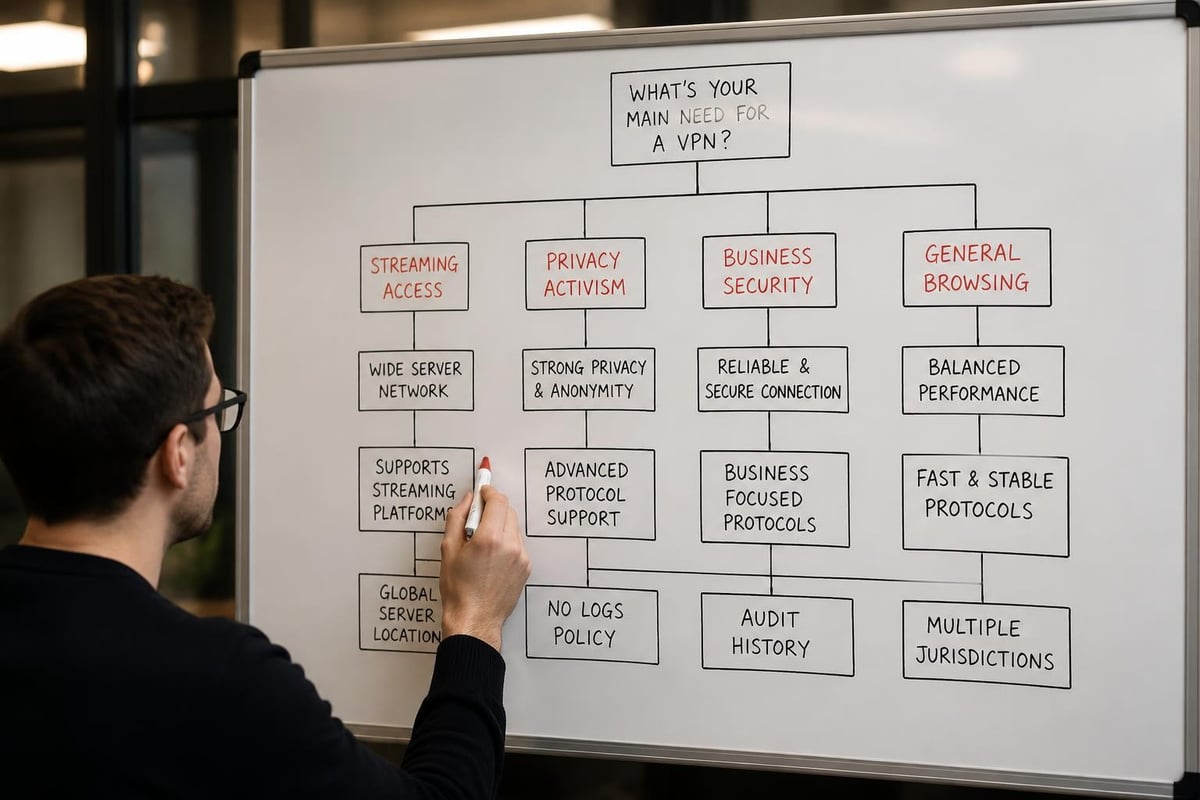
The Electronic Frontier Foundation's VPN guide emphasizes evaluating providers based on your specific threat model rather than brand recognition alone. This framework helps users identify which features genuinely matter for their use cases.
Protocol and Performance Standards
Modern ExpressVPN alternative services must support current encryption standards. OpenVPN remains the industry standard for its proven security record, while WireGuard offers superior speeds with a smaller codebase that's easier to audit. According to RTINGS' technical comparison, WireGuard typically delivers 30-40% faster speeds than OpenVPN in real-world testing.
| Protocol | Connection Speed | Security Maturity | Code Audit Frequency |
|---|---|---|---|
| OpenVPN | Moderate | Excellent | Quarterly |
| WireGuard | Fast | Strong | Monthly |
| IKEv2/IPsec | Moderate-Fast | Excellent | Semi-annual |
| Proprietary | Varies | Unknown | Provider-dependent |
Users should verify that any ExpressVPN alternative implements these protocols correctly. NIST's VPN guidance provides technical benchmarks that enterprise-grade services should meet, including specific cipher suite requirements and key exchange protocols.
Evaluating Privacy Claims and No-Logs Policies
Every VPN provider claims to protect your privacy, but verifying these assertions requires examining concrete evidence. The phrase "no-logs policy" appears in nearly every VPN marketing message, yet Privacy International's research demonstrates that many providers retain connection metadata that could identify users.
What Audit Reports Actually Tell You
Independent audits provide the strongest verification of privacy claims. When evaluating an ExpressVPN alternative, examine:
- Audit scope: Did it cover infrastructure, code, and policies?
- Auditor credentials: Recognized firms like Cure53, NCC Group, or Deloitte?
- Publication date: Audits older than 18 months may not reflect current practices
- Remediation: Were identified issues addressed publicly?
The VPN audit tracker compiles comprehensive data on which providers have undergone scrutiny and when. ZioFree maintains transparency through regular security assessments, ensuring our strict no-logs policy meets current privacy standards.
Warning signs that should trigger skepticism include vague policy language, unwillingness to specify data retention periods, or claims that seem technically impossible. The guide on how to verify VPN no-logs claims outlines specific policy language to look for and red flags that indicate insufficient privacy protection.
Top ExpressVPN Alternative Providers in 2026
Several providers deliver comparable or superior features to ExpressVPN while addressing specific user concerns about cost, jurisdiction, or feature sets.
Privacy-Focused Options
Mullvad operates from Sweden with radical transparency about its infrastructure and ownership. The service accepts cash payments and allows anonymous account creation without email addresses. Pricing remains fixed at approximately $5.50 monthly regardless of subscription length. Our detailed Mullvad analysis explores how this provider balances convenience with maximum privacy.
IVPN follows a similar privacy-first philosophy, headquartered in Gibraltar with a small, focused team. The provider publishes detailed transparency reports and maintains minimal user data. Both services sacrifice some convenience features (like 24/7 chat support) to maintain their privacy commitments.
Performance-Oriented Alternatives
Users prioritizing speed and reliability often consider providers with extensive server networks. A robust ExpressVPN alternative should maintain servers across at least 50 countries, ensuring consistent performance regardless of user location.
- Server quantity: More servers reduce congestion during peak hours
- Geographic distribution: Servers near your physical location minimize latency
- Network capacity: 10 Gbps connections per server prevent bottlenecks
- Protocol optimization: WireGuard implementation dramatically improves speeds
ZioFree's global server network delivers consistently high speeds across our infrastructure, with dedicated fast VPN service architecture designed specifically for bandwidth-intensive applications.

Value-Driven Providers
Price-conscious users can find excellent ExpressVPN alternative services at 40-60% lower cost. These providers maintain strong security standards while cutting expenses through:
- Simplified user interfaces that reduce development overhead
- Selective marketing focused on word-of-mouth and reviews
- Longer subscription terms that improve customer lifetime value
- Open-source software that leverages community development
The trade-off typically involves fewer simultaneous connections, smaller server networks, or basic customer support. Evaluating whether these limitations affect your usage helps determine if budget providers meet your needs.
Security Features That Matter
Beyond basic encryption, modern VPN services should provide layers of protection against various threats. When comparing any ExpressVPN alternative, verify these security implementations:
Kill Switch and DNS Leak Protection
A kill switch terminates internet connectivity if the VPN connection drops, preventing unencrypted data transmission. This feature should operate at the system level rather than application level for comprehensive protection.
DNS leak protection ensures that DNS queries route through the VPN tunnel rather than your ISP's servers. Testing your connection at sites like DNSLeakTest.com verifies proper implementation.
| Security Feature | Purpose | Critical for |
|---|---|---|
| Kill Switch | Prevents unencrypted traffic | All users |
| DNS Leak Protection | Hides browsing queries | Privacy-conscious users |
| IPv6 Blocking | Prevents protocol leaks | Technical users |
| Multi-hop | Routes through 2+ servers | High-risk users |
| Split Tunneling | Selective VPN routing | Business users |
Advanced Encryption Standards
Look for providers implementing AES-256 encryption for data transmission and RSA-4096 for key exchange. These standards represent current best practices that balance security strength with connection performance.
Some ExpressVPN alternative services now offer post-quantum cryptography preparation, implementing algorithms resistant to future quantum computing attacks. While not immediately necessary, this forward-thinking approach demonstrates technical sophistication.
ZioFree implements best-in-class secure VPN protocols with regular security updates to address emerging threats. Our infrastructure specifically protects against sophisticated attack vectors, including targeted attempts from state-level actors.
Jurisdiction and Legal Considerations
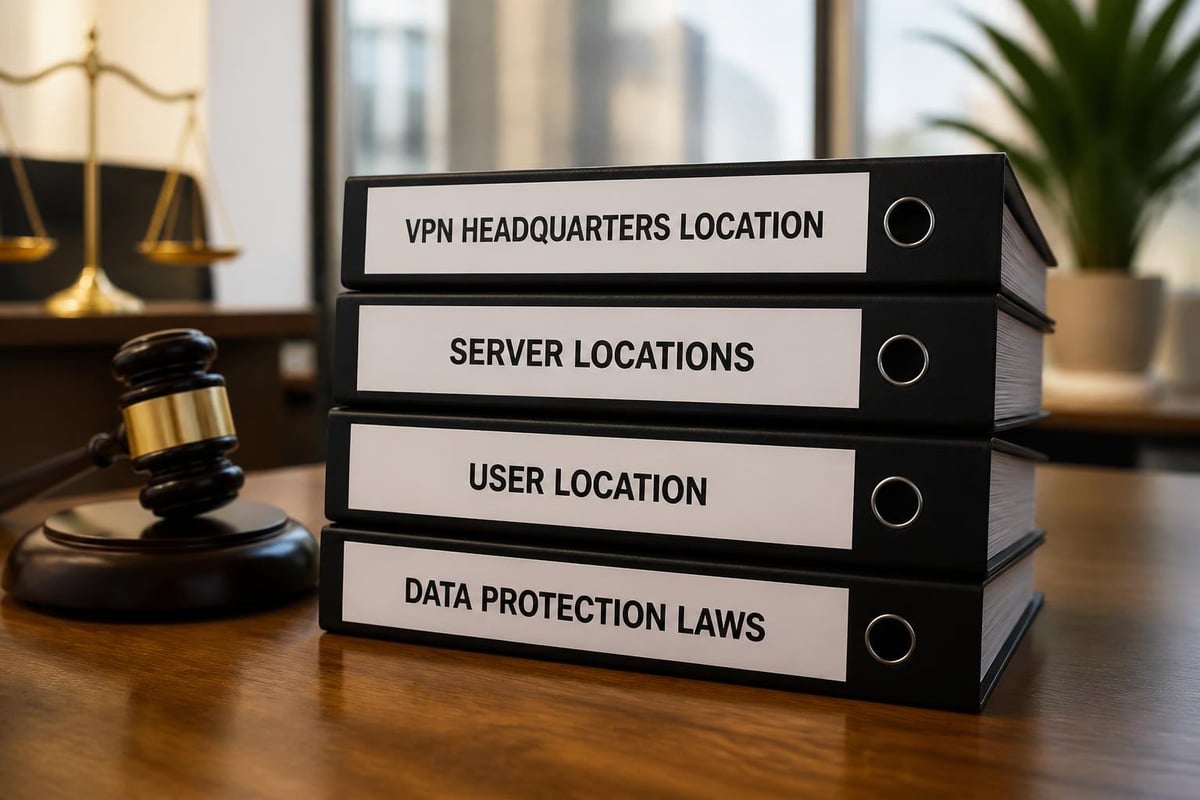
Where a VPN provider operates significantly impacts how authorities can compel data disclosure. The "Five Eyes" intelligence alliance (United States, United Kingdom, Canada, Australia, New Zealand) shares surveillance data, extending to "Nine Eyes" and "Fourteen Eyes" partnerships.
Favorable jurisdictions for privacy include:
- Switzerland (strong privacy laws, no EU data retention mandates)
- Panama (no data retention requirements)
- Romania (EU member but privacy-friendly courts)
- British Virgin Islands (no mandatory data retention)
However, jurisdiction alone doesn't guarantee privacy. A provider with servers in intrusive jurisdictions faces potential data seizure regardless of headquarters location. Understanding our commitment to operating with no servers in Israel reflects how geographic decisions impact overall security architecture.
Real-World Legal Tests
The strongest evidence of a no-logs policy comes from legal challenges where providers demonstrated inability to produce user data. Several major VPN services have faced government data requests and proved their logging claims through:
- Court testimony explaining technical architecture preventing data retention
- Server seizures that yielded no useful user information
- Public transparency reports detailing requests received and responses provided
- Technical documentation showing RAM-only server implementations
When selecting an ExpressVPN alternative, research whether the provider has faced legal scrutiny and how they responded. Providers that haven't been tested may simply not have attracted law enforcement attention yet.
Specialized Use Cases and Requirements
Different users need different VPN characteristics based on specific requirements. Matching your use case to provider strengths ensures optimal results.
Streaming and Geographic Restrictions
Users seeking reliable access to geo-restricted content require providers that actively maintain access to streaming platforms. This demands:
- Frequent IP address rotation to avoid blocking
- Dedicated streaming servers optimized for bandwidth
- Smart DNS services as VPN alternatives
- Regular platform testing and updates
Many budget ExpressVPN alternative services struggle with consistent streaming access because platforms actively block known VPN IP ranges. Higher-tier providers invest continuously in maintaining unblocked access.
Business and Enterprise Needs
Corporate users evaluating VPN solutions prioritize different features than individual consumers. Requirements typically include:
- Dedicated IP addresses that don't trigger fraud detection systems
- Team management with centralized billing and user administration
- SSO integration for simplified authentication
- Compliance certifications like SOC 2 or ISO 27001
Organizations should examine whether an ExpressVPN alternative provides business-grade private internet security features or focuses primarily on consumer use cases.
Activism and High-Risk Scenarios
Users facing significant personal risk from surveillance require maximum protection. This necessitates:
- Cash or cryptocurrency payment options preventing identity linkage
- Bridge servers and obfuscation defeating deep packet inspection
- Multi-hop configurations routing through multiple jurisdictions
- Anonymous account creation without email requirements
The practical guide to VPN selection explains how threat modeling determines which features genuinely enhance your security versus marketing features that sound impressive but provide minimal practical benefit.
Performance Measurement and Verification
Marketing claims about "fastest VPN" or "unlimited bandwidth" require independent verification. Measurement Lab's publications provide methodologies for objective VPN performance testing that reveal actual speeds under various conditions.
Testing Methodology
Proper VPN performance evaluation should measure:
- Download/upload speeds from multiple server locations at different times
- Latency impact on real-time applications like video calls or gaming
- Packet loss percentages during sustained connections
- Connection stability over 24-hour periods
- Server load handling during peak usage hours
Testing from your actual location with your real internet connection produces more relevant results than synthetic benchmarks. An ExpressVPN alternative that performs excellently in European testing might deliver poor results in Asia-Pacific regions.
| Metric | Acceptable Performance | Excellent Performance |
|---|---|---|
| Speed Retention | >70% of base speed | >85% of base speed |
| Latency Increase | <50ms addition | <30ms addition |
| Connection Success | >95% rate | >98% rate |
| Packet Loss | <1% | <0.3% |
Real-World Usage Patterns
Benchmark tests measure maximum theoretical performance, but real-world usage involves varied activities with different requirements. Video streaming needs sustained bandwidth, while web browsing tolerates brief slowdowns. Gaming demands low latency more than maximum throughput.
Consider your primary use cases when evaluating any ExpressVPN alternative. A service optimized for torrenting may not excel at low-latency gaming, and vice versa.
Platform Support and User Experience
VPN software quality significantly impacts daily usability. Well-designed applications should balance security features with intuitive interfaces that don't require technical expertise.
Cross-Platform Consistency
Users typically access VPNs across multiple devices. Quality providers maintain feature parity between:
- Desktop applications (Windows, macOS, Linux)
- Mobile apps (iOS, Android)
- Router firmware for network-wide protection
- Browser extensions for lightweight protection
- Smart TV and streaming devices
An ExpressVPN alternative should provide native applications rather than requiring manual configuration. Setup difficulty correlates strongly with user errors that compromise security.
Interface Design Principles
Effective VPN applications implement:
- One-click connection to optimal servers
- Clear status indicators showing protection state
- Minimal steps to access advanced features
- Helpful error messages with actionable solutions
- Settings that persist across updates
Poor user experience leads users to disable VPN protection or make configuration errors that create security vulnerabilities. The comparison between VPN and other privacy tools illustrates how proper implementation affects actual protection levels.
Customer Support and Documentation
Technical issues inevitably arise with VPN services. Support quality differentiates providers when troubleshooting connectivity problems, billing questions, or configuration challenges.
Support Channel Options
Premium VPN services typically offer:
- 24/7 live chat with knowledgeable representatives
- Email ticketing for complex technical issues
- Comprehensive knowledge bases with setup guides
- Community forums for peer assistance
- Video tutorials demonstrating common tasks
Budget ExpressVPN alternative providers may limit support to email-only with 24-48 hour response times. Assess whether this meets your comfort level with technical troubleshooting.
Documentation Quality
Well-maintained documentation should cover:
- Platform-specific installation instructions with screenshots
- Troubleshooting guides for common connection issues
- Protocol selection recommendations for different scenarios
- Privacy and security explanations in accessible language
- Regular updates reflecting software changes
ZioFree provides detailed FAQ resources addressing common questions and setup scenarios, ensuring users can quickly resolve issues without waiting for support responses.
Making Your Decision
Selecting the right ExpressVPN alternative requires balancing multiple factors based on your priorities. Create a weighted scoring system that reflects your specific needs:
Priority ranking example:
- Privacy and no-logs verification: 35%
- Connection speed and reliability: 25%
- Price and value: 20%
- Platform support: 10%
- Customer support quality: 10%
This framework helps quantify subjective comparisons between providers. A privacy-focused user weights audit history and jurisdiction heavily, while a streaming enthusiast prioritizes server network and speeds.
Trial Periods and Money-Back Guarantees
Most reputable VPN providers offer 30-day money-back guarantees, allowing risk-free testing. Use trial periods to verify:
- Actual speeds from servers you'll use regularly
- Connection reliability during your typical usage hours
- Application stability on your devices
- Customer support responsiveness
- Compatibility with your specific use cases
Testing multiple ExpressVPN alternative services simultaneously provides direct comparison data. Document your experiences systematically rather than relying on impressions.
Our transparent pricing structure reflects our commitment to straightforward value without hidden fees or automatic renewals that complicate cancellation.
Choosing an ExpressVPN alternative in 2026 means evaluating privacy policies, performance metrics, and security features that align with your specific requirements. Whether you prioritize maximum privacy, optimal performance, or exceptional value, multiple providers now deliver professional-grade VPN services without premium pricing. ZioFree combines robust encryption, a global server network, and verified no-logs policies with protection specifically designed against sophisticated threats, ensuring your digital privacy remains secure without compromise.