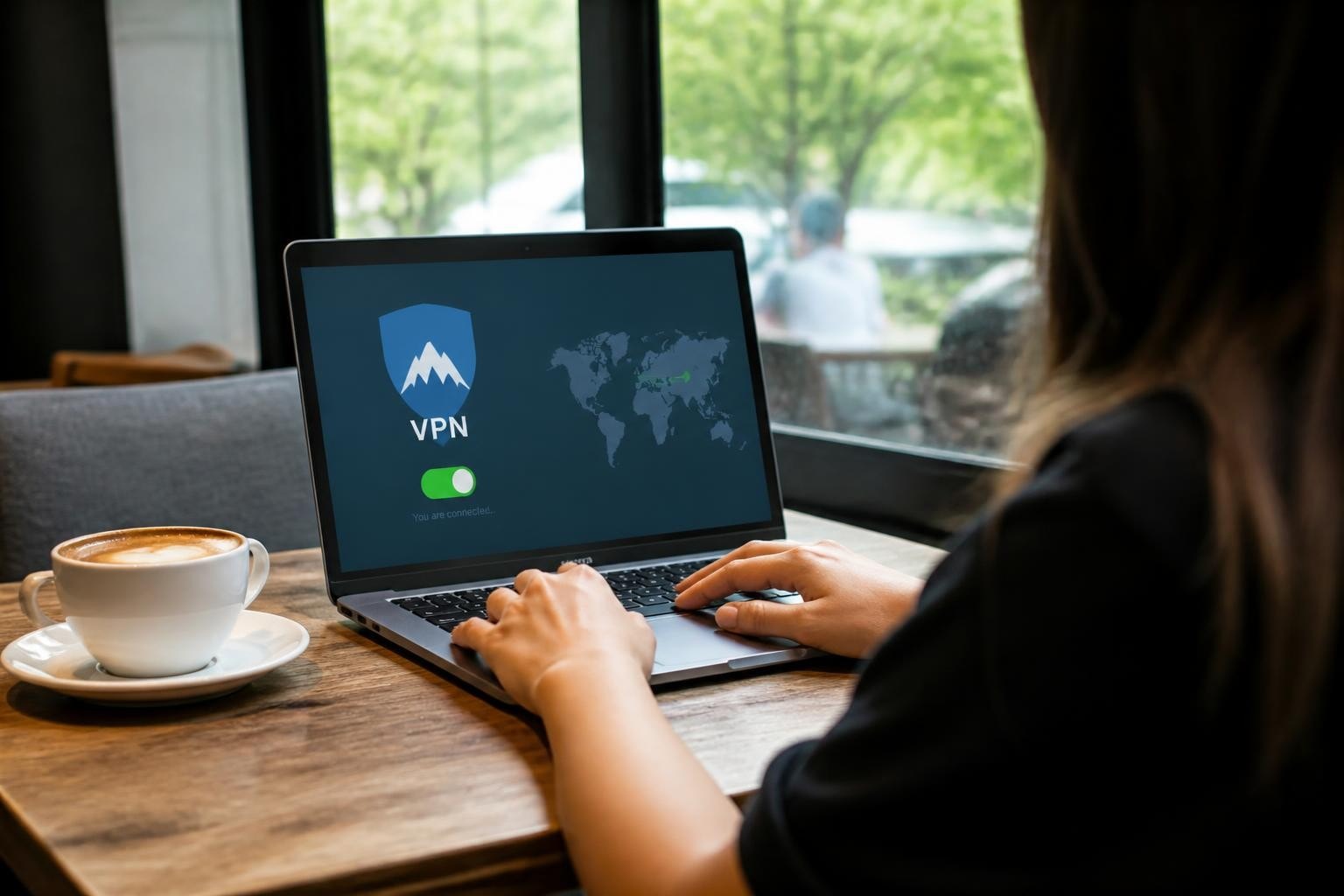




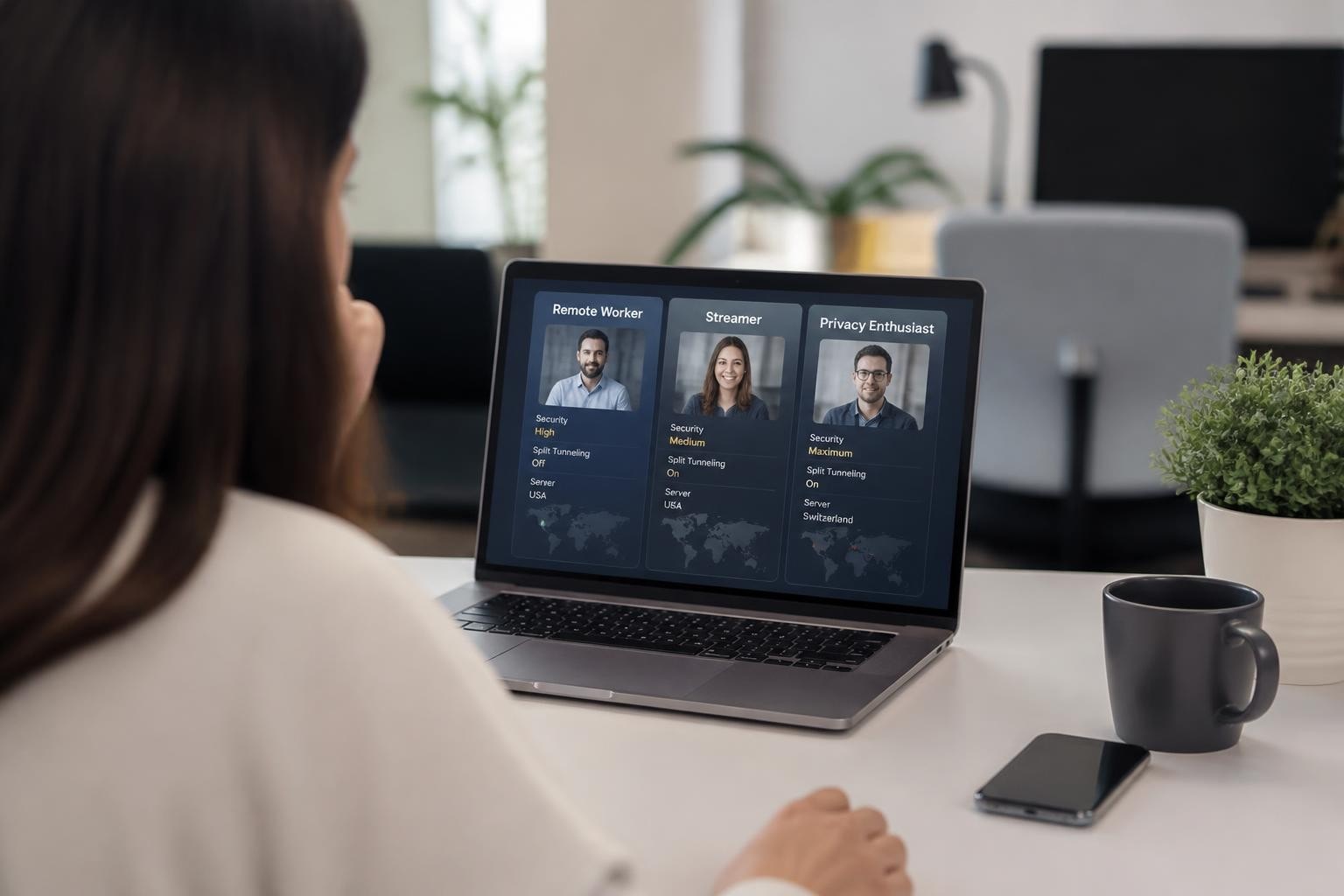
The evolution of virtual private network technology has moved beyond one-size-fits-all solutions. A personalized VPN adapts to individual user requirements, offering customized security protocols, server preferences, and privacy controls that match specific threat models and usage patterns. This approach recognizes that a remote worker, privacy advocate, and casual internet user face different risks and require distinct protection strategies. As organizations and individuals demand more granular control over their digital security, understanding how to configure and deploy a personalized VPN becomes essential for maintaining both privacy and performance in 2026.
Understanding Personalized VPN Architecture
A personalized VPN differs fundamentally from standard VPN services by allowing users to configure security parameters, connection preferences, and privacy settings based on their unique requirements. Rather than applying uniform encryption and routing policies across all users, this approach enables granular customization at the individual or device level.
The architecture supporting personalized VPN functionality typically includes intelligent routing engines, flexible policy frameworks, and user-defined rule sets. These components work together to ensure that traffic is handled according to specific preferences, whether that means routing certain applications through particular server locations or applying different encryption standards based on data sensitivity.
Core Components of Personalization
Modern personalized VPN systems incorporate several critical elements that enable customization:
- Adaptive protocol selection that chooses optimal encryption methods based on network conditions and security requirements
- Granular split tunneling allowing users to define which applications and services use the VPN tunnel
- Server selection rules enabling automatic connection to preferred locations based on time, application, or destination
- Bandwidth management prioritizing certain types of traffic according to user-defined importance
- Custom DNS resolution supporting personalized filtering and privacy preferences
These features collectively create a secure VPN environment that adapts to individual needs rather than forcing users into rigid configurations.
Security Customization Strategies
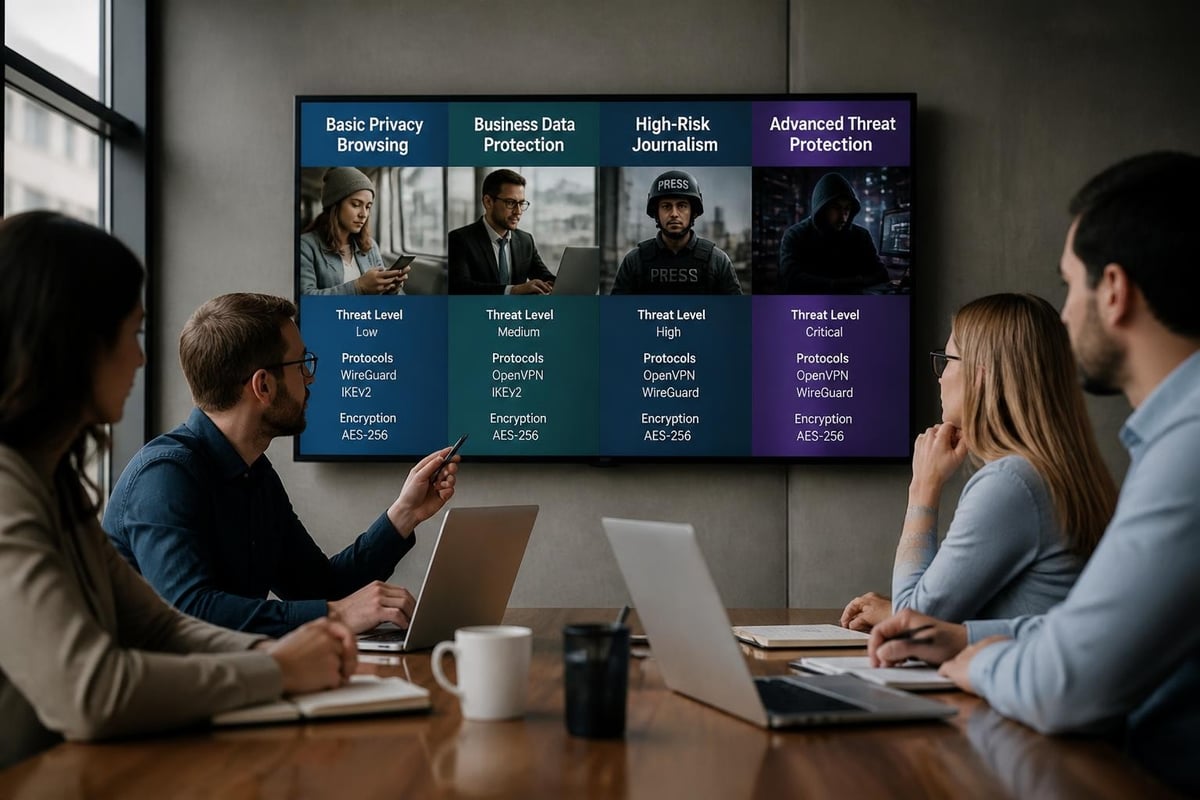
Security personalization extends beyond simply choosing a server location. Advanced users can configure encryption strength, authentication methods, and protocol choices based on their specific threat landscape. For instance, journalists working in high-risk environments may prioritize maximum encryption strength and multi-hop connections, while business users might balance security with performance requirements.
The guide to IPsec VPNs from NIST provides authoritative guidance on implementing robust security controls that can be tailored to specific organizational needs. This resource helps security professionals understand how to configure VPN parameters appropriately for different risk scenarios.
Threat-Based Configuration
Personalizing VPN security begins with accurate threat assessment. Different users face distinct risks that should inform their configuration choices:
| Threat Level | Encryption Recommendation | Protocol Choice | Additional Controls |
|---|---|---|---|
| Basic Privacy | AES-128 | WireGuard | Standard DNS protection |
| Business Security | AES-256 | OpenVPN/IKEv2 | Leak protection, kill switch |
| High-Risk Environment | AES-256 with PFS | Multi-hop OpenVPN | Custom DNS, obfuscation |
| Maximum Security | ChaCha20-Poly1305 | Tor over VPN | No logs, RAM-only servers |
Understanding your position on this spectrum enables appropriate personalization without over-engineering solutions or leaving critical gaps in protection.
Privacy Controls and Data Minimization
Privacy personalization focuses on minimizing data collection and maximizing user control over personal information. A personalized VPN should allow users to define exactly what data they're comfortable sharing and what must remain private. This becomes particularly important given research showing that VPN metadata can be used for digital phenotyping, potentially compromising privacy even with encrypted connections.
The EFF's VPN guidance emphasizes evaluating providers based on transparency and privacy policies. When personalizing VPN settings, users should understand what logs their provider keeps and configure settings to minimize identifiable data transmission.
Implementing Privacy-First Personalization
Effective privacy customization requires several key practices:
- Disable unnecessary logging at both client and server levels
- Configure custom DNS providers that align with your privacy philosophy
- Implement IPv6 leak protection to prevent protocol-level identity exposure
- Use payment methods that maintain financial privacy
- Rotate server connections regularly to prevent pattern analysis
These steps ensure that personalization enhances rather than compromises privacy. Many users assume VPNs automatically provide complete anonymity, but research on VPN user misconceptions reveals significant gaps between expectations and reality.
Application-Specific VPN Routing
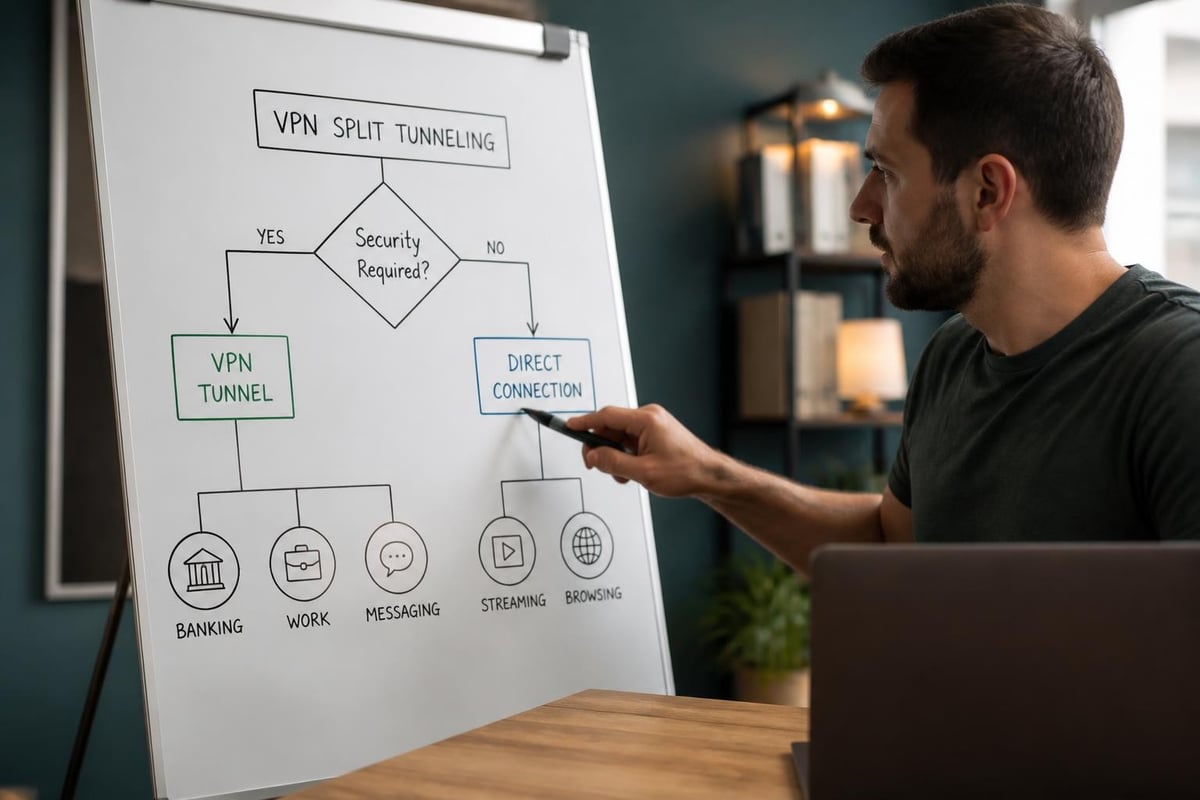
One of the most powerful personalized VPN features is application-aware routing, commonly known as split tunneling. This capability allows users to define which applications should use the VPN tunnel and which should connect directly to the internet. Business users might route only sensitive corporate applications through the VPN while allowing streaming services direct connections for better performance.
Advanced implementations enable per-application server selection. For example, you might route banking applications through domestic servers to avoid fraud detection issues while directing general browsing through privacy-focused international locations. This level of customization requires careful planning but delivers significant benefits in both security and user experience.
Configuring Smart Routing Rules
Effective application routing follows these principles:
- Always route sensitive applications through the VPN, including banking, healthcare portals, and work-related tools
- Exclude local network traffic to maintain access to printers, file shares, and IoT devices
- Optimize streaming services by routing them outside the VPN or through specific server locations
- Protect messaging applications with VPN routing while considering performance impacts
- Test configurations thoroughly to ensure no unintended data leaks
For those interested in advanced routing configurations, exploring split tunneling with WireGuard provides practical implementation guidance.
Performance Optimization Through Personalization
A personalized VPN should deliver optimal performance by adapting to network conditions, geographic requirements, and usage patterns. Generic VPN configurations often sacrifice performance for broad compatibility, but customization allows users to fine-tune settings for their specific environment.
Protocol selection significantly impacts performance. WireGuard typically offers superior speed compared to OpenVPN, but certain networks may block it. A personalized approach enables automatic protocol switching based on detected network conditions. Similarly, server selection can be automated based on latency testing, load balancing, and geographic proximity.
Performance Tuning Strategies
| Configuration Area | Optimization Technique | Expected Benefit |
|---|---|---|
| Protocol Selection | Adaptive WireGuard/OpenVPN switching | 30-50% speed improvement |
| Server Selection | Automated latency-based routing | Reduced ping by 20-40ms |
| MTU Configuration | Network-specific packet sizing | Decreased packet fragmentation |
| Cipher Selection | Hardware-accelerated AES-NI | CPU usage reduction up to 40% |
These optimizations become especially important for high-speed VPN access where performance directly impacts user experience. Professional users requiring consistent performance should implement monitoring systems that track connection quality and trigger automatic configuration adjustments.
Multi-Device Personalization
Modern users access networks from multiple devices, each with distinct security requirements and usage patterns. A laptop used for business may need stronger security than a smart TV used exclusively for streaming. Personalized VPN solutions enable device-specific policies that recognize these differences while maintaining centralized management.
Device fingerprinting presents both opportunities and risks in personalization. While it enables convenient automatic configuration based on recognized devices, it also creates privacy concerns. Balancing these considerations requires thoughtful implementation of device identification methods that don't compromise anonymity goals.
Device-Specific Configuration Examples
Different device categories benefit from tailored VPN configurations:
- Mobile phones: Automatic VPN activation on untrusted networks, optimized battery usage, app-specific routing
- Work laptops: Mandatory VPN for all traffic, corporate server preferences, enhanced leak protection
- Gaming consoles: Specific server locations for optimal ping, UDP optimization, split tunneling for updates
- Smart home devices: Local network access with selective outbound protection
- Tablets: Flexible configurations adapting to location (home vs. public)
Research into VPN-backed Android hotspot sharing demonstrates how personalization can extend to shared network scenarios, enabling different users on the same hotspot to have individualized VPN policies.
Shared Environment VPN Customization
Households and small businesses often share VPN connections across multiple users with different security needs and privacy expectations. Personalized VPN solutions can accommodate this complexity through user-aware routing and per-user policy enforcement. This approach ensures that one family member's gaming traffic doesn't compromise another's work-related security requirements.
Implementing multi-user personalization requires clear policy definition and strong authentication mechanisms. Each user profile should specify allowed destinations, required encryption levels, and permitted protocol choices. When configured properly, this approach delivers individualized protection without requiring separate VPN subscriptions.

Automation and Intelligent Adaptation
The most sophisticated personalized VPN systems incorporate automation that adapts to changing conditions without manual intervention. Intelligent systems can detect network censorship attempts and automatically switch protocols or servers to maintain connectivity. They can identify malicious networks and increase security postures accordingly.
Machine learning algorithms can optimize server selection based on historical performance data, time of day, and application requirements. This automation ensures users benefit from personalization without becoming overwhelmed by configuration complexity. However, transparency in automated decision-making remains essential to maintaining user trust and control.
Building Smart VPN Automation
Effective automation strategies include:
- Geolocation-based rules that adjust settings when traveling internationally
- Network quality monitoring that switches servers when performance degrades
- Threat intelligence integration activating enhanced security when risks are detected
- Time-based policies applying different rules for business hours versus personal time
- Bandwidth-aware routing adapting to data cap constraints on metered connections
For businesses implementing VPN access for remote work, automation reduces support burden while ensuring consistent security enforcement across distributed teams.
Ethical Considerations in VPN Personalization
Personalization inherently involves collecting information about user behavior, preferences, and usage patterns. This creates tension between the privacy-protecting purpose of VPNs and the data requirements for effective personalization. Ethical VPN providers must balance these concerns through transparent data handling practices and user control mechanisms.
Research on personalized privacy assistants provides frameworks for implementing personalization while respecting privacy boundaries. Key principles include data minimization, local processing where possible, and clear user consent for any information collection required to enable personalization features.
Privacy-Preserving Personalization Techniques
Several approaches enable personalization without compromising privacy:
- Client-side preference storage keeping configuration data locally rather than on provider servers
- Anonymous usage analytics aggregating performance data without individual identification
- Zero-knowledge architectures ensuring providers cannot access user-specific settings or patterns
- Encrypted preference sync allowing multi-device personalization without exposing configuration details
- Opt-in telemetry giving users explicit control over what data they share for service improvement
Understanding how VPNs relate to online anonymity helps users make informed decisions about personalization trade-offs.
Technical Implementation Frameworks
Implementing a personalized VPN requires robust technical infrastructure supporting flexible policy enforcement and dynamic configuration. The Enhanced VPN Framework described in IETF RFC 9732 outlines modern approaches to VPN architecture that enable advanced personalization while maintaining security and performance.
Technical implementation typically involves several layers:
- Client-side policy engine that interprets user preferences and applies routing rules
- Server-side enforcement ensuring policies cannot be circumvented through client manipulation
- Secure configuration transport protecting preference data during synchronization
- Audit logging tracking policy changes without compromising operational privacy
- Rollback mechanisms allowing quick recovery from misconfiguration
Professional implementation should also consider compatibility with existing security infrastructure and integration with identity management systems.
Migration Strategies for Existing Users
Transitioning from a generic VPN configuration to a personalized setup requires careful planning to avoid service disruption or security gaps. Users should begin by documenting current usage patterns, identifying applications with specific routing requirements, and mapping security priorities across different scenarios.
Gradual migration proves more successful than complete reconfiguration. Start by implementing personalization for a single use case or device, validate the configuration thoroughly, then expand to additional scenarios. This approach allows learning and adjustment without risking complete loss of VPN protection during the transition period.
Step-by-Step Migration Process
- Audit current VPN usage identifying all applications, devices, and use cases
- Define personalization goals specifying desired outcomes for each scenario
- Create test configurations in isolated environments before production deployment
- Implement monitoring to track performance and security metrics during transition
- Deploy incrementally starting with low-risk scenarios and expanding gradually
- Document configurations ensuring reproducibility and troubleshooting capability
- Train users on new features and personalization options available to them
Users concerned about maintaining privacy during configuration changes should ensure continuous VPN coverage throughout the migration process.
Monitoring and Maintenance Requirements
Personalized VPN configurations require ongoing monitoring to ensure policies remain effective as threats evolve and usage patterns change. Regular audits should verify that routing rules continue to align with security requirements, server selections deliver optimal performance, and privacy settings maintain intended protections.
Maintenance activities include updating encryption protocols as vulnerabilities are discovered, adjusting server preferences as network topology changes, and refining application routing rules based on performance data. Automated monitoring systems can alert users to configuration drift or security policy violations requiring attention.
Essential Monitoring Metrics
| Metric Category | Key Indicators | Recommended Action Threshold |
|---|---|---|
| Security | Encryption failures, protocol downgrades | Any occurrence requires investigation |
| Performance | Latency, throughput, packet loss | 20% degradation from baseline |
| Privacy | DNS leaks, IP exposure, WebRTC leaks | Zero tolerance for any leak |
| Reliability | Connection drops, reconnection frequency | More than 2 drops per day |
Establishing baseline performance metrics when initially configuring a personalized VPN enables meaningful comparison during ongoing monitoring. This data-driven approach ensures that customization continues delivering intended benefits over time.
Future Developments in VPN Personalization
The personalized VPN landscape continues evolving with emerging technologies and changing threat environments. Artificial intelligence will likely play an increasing role in automated threat response and predictive configuration adjustments. Quantum-resistant encryption algorithms will become essential as quantum computing threatens current cryptographic standards.
Decentralized VPN architectures may enable new personalization models where users contribute bandwidth to shared networks while maintaining individualized security policies. Privacy-preserving computation techniques could allow providers to offer personalized recommendations without accessing user data directly. These developments promise enhanced security and usability while raising new questions about trust, transparency, and user control.
Integration with broader privacy tools will likely increase, with personalized VPNs working alongside encrypted messaging, secure browsers, and privacy-focused operating systems. This ecosystem approach recognizes that comprehensive digital security requires coordinated protection across multiple layers rather than relying on any single technology.
Personalized VPN solutions represent the evolution of digital security from generic protection to tailored defense strategies matching individual threat models and usage requirements. The flexibility to customize encryption protocols, routing rules, and privacy controls enables both enhanced security and improved performance when implemented thoughtfully. ZioFree provides the high-speed infrastructure, strong encryption, and global server network necessary for implementing sophisticated personalized VPN configurations while maintaining a strict no-logs policy that respects your privacy. Whether you need advanced split tunneling, threat-adaptive security, or device-specific policies, ZioFree delivers the performance and flexibility to support your customized protection strategy.