





Speed and security have long been viewed as opposing forces in the VPN industry. Users seeking privacy protection often accepted slower connection speeds as the inevitable price of encryption. However, modern fast VPN technology has fundamentally changed this equation. Advanced protocols, optimized server infrastructure, and intelligent routing now deliver both robust security and impressive performance, making the choice between speed and privacy a false dichotomy in 2026.
Understanding What Makes a VPN Fast
A fast VPN depends on multiple interconnected factors that work together to minimize latency and maximize throughput. The encryption protocol forms the foundation of performance, determining how quickly data packets can be processed and transmitted. Modern protocols like WireGuard have revolutionized the landscape by offering cryptographic operations that execute in a fraction of the time required by older standards.
Server infrastructure plays an equally critical role in determining connection speeds. High-capacity servers with multi-gigabit connections and modern hardware acceleration can handle encryption workloads without creating bottlenecks. The physical distance between users and servers affects latency, making a geographically diverse server network essential for maintaining fast VPN connections worldwide.
Key performance factors include:
- Protocol efficiency and cryptographic overhead
- Server hardware specifications and capacity
- Network routing and peering arrangements
- Bandwidth allocation per user
- CPU performance for encryption tasks
The Protocol Performance Revolution
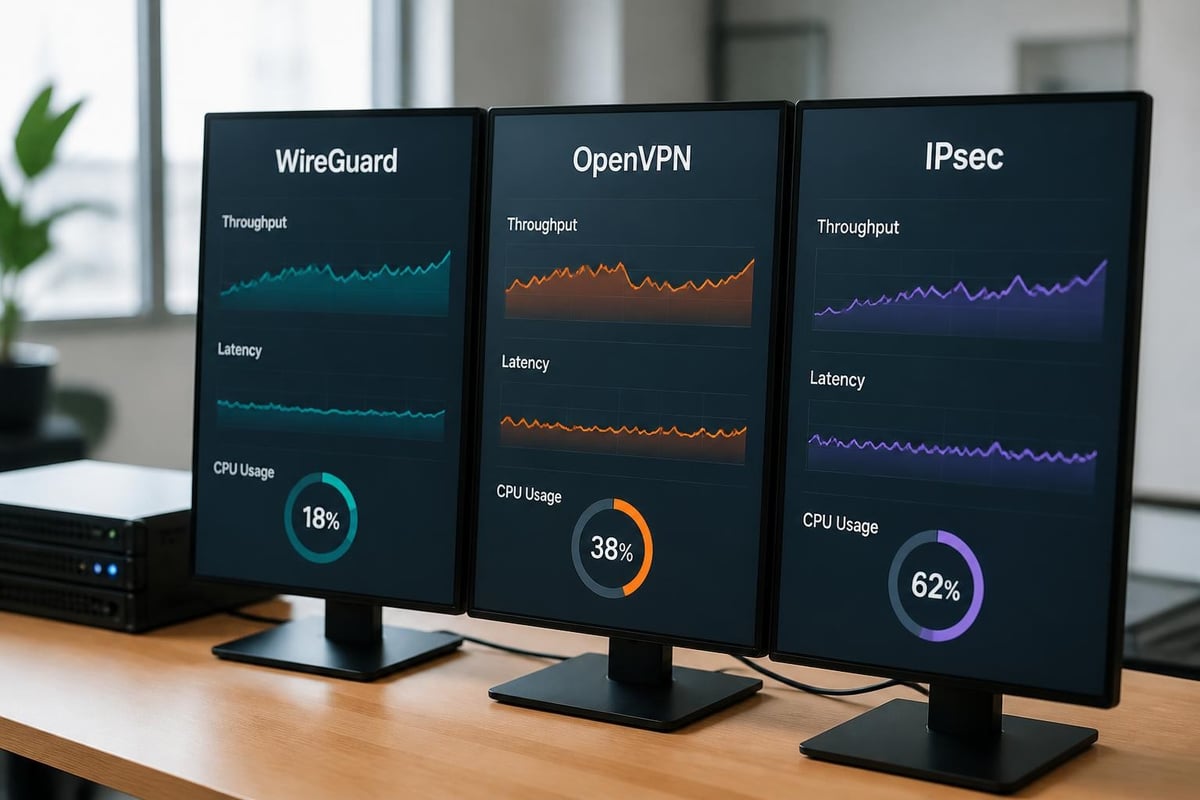
The technical design and performance analysis of WireGuard demonstrates how modern cryptographic protocols achieve remarkable speed improvements. WireGuard's streamlined codebase contains approximately 4,000 lines compared to hundreds of thousands in legacy protocols, reducing attack surface while dramatically improving processing efficiency. This lean architecture enables fast VPN performance even on mobile devices with limited processing power.
Traditional protocols like those based on IPsec security architecture were designed decades ago when computational constraints and security requirements differed significantly. While IPsec remains widely deployed in enterprise environments, its complexity creates performance overhead that newer protocols have eliminated through careful engineering.
| Protocol | Code Size | Typical Throughput | Latency | Mobile Efficiency |
|---|---|---|---|---|
| WireGuard | ~4,000 lines | Excellent | Very Low | Excellent |
| OpenVPN | ~100,000 lines | Good | Moderate | Good |
| IPsec/IKEv2 | ~400,000 lines | Good | Low | Very Good |
Server Infrastructure and Network Design
Building a truly fast VPN requires investment in premium server infrastructure across strategic global locations. Providers who prioritize speed deploy servers with dedicated hardware encryption acceleration, ensuring that cryptographic operations never become the performance bottleneck. Modern processors with AES-NI instruction sets can handle encryption at line speed, maintaining gigabit throughput without degradation.
Network peering arrangements determine how efficiently traffic reaches its destination. Direct peering with major internet service providers and content delivery networks reduces the number of hops data must traverse. This optimization minimizes latency and improves overall connection quality, particularly for latency-sensitive applications like video conferencing and online gaming.
The Impact of Server Load
Even the most powerful server infrastructure degrades when oversubscribed. A fast VPN service maintains performance through careful capacity planning and load balancing. ZioFree implements real-time monitoring to ensure servers never exceed optimal utilization thresholds, automatically routing new connections to less congested servers within the same region.
The ratio of users to available bandwidth directly impacts individual connection speeds. Budget providers often oversell capacity, creating congestion during peak hours. Understanding how to measure VPN performance using platforms like Measurement Lab helps users identify genuine fast VPN services versus those making unsubstantiated claims.
Server optimization strategies:
- Hardware-accelerated encryption processing
- Multi-gigabit uplink connections per server
- Strategic geographic distribution
- Real-time load balancing and traffic distribution
- Regular infrastructure upgrades and capacity expansion
Measuring and Testing VPN Speed
Accurately assessing VPN performance requires methodical testing across multiple dimensions. Simple speed tests provide baseline throughput measurements, but comprehensive evaluation examines latency, packet loss, jitter, and consistency over time. The AMTSO VPN Testing Guidance establishes formal methodology for reproducible performance assessment.
Testing should occur at different times throughout the day to identify peak-hour congestion. A fast VPN maintains consistent performance regardless of load, while inferior services show dramatic speed variations. Geographic testing across multiple server locations reveals whether the provider maintains quality standards globally or concentrates resources in specific regions.

Understanding Speed Test Results
Raw bandwidth numbers tell only part of the performance story. Latency measurements indicate responsiveness for interactive applications, while jitter reveals connection stability. A connection with 500 Mbps throughput but 200ms latency performs poorly for video calls despite impressive bandwidth figures.
Connection stability over extended periods matters more than peak speeds. The interactions between security protocols and transport services affect how VPN tunnels handle network congestion and packet loss. Quality fast VPN implementations include optimizations that maintain performance even under challenging network conditions.
| Metric | Excellent | Good | Acceptable | Poor |
|---|---|---|---|---|
| Download Speed | >400 Mbps | 200-400 Mbps | 50-200 Mbps | <50 Mbps |
| Upload Speed | >200 Mbps | 100-200 Mbps | 25-100 Mbps | <25 Mbps |
| Latency | <20ms | 20-50ms | 50-100ms | >100ms |
| Speed Retention | >90% | 75-90% | 50-75% | <50% |
Security Without Sacrificing Speed
The persistent myth that security requires speed sacrifice stems from poorly optimized implementations rather than fundamental technical limitations. Modern cryptographic algorithms execute with minimal overhead on contemporary processors. The challenge lies in integrating encryption seamlessly into high-performance network stacks without introducing unnecessary latency.
Strong encryption protocols like AES-256 provide military-grade protection while maintaining fast VPN performance. Hardware acceleration built into modern CPUs specifically targets these algorithms, enabling encryption and decryption at network line speeds. The computational cost of proper encryption becomes negligible compared to network transit time.
Privacy-Preserving Performance Optimization
Maintaining user privacy doesn't require sacrificing connection analytics that enable performance optimization. A strict no-logs policy means storing no personally identifiable information or browsing activity while still collecting aggregated performance metrics. This data informs infrastructure decisions without compromising user anonymity.
Understanding what makes the safest VPN reveals that security and speed are complementary rather than competing priorities. Advanced security features like perfect forward secrecy and leak protection integrate into fast VPN architectures without measurable performance impact when properly implemented.
Security features with minimal performance impact:
- Modern authenticated encryption (ChaCha20-Poly1305, AES-GCM)
- Hardware-accelerated cryptographic operations
- Efficient key exchange protocols
- Split tunneling for selective encryption
- DNS leak protection with minimal overhead
Optimizing Your VPN Connection
Even with premium infrastructure, user-side configuration significantly affects connection performance. Selecting the nearest server geographically minimizes latency, though sometimes more distant servers with better routing deliver superior performance. Testing multiple server locations within your region identifies the optimal balance.
Protocol selection offers another optimization opportunity. While WireGuard generally delivers the best speed, specific network conditions may favor alternative protocols. Some internet service providers perform deep packet inspection that affects certain protocols differently, making experimentation valuable for maximizing your private internet security.
Application-Specific Optimization
Different applications have varying performance requirements. Streaming video demands consistent bandwidth but tolerates moderate latency, while gaming requires minimal latency even with lower bandwidth. Split tunneling enables routing latency-sensitive traffic through the fast VPN while allowing less critical applications to use standard connections.
ZioFree's optimization features include automatic server selection based on current load and performance metrics. This intelligent routing ensures users always connect to the fastest available server without manual intervention. The system continuously monitors network performance metrics and adapts routing decisions in real-time.

The Real-World Performance Gap
Theoretical maximum speeds rarely translate to real-world performance due to numerous variables beyond VPN provider control. Internet service provider throttling, network congestion, Wi-Fi limitations, and device capabilities all constrain actual throughput. Understanding these factors helps set realistic expectations for fast VPN performance.
The speed retention percentage-how much of your baseline connection speed remains when connected to the VPN-provides a more meaningful metric than absolute numbers. Premium services typically retain 80-95% of baseline speed, while budget providers often deliver only 40-60% retention. This difference becomes substantial on slower connections where every megabit matters.
ISP Throttling and VPN Performance
Internet service providers increasingly employ traffic management that selectively throttles specific services or protocols. A fast VPN can actually improve speeds for throttled services by encrypting traffic and preventing protocol-based discrimination. Users frequently report faster streaming speeds through VPNs when their ISP throttles video services.
The relationship between VPN speed and security extends beyond pure performance metrics. Some security features like obfuscation add minimal overhead while enabling fast VPN connections in restrictive networks that block standard VPN protocols. These advanced features maintain performance while ensuring accessibility.
Enterprise vs. Consumer Performance Needs
Corporate VPN requirements differ substantially from consumer applications. Enterprise deployments prioritize reliability, scalability, and integration with existing security infrastructure over raw speed. However, the growing trend toward remote work has elevated performance requirements as employees access bandwidth-intensive corporate resources from home networks.
The NIST guidance on IPsec VPNs addresses security versus performance tradeoffs in enterprise contexts. Organizations must balance regulatory compliance requirements, security policies, and user experience when configuring VPN infrastructure. Finding this balance becomes increasingly critical as remote work expands.
Enterprise performance considerations:
- Concurrent connection capacity and scalability
- Integration with existing network infrastructure
- Compliance with regulatory performance requirements
- Support for legacy applications and protocols
- Advanced traffic management and quality of service
The Future of VPN Speed Technology
Emerging technologies promise further improvements in fast VPN performance. Quantum-resistant cryptographic algorithms currently under development maintain security against future quantum computers while matching or exceeding current protocol speeds. Network function virtualization enables more flexible and efficient VPN infrastructure deployment.
Understanding alternatives to popular VPN services reveals how competition drives continuous performance improvements across the industry. Providers must constantly upgrade infrastructure and adopt new technologies to remain competitive as user expectations evolve. The research conducted by organizations like CAIDA on Internet measurement informs these infrastructure decisions.
Regional Performance Variations
VPN performance varies significantly across geographic regions due to infrastructure disparities and internet regulatory environments. Countries with advanced internet infrastructure and competitive markets generally deliver better fast VPN performance than regions with limited connectivity options. Server density in each region directly impacts both speed and reliability.
Providers operating servers with no connection to specific jurisdictions must carefully plan network architecture to maintain performance while respecting these constraints. Strategic server placement in neutral locations with excellent connectivity enables high-performance service without compromising on privacy principles or geographic requirements.
Addressing Global Connectivity Challenges
International VPN connections face unique performance challenges as traffic crosses multiple networks and national boundaries. Undersea cable capacity, international peering arrangements, and regulatory requirements all affect cross-border performance. Quality providers invest in diverse routing options to maintain fast VPN speeds regardless of destination.
For users seeking private internet access across multiple regions, understanding these geographic performance variations helps set appropriate expectations. Testing server performance in relevant geographic markets ensures the chosen provider delivers acceptable speeds for your specific use case and location.
Mobile VPN Performance Considerations
Mobile devices present unique challenges for maintaining fast VPN performance. Battery efficiency concerns limit cryptographic processing intensity, while cellular network characteristics differ substantially from wired broadband. Protocol selection becomes particularly important on mobile platforms where battery life often takes priority over maximum speed.
Modern mobile operating systems include VPN-specific optimizations that improve performance and battery efficiency. Always-on VPN features maintain security without requiring manual connection management, though this convenience can impact battery life on older devices. Choosing protocols optimized for mobile environments ensures the best balance of security, speed, and battery conservation.
Mobile optimization factors:
- Battery-efficient protocol selection
- Cellular network handoff management
- Background connection persistence
- Data usage optimization
- Performance on limited processing power
The evolution from what is a VPN to understanding fast VPN technology reflects broader industry maturation. Early VPN services prioritized basic functionality over performance, but modern user expectations demand both security and speed. This shift has driven substantial infrastructure investment and protocol innovation across the industry.
Achieving truly fast VPN performance requires the convergence of advanced protocols, premium infrastructure, and intelligent optimization-not compromise between speed and security. When evaluating providers, look beyond marketing claims to examine real-world performance metrics, infrastructure transparency, and commitment to ongoing optimization. ZioFree delivers high-speed VPN access through a global network of optimized servers, combining strong encryption with exceptional performance while maintaining a strict no-logs policy. Experience the difference that properly engineered VPN infrastructure makes in your daily internet usage.