



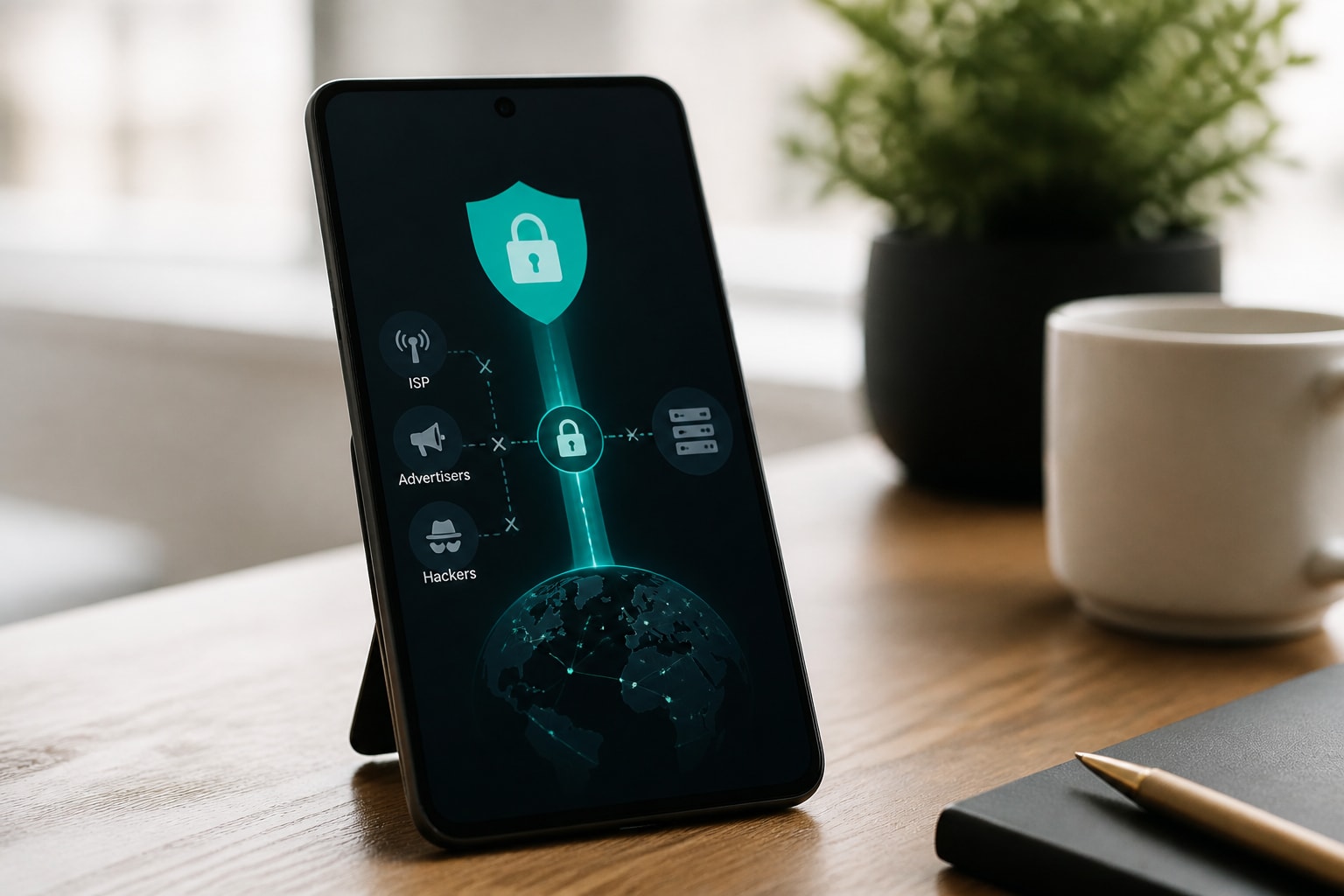
The best VPN program for Android is one that pairs strong encryption and a verifiable no-logs policy with an app that stays fast and light on battery. This list covers four options, ranked on privacy design, app features and value, so you can match a service to the way you actually use your phone.
The stakes are real. TechRadar reports that more than 75% of Android VPNs fail basic transparency tests, which means many apps in the Play Store reveal little about who runs them or what they record. A VPN only protects you if the provider itself is trustworthy, so the criteria below start with privacy and work outward to speed and price.
How to Judge a VPN Program for Android Before You Install It
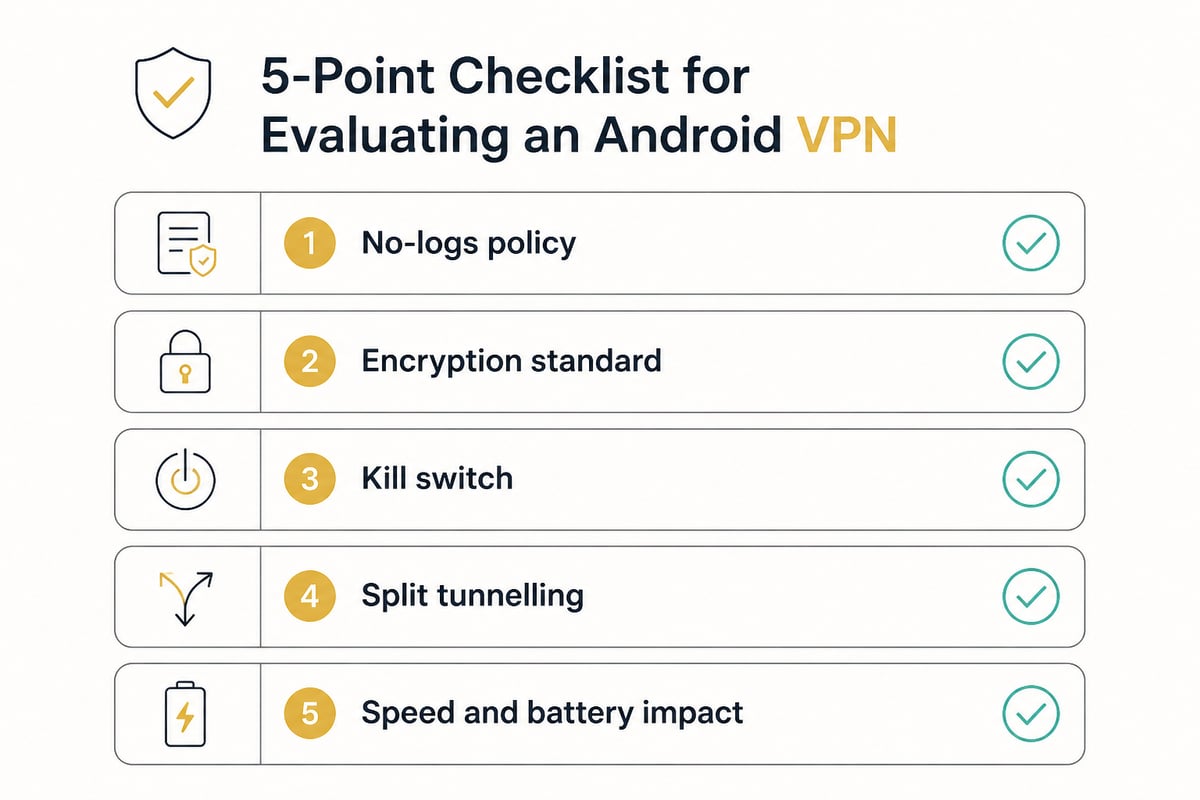
Judge an Android VPN on five measurable points: logging policy, encryption, leak protection, app controls and performance cost.
- Logging policy: The provider should state plainly that it stores no browsing activity, DNS queries, timestamps or IP addresses. RAM-only servers add a technical safeguard because data is wiped on reboot.
- Encryption: AES-256 is the standard to look for on all traffic.
- Kill switch: An automatic kill switch blocks traffic if the tunnel drops, which matters on a phone that constantly hops between Wi-Fi and mobile data.
- Split tunnelling: This lets you route only chosen apps through the VPN, useful for keeping banking or local apps on your normal connection.
- Performance cost: Every VPN slows a connection. A 2026 Gizmodo Android VPN test measured a noticeable speed loss across five major apps, and a small amount of battery use over 20 minutes.
Compatibility is a final check. TechRadar notes that the mobile apps it recommends work on Android 10.0 or later, so older handsets may fall outside what current apps support.
1. TunnelBear
TunnelBear is a simple, beginner-oriented Android VPN, reviewed as an Android option by PCMag.
- Key specs: Android app with a deliberately minimal interface. Detailed server counts, protocol lists and device limits are not listed in the research used for this article.
- Approximate price: Not listed here. Check the provider's site for current plans as of November 2026.
- Suits: Low-complexity use where the goal is to switch protection on with one tap and avoid configuration menus, on any budget that tolerates a standard consumer subscription. A typical situation is a first-time user who wants protection on a coffee shop network without reading about protocols. Because the research does not list protocols or device limits, confirm both on the provider's site before paying, especially if you plan to cover more than one device.
- Verdict: A gentle starting point for someone installing a VPN for the first time, with less depth for advanced tuning. Given that TechRadar reports many Android VPNs fail basic transparency tests, a beginner should still check TunnelBear's published privacy and logging statements rather than assume simplicity equals safety. Also expect the usual cost of any VPN: the Gizmodo test saw a noticeable speed loss across five apps, so a simple interface does not remove that trade-off. Confirm that your handset runs Android 10.0 or later before installing.
2. IVPN
IVPN is a privacy-focused Android VPN noted for a clean, minimalist client.
- Key specs: Seven simultaneous connections in the PCMag comparison. Other specs and pricing are not listed in the research used for this article.
- Approximate price: Not listed here. Confirm current plans on the provider's site as of November 2026.
- Suits: Households or users who protect a phone, tablet and laptop together, since seven connections cover several devices on one account, and anyone who prefers a stripped-back interface. For example, two adults could run a phone and a laptop each, with three connections left for a tablet and other devices. That headroom matters because many consumer plans cap connections at a lower number, forcing people to log devices in and out.
- Verdict: A good match for those who value a plain app and generous device allowance over extra features. PCMag reviewed it as an Android option, which gives a starting point for independent assessment. Before subscribing, check its no-logs wording and whether it offers a kill switch and split tunnelling, since those details are not covered in the research here. As with every Android VPN, plan for a noticeable speed drop, as seen in the Gizmodo test of other apps.
3. ZioFree VPN 12 Months
ZioFree VPN 12 Months is an annual subscription to the ZioFree VPN, built around privacy by design and unlimited bandwidth.
- Key specs: AES-256 encryption on all traffic, an automatic kill switch, split tunnelling, RAM-only servers that wipe data on reboot, and a no-logs policy covering browsing activity, traffic data, DNS queries, connection timestamps and IP addresses. Unlimited bandwidth and access to all servers on every plan.
- Approximate price: About $3.60 per month as of November 2026, available at ZioFree.
- Suits: Long-term daily use on a phone, where a lower monthly rate and unlimited data suit constant background protection on public Wi-Fi and mobile networks. The kill switch is especially relevant for commuters, since a phone moving between Wi-Fi and mobile data is exactly when a tunnel can drop. Split tunnelling lets you send a banking or local streaming app outside the VPN while everything else stays protected. Unlimited bandwidth means long video calls and downloads do not trigger a data cap.
- Verdict: The stronger value of the two ZioFree plans for anyone committing to a year, with a privacy feature set that covers the checklist above. It is a paid service, not a free one. Expect the same performance cost as any VPN: the Gizmodo test measured a noticeable speed loss and a small amount of battery use across other apps. Choosing a nearby server and using split tunnelling for apps that do not need protection helps reduce that load.
For more on how this fits the wider field, see this guide to Android VPN software.
4. ZioFree VPN Monthly
ZioFree VPN Monthly is the same ZioFree service on a rolling monthly plan, with no long commitment.
- Key specs: The same AES-256 encryption, automatic kill switch, split tunnelling, RAM-only servers, no-logs policy, unlimited bandwidth and full server access as the annual plan.
- Approximate price: About $5.83 per month as of November 2026, listed at ZioFree.
- Suits: A short-term need, such as a trip or a trial period on your own handset, where flexibility matters more than the lowest monthly rate. A traveler using hotel and airport Wi-Fi for two weeks, for instance, pays for only the month needed. It also suits anyone who wants to measure speed and battery impact on their own phone and network before committing to a year. Testing on both Wi-Fi and mobile data gives a clearer picture of everyday performance.
- Verdict: Identical protection to the annual plan at a higher monthly cost, sensible for testing the app before committing to a year. Because every feature carries over, nothing is lost by starting monthly, including the RAM-only servers and the no-logs policy. If the app suits you after the first month, the annual plan at about $3.60 per month lowers the ongoing cost. Confirm your phone runs a current Android version first, since current mobile VPN apps are generally built for newer releases.
Comparison Table
| VPN | Plan type | Notable specs | Approximate price (Nov 2026) |
|---|---|---|---|
| TunnelBear | Standard subscription | Simple Android app | Check provider |
| IVPN | Standard subscription | Seven simultaneous connections | Check provider |
| ZioFree VPN 12 Months | 12-month plan | AES-256, kill switch, split tunnelling, RAM-only servers, unlimited bandwidth | About $3.60/month |
| ZioFree VPN Monthly | Monthly plan | Same feature set, no long commitment | About $5.83/month |
Why Privacy Features Matter More Than Server Counts
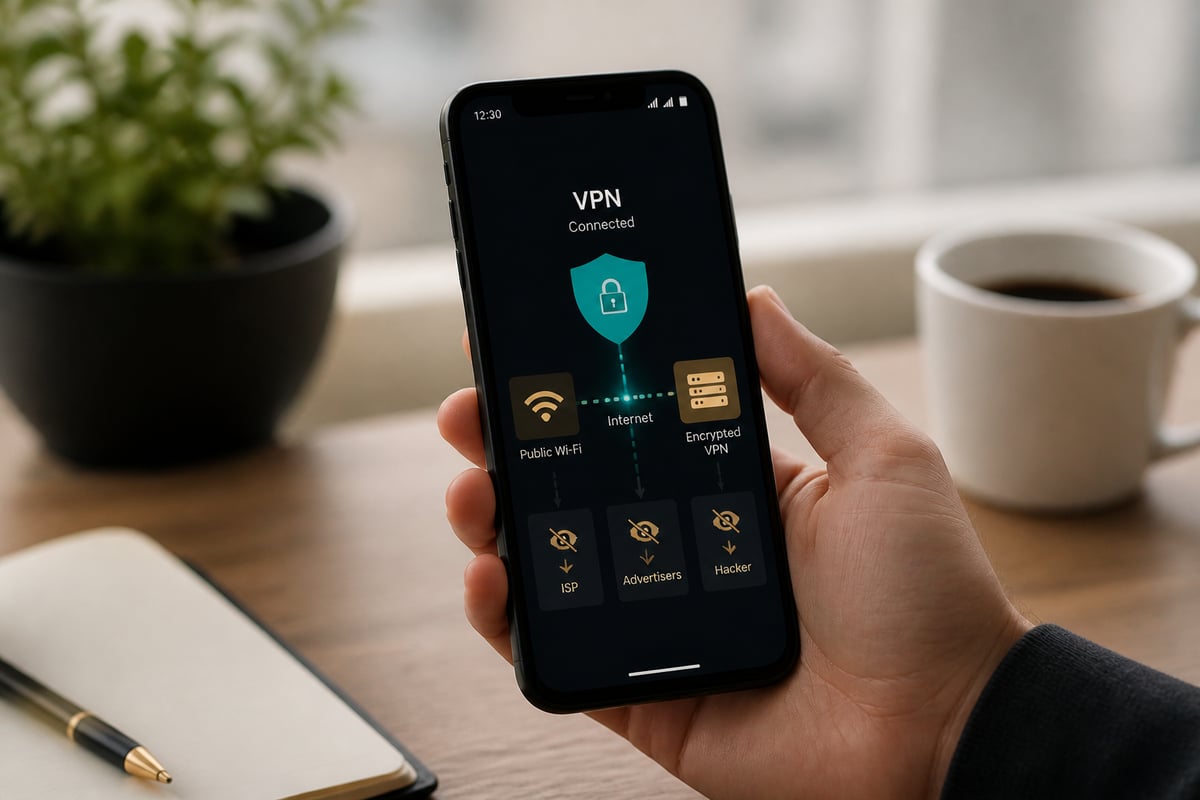
Privacy design matters more than raw server numbers because a large network does nothing for you if the provider logs your activity.
Server counts are easy to advertise and hard to compare. A no-logs claim, RAM-only infrastructure and a kill switch change what a provider can disclose or what an attacker can reach. If you browse on shared networks, a good habit is to also read about VPN use on public Wi-Fi so you understand which risks a VPN covers and which it does not.
What to Expect From Speed and Battery
Expect a noticeable but manageable speed drop and a small battery cost on any Android VPN.
The Gizmodo test cited above found a noticeable speed loss and a small battery cost across five apps. Your results will vary with the protocol, server distance and signal strength. Picking a nearby server and keeping split tunnelling on for apps that do not need protection reduces the load on both.
For a broader hands-on view of app testing and pricing, Tom's Guide maintains a comparison worth reading alongside this one.
Is a Free VPN Safe on Android?
A free VPN is rarely the safe choice for privacy, because a service with no subscription revenue still has to fund its servers somehow.
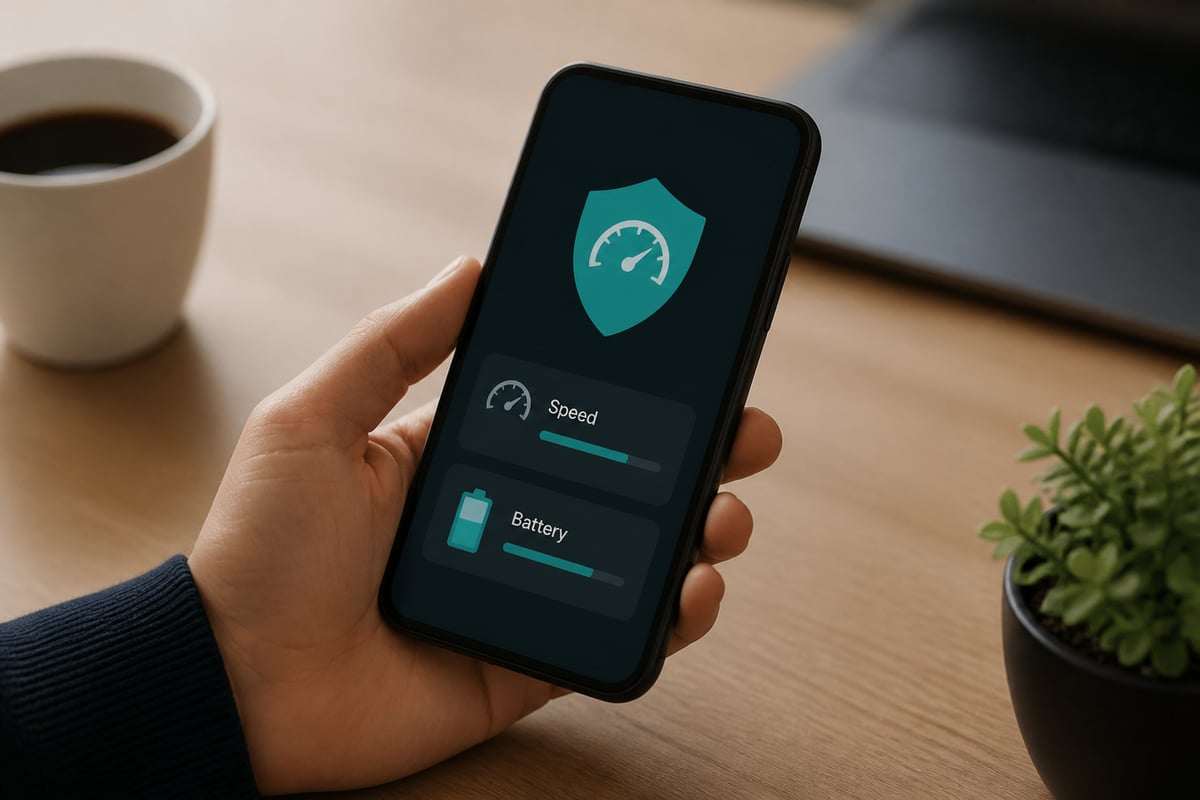
That money can come from advertising, data collection or heavy usage caps. If your goal is to stop ISPs, advertisers and hackers from tracking you, a paid service with a clear no-logs policy is the safer route. This guide to paid versus free VPNs lays out the trade-offs in more detail.
Best VPN Program for Android: Quick Setup Steps
Setting up the best VPN program for Android takes under five minutes on any recent handset.
- Confirm your device runs Android 10.0 or later.
- Subscribe to the plan on the provider's website.
- Install the app from the Google Play Store and sign in.
- Enable the kill switch and set split tunnelling for any apps that should bypass the VPN.
- Connect to a nearby server and confirm your IP address changes.
If you need a walkthrough for removing or resetting a connection later, this page on removing a VPN from Android covers it.
FAQ
Which VPN is safe for Android?
A safe Android VPN publishes a clear no-logs policy, uses AES-256 encryption and includes an automatic kill switch. RAM-only servers add another layer because data cannot persist after a reboot.
Does a VPN drain an Android battery?
A VPN uses some extra power, though the amount is modest. The Gizmodo test measured a small amount of battery use over 20 minutes across five apps.
Do I need a VPN if my phone already has security features?
Yes, if your concern is tracking. Built-in phone security protects the device, while a VPN encrypts the traffic leaving it so your ISP and others on the network cannot read it.
Start by checking that your phone runs Android 10.0 or later, then pick the plan that matches how long you want protection. If you want a year of coverage, the ZioFree VPN 12 Months plan gives you AES-256 encryption, a kill switch, split tunnelling, RAM-only servers and unlimited bandwidth at a lower monthly rate. ZioFree pairs a strict no-logs policy with a global server network to shield your browsing from tracking and interception. Get Started Now by choosing a plan and installing the app on your Android device.