





Mobile privacy has become a critical concern for Android users worldwide, with billions of smartphones connecting to unsecured networks daily. The demand for free vpn software android solutions continues to grow, driven by increasing awareness of digital surveillance, data breaches, and regional content restrictions. While free VPN applications promise anonymity and security without cost, the reality is far more complex. Understanding what these applications actually do with your data, how they generate revenue, and whether they deliver genuine protection requires examining the economics, technology, and privacy implications that most users overlook.
The Economics Behind Free VPN Software Android
Free vpn software android applications operate on business models that fundamentally differ from paid services, and these economic realities directly impact your privacy and security. When you download a free VPN application, you need to understand that infrastructure costs including servers, bandwidth, development, and maintenance remain constant regardless of the price point.
How Free VPN Services Generate Revenue
The most common monetization strategies include displaying advertisements within the application interface, collecting and selling anonymized browsing data to third-party advertisers, offering premium upgrades with artificial limitations on the free tier, and partnering with affiliate marketing programs. According to research on free VPN investigations, over 70% of free Android VPN applications contain tracking libraries from third-party analytics companies.
Common revenue models include:
- In-app advertising that tracks user behavior
- Data collection and sales to marketing firms
- Freemium models with severe bandwidth caps
- Cross-promotion of other applications
- Browser hijacking and search redirection
Some providers use free tiers as loss leaders, hoping to convert users to paid subscriptions. However, many operate with questionable practices that undermine the core promise of privacy protection.
Infrastructure Costs and Service Quality
Operating a legitimate VPN service requires substantial investment in server infrastructure, network bandwidth, security audits, and customer support. NIST mobile device security guidance outlines the technical requirements for enterprise-grade VPN deployments, highlighting the complexity and cost involved in maintaining secure connections.
Free vpn software android applications typically cut corners on infrastructure, resulting in overcrowded servers, slower connection speeds, limited server locations, and outdated encryption protocols. When hundreds of thousands of users share limited server capacity without contributing revenue, performance degradation becomes inevitable.
| Cost Factor | Free VPN Approach | Premium VPN Approach |
|---|---|---|
| Server Network | Minimal locations, shared resources | Global coverage, dedicated infrastructure |
| Bandwidth | Severely limited, throttled speeds | Unlimited, high-speed connections |
| Encryption | Outdated or weak protocols | Military-grade, current standards |
| Support | Automated or nonexistent | 24/7 human assistance |
Security Risks of Free VPN Software Android
The security landscape for free vpn software android has deteriorated significantly, with academic research and security audits uncovering alarming vulnerabilities. MVDroid research published in 2023 identified malicious behaviors in numerous popular free Android VPN applications, including data exfiltration, suspicious permission requests, and embedded malware.
Permission Exploitation and Data Access
Android VPN applications require specific permissions to function, but many free vpn software android options request excessive access that extends far beyond network connectivity. According to Android's VPN connectivity documentation, legitimate VPN services only need VpnService permissions and network access.
Free applications frequently request permissions for:
- Reading contacts and call logs
- Accessing device location constantly
- Viewing installed applications
- Reading SMS messages and notifications
- Accessing camera and microphone
- Modifying system settings
These permissions enable comprehensive surveillance that contradicts the fundamental purpose of VPN protection. Academic research on Android app data collection found that many applications misrepresent their data collection practices in Google Play store listings, creating false impressions of privacy protection.
Malware Distribution and Compromised Connections
The Zimperium Global Mobile Threat Report 2024 documented increasing instances of malware distribution through free VPN applications, with some apps serving as vehicles for adware, spyware, and cryptocurrency miners. When you install free vpn software android from unknown developers, you risk introducing malicious code directly into your device's network layer.
Critical security concerns include:
- Man-in-the-middle attacks through compromised VPN servers
- DNS hijacking that redirects traffic to phishing sites
- Injection of tracking cookies and advertising identifiers
- Credential theft through fraudulent login screens
- Bandwidth theft using your device as an exit node
The irony is profound: applications marketed as security tools actively compromise device security and user privacy for profit.
Privacy Implications and Data Logging
The privacy promises made by free vpn software android applications rarely withstand scrutiny. While paid VPN services like those offered through ZioFree's no-log VPN approach undergo independent audits to verify their privacy claims, free applications typically operate without transparency or accountability.
Understanding VPN Logging Policies
When evaluating free vpn software android options, the logging policy determines what information the provider collects, stores, and potentially shares. The Electronic Frontier Foundation's VPN guide emphasizes that even connection metadata can compromise privacy when aggregated and analyzed.
| Log Type | Information Collected | Privacy Impact |
|---|---|---|
| No Logs | No browsing or connection data | Maximum privacy |
| Connection Logs | Timestamps, bandwidth usage | Moderate risk |
| Activity Logs | Websites visited, duration | Severe privacy compromise |
| Full Logs | Complete browsing history, data | No privacy protection |
Free vpn software android applications frequently claim "no-logs" policies while maintaining connection logs, metadata collection, and analytics tracking. The distinction between logging your actual browsing activity versus logging connection metadata may seem technical, but both can be used to identify users and their online behavior.
Third-Party Data Sharing
Beyond direct logging, free VPN providers often embed third-party tracking libraries and analytics frameworks that collect data independently. Research shows that applications may share user information with dozens of advertising networks, data brokers, and analytics companies without explicit disclosure in privacy policies.
These partnerships create complex data flows where:
- Your IP address and location get shared with ad networks
- Browsing patterns inform targeted advertising profiles
- Device identifiers enable cross-application tracking
- Behavioral data feeds into user profiling databases
CISA's mobile communications best practices guidance specifically warns about the risks associated with personal VPN services that may expose sensitive information through inadequate security controls or intentional data collection.
Evaluating Free VPN Software Android Options
If you're considering free vpn software android despite the documented risks, certain evaluation criteria can help identify less problematic options. However, understanding that no free service can match the security and speed of premium VPN services remains essential for making informed decisions.
Technical Evaluation Criteria
Assessment should begin with verifying the application's compliance with Google Play policies for VPN apps, including proper disclosure of data collection, transparent privacy policies, and adherence to security requirements. Applications that bypass official distribution channels carry significantly higher risk profiles.
Key technical factors to examine:
- Encryption protocols: OpenVPN, WireGuard, or IKEv2/IPsec represent current standards; proprietary or unspecified protocols raise concerns
- Server infrastructure: Physical server locations, ownership transparency, and jurisdiction matter for privacy
- Connection stability: Frequent disconnections may indicate overcrowded infrastructure or technical limitations
- DNS leak protection: Proper implementation prevents your ISP from seeing your browsing despite VPN connection
- Kill switch functionality: Automatic disconnection when VPN drops prevents data exposure
Testing tools can verify whether free vpn software android applications actually encrypt traffic or merely route connections through proxy servers without genuine security protections.
Transparency and Accountability Signals
Legitimate VPN providers, whether free or paid, demonstrate transparency through published privacy policies, regular security audits, responsive customer service, and clear ownership information. Free applications that lack developer contact information, provide vague privacy terms, or operate through shell companies should trigger immediate skepticism.
AV-Comparatives IT Security Survey 2025 found that users increasingly prioritize transparency when selecting VPN services, yet many free vpn software android options fail to provide basic information about their operations.
Alternatives to Free VPN Software Android
Given the substantial risks associated with free vpn software android applications, exploring alternatives provides better security outcomes without necessarily requiring significant expense. The VPN market has evolved to offer various pricing models that balance affordability with genuine privacy protection.
Freemium Models from Reputable Providers
Some established VPN companies offer legitimate free tiers with honest limitations rather than privacy compromises. These services typically restrict bandwidth usage, limit server locations, or cap simultaneous connections while maintaining the same encryption standards and privacy policies as their paid offerings.
Characteristics of trustworthy freemium VPNs:
- Clear bandwidth or time limitations stated upfront
- Identical encryption and security protocols to paid tiers
- Same privacy policy and no-logs commitment
- Transparent about how free tier is subsidized
- Path to upgrade for users needing more features
This model allows users to test service quality while ensuring the provider has sustainable revenue from premium subscriptions rather than data monetization.
Budget-Friendly Premium Options
The price gap between free and paid VPN services has narrowed considerably, with many providers offering affordable VPN plans that cost less than a single coffee per month. When compared against the privacy risks of free applications, this minimal investment provides substantially better protection.
Services like ZioFree demonstrate that premium features including high-speed connections, global server networks, strong encryption, and strict no-logs policies can be delivered at accessible price points. The business model relies on user subscriptions rather than data exploitation, aligning provider incentives with user privacy.
Network-Based Solutions
For users whose primary concern is securing connections on public Wi-Fi rather than comprehensive privacy, alternative approaches may suffice. HTTPS encryption provides transport-layer security for most modern websites, cellular data connections offer inherent protection against local network threats, and application-specific security features can address targeted risks.
However, these alternatives don't provide the comprehensive protection that VPNs offer against ISP surveillance, geographic restrictions, or network-level tracking. They represent complementary security layers rather than complete replacements.
Making Informed Decisions About Mobile Privacy
The proliferation of free vpn software android applications reflects genuine demand for mobile privacy tools, but the market has become saturated with options that undermine the security they promise to provide. Understanding the economic incentives, technical limitations, and privacy implications enables more informed decision-making.
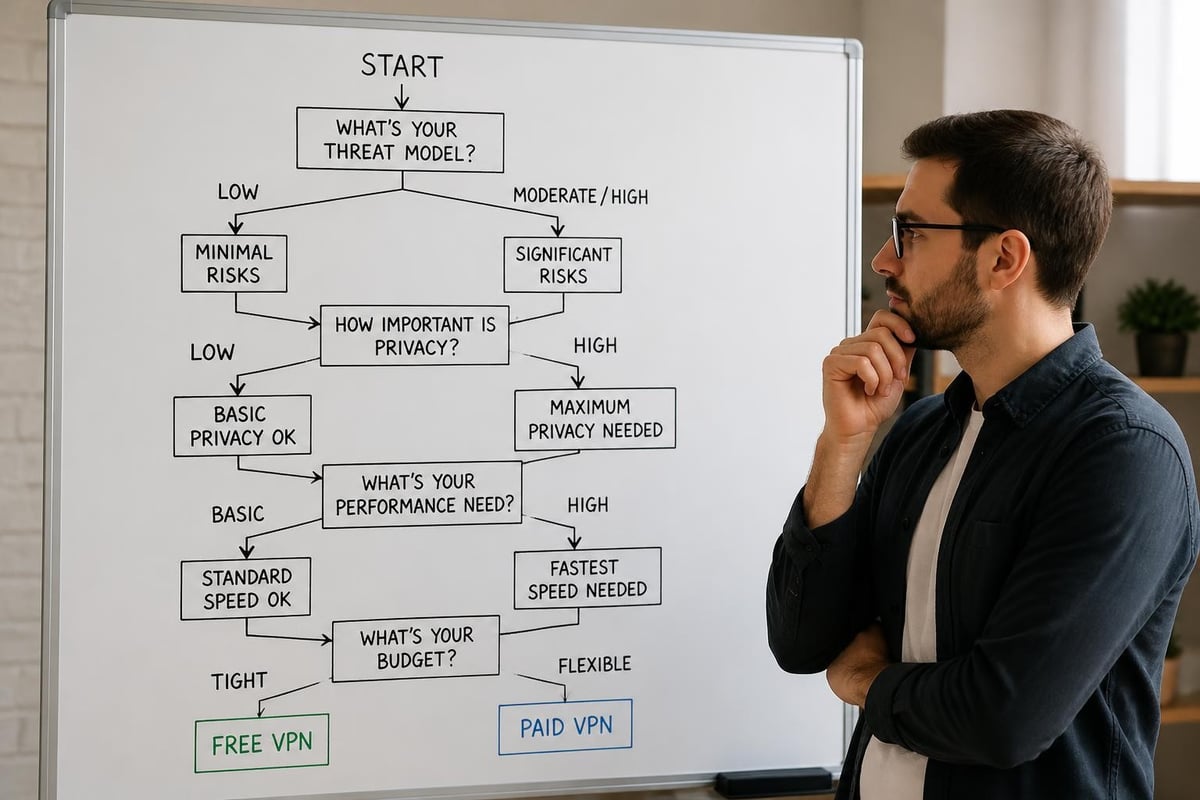
Assessing Your Privacy Threat Model
Different users face different privacy threats, and appropriate protection levels vary accordingly. Journalists, activists, or individuals in surveillance-heavy regions require robust protection that free vpn software android cannot reliably provide. Casual users seeking protection on public Wi-Fi may accept some limitations, though understanding the actual privacy delivered remains crucial.
Federal cybersecurity guidance on mobile communications recommends assessing your specific risk profile before selecting security tools, considering factors like:
- Sensitivity of data transmitted over mobile networks
- Regulatory compliance requirements for your industry
- Geographic regions where you connect to networks
- Potential adversaries and their capabilities
- Consequences of privacy breach or data exposure
This assessment should inform whether free vpn software android meets your actual security requirements or whether investment in premium protection becomes necessary.
Reading Privacy Policies Critically
Privacy policies for VPN applications often contain legal language that obscures actual data practices. Critical reading requires identifying what data gets collected, how it's used, who receives access, and how long it's retained. Vague statements like "we may share data with partners" or "aggregated analytics" often hide extensive data collection.
Red flags in VPN privacy policies:
- Undefined terms like "anonymized" without technical specifications
- Permissions to share data with unspecified third parties
- Jurisdiction in privacy-hostile countries
- No commitment to delete data upon account closure
- Clauses allowing policy changes without notification
Comparing privacy policies across multiple free vpn software android options reveals patterns that help distinguish marketing claims from genuine privacy commitments.
Monitoring VPN Performance and Behavior
After installing any VPN application, monitoring its behavior provides insights into whether it operates as advertised. Network analysis tools can detect DNS leaks, verify encryption, and identify unexpected data transmissions. Battery usage patterns may indicate background data collection, while permission requests that appear after installation suggest scope creep.
Regular security audits from independent researchers, though rare for free applications, provide valuable third-party verification when available. The absence of any independent security assessment should raise concerns about application trustworthiness.
The Future of Free VPN Software Android
The free vpn software android landscape continues evolving as regulatory pressure increases, security researchers expose problematic applications, and user awareness grows. Google has enhanced Play Store requirements for VPN applications, including mandatory data safety disclosures and stricter review processes, though enforcement remains inconsistent.
Regulatory Developments
Privacy regulations including GDPR, CCPA, and emerging frameworks worldwide impose obligations on data collection and processing that affect VPN providers. Free applications that monetize through data sales face increasing compliance costs, potentially forcing business model changes or market exits.
However, enforcement challenges persist, particularly for applications developed in jurisdictions with minimal privacy protections or those operating through complex corporate structures designed to obscure ownership and responsibility.
Technological Improvements
Advances in encryption protocols, authentication methods, and security frameworks continue improving VPN technology generally. Projects like WireGuard have delivered faster, more secure protocols that benefit both free and paid services. Yet infrastructure costs and business model constraints prevent many free vpn software android applications from implementing these improvements.
The technical gap between free and premium VPN services may widen as advanced features including multi-hop routing, obfuscation techniques, and threat protection require resources that advertising-supported models cannot sustain.
User Education and Awareness
Growing awareness of privacy risks drives demand for transparent, trustworthy VPN services while reducing tolerance for deceptive free applications. Educational initiatives from organizations like the Electronic Frontier Foundation help users understand what VPN protection actually means and how to evaluate provider claims critically.
This education shifts market dynamics, potentially reducing the viability of exploitative free vpn software android applications while supporting ethical providers who prioritize user privacy over data monetization.
Choosing free vpn software android requires understanding the fundamental tradeoffs between cost and privacy, recognizing that truly free services must generate revenue through means that often compromise user security. While legitimate freemium options exist, the market remains saturated with applications that actively undermine the protection they promise. For users serious about mobile privacy, investing in a trusted service delivers peace of mind and genuine security. ZioFree offers high-speed VPN protection with strong encryption, a verified no-logs policy, and advanced security protocols designed to protect against sophisticated threats including state-sponsored surveillance. Explore how premium protection at accessible pricing can secure your mobile communications without compromising your privacy.


