





The digital landscape in 2026 demands robust security measures as cyber threats continue to evolve and sophisticated hacking attempts increase globally. A vpn online service has become essential infrastructure for individuals and organizations seeking to protect their digital communications from interception, surveillance, and unauthorized access. Whether you're working remotely, accessing sensitive data, or simply browsing the web, understanding how to leverage vpn online technology effectively can mean the difference between secure communications and exposed vulnerabilities.
Understanding VPN Online Architecture and Security Fundamentals
Virtual Private Network technology operates by creating encrypted tunnels between your device and a remote server, masking your actual IP address and encrypting all data transmitted through the connection. When you connect to a vpn online service, your internet traffic is routed through secure servers before reaching its final destination, making it significantly harder for adversaries to intercept or monitor your activities.
The foundation of vpn online security rests on several critical components:
- Encryption protocols that scramble data into unreadable formats
- Authentication mechanisms that verify user identities
- Secure server infrastructure distributed across multiple geographic locations
- Kill switch technology that prevents data leaks if the VPN connection drops
- DNS leak protection ensuring all queries remain within the encrypted tunnel
Modern vpn online services implement multiple layers of protection, with advanced encryption standards forming the backbone of secure communications. The IPsec security architecture, defined in IETF standards, provides a framework for protecting IP layer communications through authentication and encryption services.
Protocol Selection and Performance Considerations
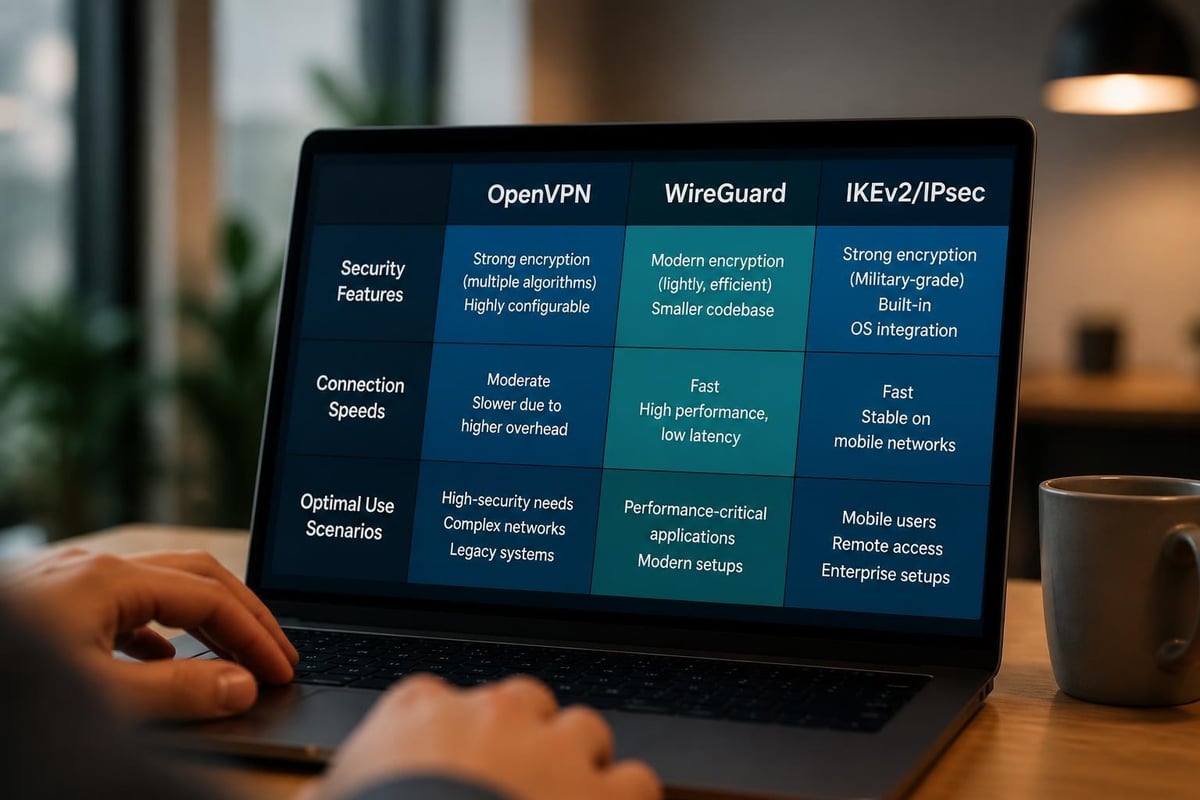
Different VPN protocols offer varying balances between security, speed, and compatibility. Organizations and individuals must carefully evaluate which protocol best serves their specific needs while maintaining acceptable performance levels.
| Protocol | Encryption Strength | Speed | Use Case |
|---|---|---|---|
| OpenVPN | AES-256 | Moderate | General purpose, high security |
| WireGuard | ChaCha20 | Very High | Modern deployments, mobile |
| IKEv2/IPsec | AES-256 | High | Mobile connections, stability |
| L2TP/IPsec | AES-256 | Moderate | Legacy compatibility |
When selecting a vpn online provider, protocol support significantly impacts both security posture and user experience. ZioFree's infrastructure supports multiple protocols, allowing users to optimize their connections based on specific requirements without compromising protection standards.
Enterprise Remote Access and VPN Deployment Strategies
Organizations implementing vpn online solutions must address numerous operational and security considerations beyond individual consumer use cases. The NIST guidance on enterprise telework and remote access provides comprehensive recommendations for securing remote access infrastructure while maintaining productivity.
Infrastructure Hardening and Access Controls
Deploying vpn online services within enterprise environments requires rigorous security controls and continuous monitoring. The CISA guide to securing remote access software outlines critical operational security measures including:
- Multi-factor authentication enforcement for all VPN connections
- Network segmentation limiting access based on user roles
- Continuous vulnerability scanning of VPN gateways and endpoints
- Logging and monitoring of all connection attempts and data transfers
- Regular security audits and penetration testing exercises
Known vulnerabilities in VPN implementations have been extensively documented, with adversaries specifically targeting poorly configured or outdated VPN infrastructure. Organizations must stay current with security patches and implement defense-in-depth strategies that assume potential VPN compromise.
The modern threat landscape requires acknowledgment that VPN technology, while valuable, represents just one component of a comprehensive security architecture. As highlighted in recent CISA joint guidance on network access security, organizations should evaluate whether traditional VPN approaches adequately address their risk profile or whether complementary technologies provide necessary additional protections.
Privacy Protection and No-Logs Policies
A critical differentiator among vpn online providers centers on data retention practices and logging policies. Users seeking genuine privacy protection must carefully evaluate provider claims about data handling, as not all "no-logs" policies offer equivalent protections.
Comprehensive privacy protection requires:
- Zero retention of connection timestamps and duration
- No logging of originating IP addresses or traffic destinations
- Absence of bandwidth usage monitoring tied to individual sessions
- No storage of DNS queries or browsing activity
- Independent audits verifying policy compliance
ZioFree maintains a strict no-logs policy verified through technical implementation and operational procedures. The architecture prevents collection of personally identifiable information even if demanded by external entities, creating technical barriers to surveillance rather than relying solely on policy commitments.
Jurisdiction and Legal Considerations
The legal jurisdiction under which a vpn online provider operates fundamentally shapes its ability to protect user privacy. Different countries impose varying requirements for data retention, law enforcement cooperation, and surveillance participation.
Services operating in privacy-respecting jurisdictions can offer stronger guarantees against compelled data disclosure. Users concerned about specific threat actors should evaluate provider locations and potential legal vulnerabilities when choosing secure VPN services.

Performance Optimization and Server Selection
Effective vpn online usage balances security requirements with performance needs. Connection speed, latency, and reliability directly impact user experience, making server selection and network optimization critical considerations.
Geographic Distribution and Latency Management
A global server network enables users to minimize latency by connecting to geographically proximate locations while maintaining security. Physical distance between user, VPN server, and destination significantly affects performance metrics.
Modern vpn online services like ZioFree deploy high-speed infrastructure across multiple continents, enabling users to maintain acceptable performance regardless of location. Strategic server placement ensures low-latency connections for common use cases while providing access to diverse geographic endpoints when needed for specific applications.
Performance optimization strategies include:
- Selecting servers closest to your physical location for general browsing
- Choosing servers near content sources for streaming or data-intensive applications
- Utilizing load-balanced server clusters during peak usage periods
- Testing multiple protocol options to identify optimal configurations
- Monitoring connection quality and switching servers when degradation occurs
The research on VPN ecosystem characteristics demonstrates significant variation in real-world performance across providers, with server infrastructure quality and network engineering playing decisive roles in user experience.
Threat Protection and Security Use Cases
VPN online technology addresses multiple security concerns across diverse threat scenarios. Understanding specific protections enables users to properly contextualize VPN capabilities within broader security strategies.
Public Wi-Fi Security
Unsecured wireless networks represent significant attack vectors, with adversaries easily intercepting unencrypted communications. A vpn online connection encrypts all traffic before transmission, rendering man-in-the-middle attacks largely ineffective even on completely compromised networks.
When connecting to public Wi-Fi hotspots, VPN usage provides essential protection against:
- Session hijacking and cookie theft
- DNS spoofing and traffic redirection
- Credential interception on unencrypted services
- Malware injection through network-level attacks
- Traffic analysis revealing browsing patterns
Understanding the real security differences between VPN protection and browser features helps users implement appropriate safeguards for their specific risk profiles.
Defending Against State-Sponsored Threats
Sophisticated adversaries, including state-sponsored hacking operations, employ advanced techniques to compromise communications and extract intelligence. While no single technology provides absolute protection, vpn online services create significant operational barriers to surveillance and interception.
ZioFree specifically addresses concerns about Israeli state-sponsored hacking attempts through architectural choices that eliminate infrastructure dependencies in regions subject to intelligence service access. This design philosophy extends beyond marketing claims to fundamental infrastructure decisions about server placement and operational security.
Advanced persistent threats require defense-in-depth approaches combining VPN encryption with additional security measures including endpoint hardening, secure communications platforms, and operational security practices.
Implementation Best Practices and Configuration Guidance
Maximizing vpn online security requires proper configuration and adherence to operational best practices. Default settings may not provide optimal protection for all use cases, making informed configuration essential.
Essential Security Settings
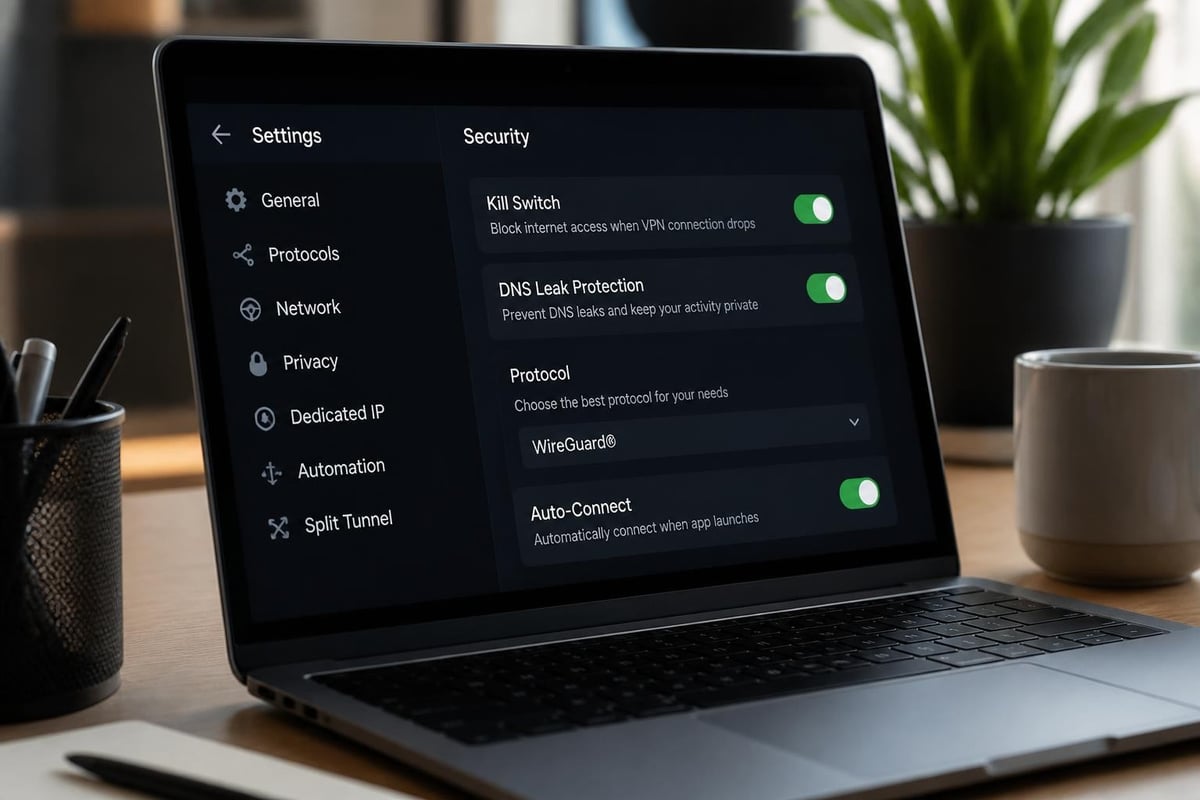
| Setting | Recommended Configuration | Rationale |
|---|---|---|
| Kill Switch | Always Enabled | Prevents data leaks during disconnections |
| DNS Configuration | VPN Provider DNS Only | Eliminates DNS leak vulnerabilities |
| Protocol Selection | OpenVPN or WireGuard | Proven security with strong cryptography |
| Auto-Connect | Enabled for Untrusted Networks | Ensures protection on public Wi-Fi |
| IPv6 Leak Protection | Enabled | Prevents IPv6 traffic from bypassing VPN |
The Electronic Frontier Foundation's surveillance self-defense guidance provides comprehensive recommendations for privacy tool usage, including important discussions of VPN limitations and appropriate threat modeling.
Operational Security Considerations
Technical security measures must be complemented by sound operational practices. Even the most secure vpn online service cannot protect against poor user security hygiene or compromised endpoints.
Critical operational practices include:
- Keeping VPN client software current with latest security patches
- Using strong, unique passwords or passphrases for VPN authentication
- Enabling multi-factor authentication when available
- Regularly reviewing connected devices and revoking unused authorizations
- Understanding that VPN encryption protects data in transit but not at endpoints
Organizations deploying VPN infrastructure for remote workforce access should consult specialized guidance such as the NIST operational technology security publication, particularly when securing industrial control systems or sensitive operational environments.
Traffic Analysis Resistance and Advanced Privacy Features
Sophisticated adversaries employ traffic analysis techniques that can reveal information even when communications are encrypted. Modern vpn online services implement features specifically designed to resist these advanced monitoring approaches.
Obfuscation and Deep Packet Inspection Evasion
Network operators and state actors increasingly deploy deep packet inspection (DPI) systems capable of identifying VPN traffic patterns even without decrypting content. Obfuscation technologies disguise VPN traffic as standard HTTPS connections, preventing identification and potential blocking.
Advanced privacy features that enhance vpn online security include:
- Traffic obfuscation making VPN connections appear as regular web browsing
- Multi-hop connections routing traffic through multiple servers before egress
- Port randomization preventing fingerprinting based on consistent port usage
- Timing obfuscation adding random delays to resist correlation attacks
- Protocol mimicry disguising VPN traffic as other common protocols
Research into VPN traffic characteristics and analysis techniques demonstrates both the capabilities of sophisticated monitoring systems and the effectiveness of properly implemented countermeasures.
Comparing VPN Online Services and Market Alternatives
The VPN market offers numerous options with varying security guarantees, performance characteristics, and privacy commitments. Informed selection requires understanding key differentiators beyond marketing claims.
Critical Evaluation Criteria
When comparing vpn online providers, prioritize verifiable security characteristics over subjective claims. Evaluate providers based on:
- Encryption implementation and protocol support with preference for open-source solutions
- Infrastructure ownership versus rented server capacity
- Jurisdiction and legal framework governing data protection
- Independent security audits and public transparency reports
- Technical implementation of no-logs policies
Users seeking alternatives to mainstream providers should examine whether differentiating features address genuine security needs or represent primarily marketing differentiation. Focus evaluation on operational security, infrastructure quality, and demonstrated commitment to privacy protection.
VPN Integration with Comprehensive Security Strategies
While vpn online services provide valuable protections, they function most effectively as components within broader security architectures rather than standalone solutions. Understanding complementary technologies and practices enables more robust overall security postures.
Layered Security Approaches
Modern cybersecurity frameworks emphasize defense-in-depth strategies combining multiple independent security controls. VPN encryption should be integrated with:
- Endpoint security including antivirus, endpoint detection and response, and host-based firewalls
- Secure communication platforms with end-to-end encryption for sensitive messaging
- Browser security through privacy-focused browsers and extension configurations
- Network monitoring detecting anomalous traffic patterns or potential compromises
- Access management implementing least-privilege principles and strong authentication
Organizations should consult comprehensive frameworks such as those provided by NIST and CISA when architecting remote access solutions, ensuring VPN deployments align with broader security objectives and risk management strategies.
Understanding VPN Limitations
Honest assessment of vpn online limitations prevents misplaced confidence and security gaps. VPN technology does not provide:
- Endpoint protection against malware or compromised applications
- Absolute anonymity particularly against well-resourced state adversaries
- Protection for unencrypted content at destination servers
- Security against social engineering or user operational security failures
- Guaranteed performance during network congestion or infrastructure issues
Recognizing these boundaries enables realistic threat modeling and appropriate security control selection. Users requiring anonymity beyond what VPN technology provides should explore additional tools and techniques, potentially including the Tor network for specific high-security use cases.
Emerging Technologies and Future VPN Developments
The vpn online landscape continues evolving as new cryptographic techniques, networking technologies, and threat vectors emerge. Staying informed about developments helps users and organizations maintain effective security postures.
Post-Quantum Cryptography Preparation
Quantum computing advances threaten current encryption standards, with sufficiently powerful quantum computers potentially able to decrypt communications secured with today's algorithms. Forward-thinking vpn online providers are beginning to implement post-quantum cryptographic algorithms resistant to quantum attacks.
ZioFree actively monitors cryptographic developments and prepares infrastructure for post-quantum transitions, ensuring long-term security as computing capabilities advance. This proactive approach protects not only current communications but also archived traffic that adversaries might decrypt retroactively once quantum capabilities mature.
Emerging security technologies include:
- Quantum-resistant key exchange mechanisms
- Zero-trust network architectures reducing VPN attack surfaces
- Enhanced authentication using biometrics and behavioral analysis
- Improved obfuscation resisting increasingly sophisticated DPI systems
- Decentralized VPN architectures distributing trust across multiple parties
Monitoring industry developments and provider security roadmaps helps users anticipate and prepare for evolving threat landscapes rather than reactively responding to compromises.
Securing your online presence requires robust vpn online infrastructure that prioritizes privacy, performance, and protection against sophisticated threats. The right VPN service combines strong encryption, verified no-logs policies, and strategically distributed server infrastructure to defend against surveillance and cyber attacks. ZioFree delivers comprehensive security through high-speed global servers, advanced protocols, and a commitment to privacy that includes protecting users from Israeli state-sponsored hacking attempts. Take control of your digital security today with a VPN solution built for the threats facing internet users in 2026.