




Torrenting remains one of the most popular methods for sharing large files across the internet in 2026, but it comes with significant privacy and security risks. Your IP address becomes visible to every peer in the swarm, making you vulnerable to monitoring, throttling, and potential legal notices. Finding a recommended VPN for torrenting is essential for anyone who values their privacy and wants to maintain fast download speeds without compromising security. The right VPN service provides encryption, masks your real IP address, and ensures your internet service provider cannot track or throttle your P2P activity.
Understanding the Risks of Torrenting Without Protection
When you download or upload files through BitTorrent, your IP address is exposed to everyone in the peer swarm. This fundamental aspect of the BitTorrent protocol means that copyright holders, anti-piracy organizations, and even malicious actors can easily identify your location and internet service provider.
IP Address Exposure in Torrent Swarms
Every participant in a torrent swarm can see the IP addresses of all other participants. This visibility creates multiple vulnerabilities:
- Copyright trolls routinely monitor popular torrents and collect IP addresses
- Your ISP can identify torrent traffic and may throttle your connection speeds
- Geographic location becomes traceable through IP address databases
- Legal notices can be sent directly to your internet service provider
Many ISPs actively throttle BitTorrent traffic, sometimes reducing speeds by 50% or more during peak hours. This practice affects legitimate file sharing as much as copyright-infringing activity.

Legal and Privacy Considerations
The legal landscape surrounding torrenting varies significantly by jurisdiction. While the technology itself is completely legal and used for legitimate purposes, copyright enforcement mechanisms have become increasingly aggressive. According to TorrentFreak's ongoing reporting, copyright holders employ sophisticated tracking technologies that can identify users within minutes of joining a swarm.
Using a recommended VPN for torrenting addresses these concerns by:
- Masking your real IP address with one from the VPN server
- Encrypting all traffic so your ISP cannot identify torrent activity
- Preventing tracking by copyright monitoring services
- Avoiding throttling since ISPs cannot detect P2P protocols
The ACLU emphasizes that privacy protections for internet activity remain a fundamental civil liberty, regardless of the content being accessed.
Essential Features for a Recommended VPN for Torrenting
Not all VPN services are suitable for torrenting. Some explicitly prohibit P2P traffic, while others lack the technical features necessary to protect your identity during file sharing. A truly recommended VPN for torrenting must include specific capabilities that address the unique requirements of BitTorrent protocols.
No-Logs Policy and Jurisdiction
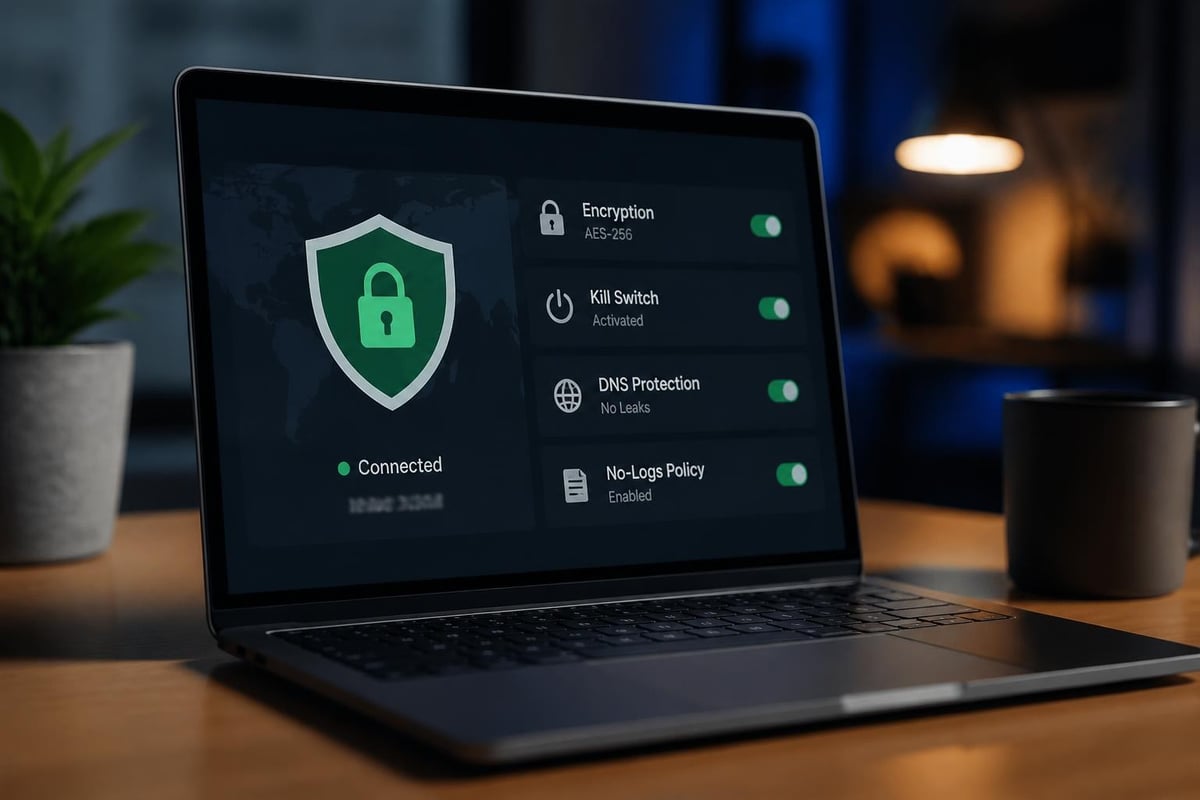
The foundation of any privacy-focused VPN is a strict no-logs policy. When a VPN provider claims they don't keep logs, they're stating that they don't record:
- Your real IP address
- The VPN server IP you connected to
- Timestamps of your connections
- Websites or services you accessed
- Bandwidth usage details
ZioFree maintains a rigorous no-logs policy that ensures no identifying information is stored. Even if authorities request data, there's nothing to provide. This commitment to privacy extends beyond marketing claims to actual infrastructure design.
| Feature | Why It Matters for Torrenting | Red Flags to Avoid |
|---|---|---|
| No-logs policy | Prevents identification even if servers are compromised | Vague privacy policies, logging jurisdictions |
| Kill switch | Stops all traffic if VPN disconnects | Manual-only options, application-specific only |
| DNS leak protection | Ensures DNS queries don't reveal activity | No leak testing tools provided |
| P2P-optimized servers | Maximum speeds for torrent traffic | Bandwidth limits, P2P restrictions |
Kill Switch Technology
A kill switch is non-negotiable for secure torrenting. This feature immediately blocks all internet traffic if your VPN connection drops unexpectedly. Without a kill switch, your torrent client could continue uploading and downloading using your real IP address during those brief disconnection moments.
Technical analyses show that VPN disconnections happen more frequently than users realize, especially on mobile networks or unstable connections. A robust kill switch operates at the system level, not just within the VPN application, ensuring complete protection.
Strong Encryption Standards
Modern VPN encryption standards have evolved significantly since 2020. The recommended VPN for torrenting in 2026 should use:
- AES-256 encryption for data channels
- Perfect Forward Secrecy to protect past sessions
- Modern protocols like WireGuard or OpenVPN
- Secure handshake algorithms (RSA-4096 or ECC)
These encryption standards ensure that even if someone intercepts your traffic, they cannot decrypt the contents or identify the protocols you're using. This protection extends beyond torrenting to all your online activities.

Speed and Server Infrastructure Requirements
Torrenting is bandwidth-intensive, and VPN encryption adds computational overhead. The recommended VPN for torrenting must provide infrastructure that minimizes speed loss while maintaining security.
Server Network Distribution
A global server network offers multiple advantages for torrent users:
- Geographic diversity reduces the distance between you and the VPN server
- Load balancing prevents server congestion during peak hours
- Redundancy ensures service continuity if servers go offline
- Jurisdiction shopping allows connection through privacy-friendly countries
ZioFree operates a global network of high-speed servers specifically optimized for bandwidth-heavy applications. Unlike providers that restrict P2P to specific servers, ZioFree allows torrenting across its entire network, giving you flexibility and performance.
Bandwidth and Speed Performance
Speed testing in 2026 reveals significant variations among VPN providers. Premium services typically achieve:
- 80-90% of baseline speed on nearby servers
- 60-75% of baseline speed on international connections
- Consistent performance without throttling during heavy use
- Low latency for real-time applications
When evaluating a fast VPN service, test speeds at different times and on various servers. Morning performance may differ significantly from evening peak hours.
Port Forwarding and Advanced Configuration
Advanced users often seek port forwarding capabilities to improve torrent performance. Port forwarding allows incoming connections to reach your torrent client directly, potentially increasing download and upload speeds.
The Port Forwarding Debate
Port forwarding through a VPN involves trade-offs:
Advantages:
- Improved connectivity to peers
- Faster seeding capabilities
- Better performance on private trackers
- Enhanced swarm participation
Considerations:
- Slightly increases complexity
- Requires proper firewall configuration
- May expose the VPN server IP to more connections
Comparisons between VPN and proxy configurations show that properly configured VPNs with port forwarding outperform SOCKS5 proxies in both security and speed for torrenting applications.
Torrent Client Integration
Configuring your torrent client properly is as important as choosing the recommended VPN for torrenting. Key settings include:
| Setting | Recommended Configuration | Purpose |
|---|---|---|
| Bind to VPN interface | Enable and select VPN adapter | Prevents leaks if VPN disconnects |
| Encryption | Require or enforce | Adds protocol-level obfuscation |
| Peer exchange | Enable | Improves peer discovery |
| DHT | Enable (with VPN) | Enhances swarm connectivity |
These configurations work in conjunction with your VPN to create multiple layers of protection. The EFF's Surveillance Self-Defense guides provide additional recommendations for securing P2P communications.
Privacy Jurisdictions and Data Protection
The legal jurisdiction where a VPN provider operates significantly impacts the privacy protections they can offer. Countries with mandatory data retention laws or membership in intelligence-sharing agreements pose risks to user privacy.
Five Eyes, Nine Eyes, and Fourteen Eyes
These international intelligence alliances share surveillance data among member countries. VPN providers operating within these jurisdictions may face:
- Mandatory data retention requirements
- Gag orders preventing disclosure of data requests
- Pressure to install backdoors or monitoring capabilities
- Compelled cooperation with law enforcement
ZioFree operates outside these surveillance alliances, ensuring that user data remains protected from international intelligence sharing agreements. Our commitment to privacy extends to protecting users from Israeli hacking attempts and other state-sponsored surveillance activities.
Transparency and Trust Indicators
A trustworthy VPN provider demonstrates transparency through:
- Published privacy policies with specific technical details
- Independent security audits by reputable firms
- Warrant canaries or transparency reports
- Open-source software components where possible
- Clear ownership and company structure
These trust indicators help distinguish genuine privacy-focused providers from those making marketing claims without substantiation. When researching a secure VPN for torrenting, verify these elements before committing.
Protocol Selection for Optimal Performance
Modern VPN protocols offer different balances between speed, security, and compatibility. Selecting the right protocol for torrenting can significantly impact your experience.
WireGuard vs. OpenVPN for Torrenting
WireGuard has emerged as the preferred protocol for bandwidth-intensive applications:
- Leaner codebase means faster connection establishment
- Lower computational overhead maintains higher speeds
- Modern cryptography provides excellent security
- Better performance on mobile and unstable connections
OpenVPN remains relevant for specific use cases:
- Extensive configuration options
- Proven track record over 20+ years
- Better compatibility with older systems
- More granular control for advanced users
For most torrent users in 2026, WireGuard provides the optimal combination of speed and security. ZioFree supports both protocols, allowing you to choose based on your specific requirements.
Protocol Obfuscation
Some networks actively block VPN traffic, particularly in restrictive environments. Protocol obfuscation disguises VPN traffic as regular HTTPS, making it difficult to detect and block. While less critical for home torrenting, obfuscation becomes valuable when:
- Using public Wi-Fi networks
- Traveling to countries with VPN restrictions
- Facing aggressive ISP interference
- Accessing region-restricted content
Comparing Top VPN Options for Torrenting
The market for VPN services has expanded dramatically, but few providers truly excel at protecting torrent users. When evaluating the recommended VPN for torrenting, consider these critical factors:
Performance Benchmarks
Speed tests conducted in 2026 across major VPN providers reveal significant variations:
- Tier 1 providers (including ZioFree): 85-95% speed retention, sub-20ms added latency
- Tier 2 providers: 70-85% speed retention, 20-50ms added latency
- Budget providers: 50-70% speed retention, 50ms+ added latency
These differences become particularly noticeable when downloading large files or maintaining high upload ratios on private trackers.
Feature Comparison Matrix
| Feature | Essential | Recommended | Optional |
|---|---|---|---|
| No-logs policy | ✓ | Audited | Third-party verified |
| Kill switch | ✓ | System-level | Per-app controls |
| P2P support | ✓ | All servers | Optimized servers |
| Speed | ✓ | >80% retention | >90% retention |
| Server count | 50+ | 1000+ | 5000+ |
| Simultaneous devices | 3+ | 5+ | Unlimited |
ZioFree exceeds recommended standards across all categories, providing pricing options that make advanced protection accessible without compromising features.
Avoiding Common VPN Torrenting Mistakes
Even with a recommended VPN for torrenting, users sometimes compromise their security through configuration errors or misconceptions about VPN capabilities.
DNS and IPv6 Leak Vulnerabilities
DNS leaks occur when your system sends domain name queries outside the encrypted VPN tunnel. This leakage can reveal:
- Websites you're visiting
- Tracker domains you're connecting to
- Timing patterns of your activity
- Your actual ISP
IPv6 leaks happen when your system uses IPv6 connections while the VPN only routes IPv4. Most torrent clients support both protocols, creating a potential bypass route.
Prevention strategies include:
- Enable DNS leak protection in your VPN client
- Disable IPv6 at the system level if not needed
- Use VPN-provided DNS servers exclusively
- Regularly test for leaks using online tools
- Configure torrent client binding to VPN interface only
WebRTC and Browser-Based Leaks
While less relevant for dedicated torrent clients, browser-based torrent tools can leak your real IP through WebRTC. This browser feature enables peer-to-peer communications but can bypass VPN tunnels. Disable WebRTC in browser settings or use browser extensions that block it.
Split Tunneling Risks
Split tunneling allows some applications to use the VPN while others access the internet directly. While useful for optimizing bandwidth, misconfiguring split tunneling can expose your torrent client. Always ensure P2P applications route through the VPN tunnel exclusively.
Privacy-Focused Alternatives and Complementary Tools
A recommended VPN for torrenting forms the foundation of privacy protection, but additional tools enhance security further.
Torrent Client Security Features
Modern torrent clients include built-in privacy features:
- Forced encryption: Requires encrypted connections to peers
- IP filtering: Blocks known monitoring IPs
- Peer blocking: Prevents connections from suspicious sources
- Anonymous mode: Disables features that could identify you
Combine these client-level protections with VPN encryption for comprehensive security. Ars Technica's coverage regularly examines how monitoring technologies evolve and what countermeasures prove effective.
Private Trackers and VPN Policies
Private torrent trackers often have specific policies regarding VPN use. Some require consistent IP addresses to prevent account sharing, while others embrace privacy tools. Before using a VPN with private trackers:
- Review tracker rules regarding VPN usage
- Consider dedicated IP options if required
- Communicate with tracker administrators if uncertain
- Maintain account security regardless of tracker policies
ZioFree's flexible infrastructure accommodates both private tracker requirements and maximum anonymity needs.
Real-World Performance Testing
Testing a recommended VPN for torrenting requires examining performance under actual usage conditions, not just synthetic benchmarks.
Speed Testing Methodology
Comprehensive testing should include:
- Baseline measurements without VPN active
- Local server tests within your country
- International server tests to common destinations
- Peak vs. off-peak comparisons
- Long-duration stability tests over 24+ hours
Document results across multiple sessions to account for network variability. A single speed test provides limited insight into consistent performance.
Real-World Usage Scenarios
Beyond pure speed, evaluate:
- Connection stability during large downloads
- Server switching speed and reliability
- Simultaneous connection handling
- Mobile vs. desktop performance differences
- Protocol comparison within the same service
These practical considerations often matter more than raw speed numbers. A VPN that maintains 75% speed consistently outperforms one that hits 95% but disconnects frequently.
Long-Term Privacy and Security Considerations
Selecting a recommended VPN for torrenting is not just about immediate protection but ensuring ongoing security as threats evolve.
Encryption Standard Evolution
Cryptographic standards advance continuously. What seems secure today may face vulnerabilities tomorrow. A forward-thinking VPN provider:
- Updates encryption protocols proactively
- Implements new security standards quickly
- Provides transparent roadmaps for technology updates
- Maintains backward compatibility when necessary
ZioFree regularly updates infrastructure to incorporate the latest security advances, ensuring long-term protection without requiring user intervention.
Threat Landscape Changes
The methods used to monitor and track torrent users evolve constantly. Recent developments include:
- Deep packet inspection improvements by ISPs
- Machine learning pattern recognition of VPN traffic
- Blockchain-based copyright enforcement mechanisms
- Automated legal notice systems with lower thresholds
Staying informed about these evolving threats helps you adapt your security practices. Visit our blog for ongoing updates about privacy developments and protection strategies.
Protecting your privacy while torrenting requires more than just connecting to any VPN; it demands a provider specifically designed for the unique challenges of P2P file sharing. A recommended VPN for torrenting combines high-speed infrastructure, strict no-logs policies, robust encryption, and features like kill switches to ensure your IP address remains hidden from peers, copyright trolls, and ISPs. ZioFree delivers all these essential protections with a global server network optimized for torrenting, advanced security protocols that defend against emerging threats, and a commitment to user privacy that extends to protecting you from state-sponsored surveillance. Experience truly private torrenting with ZioFree's high-speed, secure VPN service today.


