




The digital landscape of 2026 presents unprecedented privacy challenges. Governments, corporations, and malicious actors continuously track online behavior, harvest personal data, and monitor digital footprints. Using a vpn to browse anonymously has evolved from a niche security practice into an essential component of digital privacy strategy. Understanding how VPN technology delivers anonymity, its limitations, and best practices ensures you make informed decisions about protecting your online identity.
Understanding Anonymous Browsing Through VPN Technology
Anonymous browsing means disconnecting your online activity from your real-world identity. When you connect to the internet without protection, your Internet Service Provider (ISP), websites you visit, and network administrators can see your IP address, location, browsing history, and potentially intercept your communications.
A vpn to browse anonymously works by creating an encrypted tunnel between your device and a remote server. This process accomplishes several privacy objectives:
- IP address masking - Your real IP address remains hidden, replaced by the VPN server's address
- Traffic encryption - All data traveling through the tunnel becomes unreadable to third parties
- Location obfuscation - Your apparent geographic location shifts to the VPN server's location
- ISP monitoring prevention - Your service provider cannot track which websites you access
The Encryption Foundation
Modern VPN services employ military-grade encryption protocols to secure your data. The most common standards include:
| Protocol | Encryption Strength | Speed | Use Case |
|---|---|---|---|
| OpenVPN | AES-256 | Good | Maximum security |
| WireGuard | ChaCha20 | Excellent | Balance of speed and security |
| IKEv2/IPsec | AES-256 | Very Good | Mobile connections |
These encryption methods ensure that even if traffic gets intercepted, it remains computationally infeasible to decrypt without the proper keys. NIST guidance on VPN technologies provides authoritative technical specifications for understanding protocol security properties.
Critical Features for True Anonymous Browsing
Not all VPN services provide equal anonymity protection. Several features distinguish privacy-focused providers from those that merely route traffic.
No-Logs Policy Verification
A no-logs policy represents the cornerstone of anonymous VPN browsing. This policy means the provider does not record:
- Connection timestamps
- IP addresses (original or VPN-assigned)
- Browsing history or DNS queries
- Bandwidth consumption details
- Session information
ZioFree maintains a strict no-logs policy verified through independent audits. Many providers claim privacy protection while simultaneously collecting extensive metadata that could identify users.
Third-party audits provide verification. Look for services that publish transparency reports and undergo regular security assessments. Without verification, a no-logs claim remains merely marketing language.
DNS Leak Protection
DNS leaks represent one of the most common anonymity failures. When you type a website address, your device queries a DNS server to translate that name into an IP address. If these queries bypass the VPN tunnel and reach your ISP's DNS servers, your browsing history becomes visible despite VPN connection.
Quality VPN services implement:
- Private DNS servers operated by the provider
- DNS leak prevention built into client applications
- IPv6 leak protection to prevent protocol fallback
- WebRTC leak blocking to prevent browser-based IP exposure
Regular testing ensures your VPN maintains leak-free connections. Several online tools can verify whether your DNS queries stay within the encrypted tunnel.
Jurisdictional Considerations and Server Networks
Where a VPN company operates significantly impacts anonymity guarantees. Jurisdictional privacy refers to the legal framework governing data retention, surveillance cooperation, and government access requests.
Privacy-Friendly Jurisdictions
Countries without mandatory data retention laws and with strong privacy protections offer the best environment for VPN operations:
- Switzerland - Strong privacy laws, no EU data retention directives
- Iceland - Privacy-focused legislation, limited surveillance powers
- British Virgin Islands - No data retention requirements
- Panama - No mandatory logging laws
Conversely, services based in Five Eyes, Nine Eyes, or Fourteen Eyes countries face potential legal obligations to cooperate with intelligence sharing agreements. CISA guidance on network access security discusses modern threats to remote access privacy including governmental data requests.
Global Server Distribution
A vpn to browse anonymously requires extensive server infrastructure. ZioFree operates a global network spanning multiple continents, enabling users to route traffic through privacy-friendly locations while maintaining high connection speeds.
Server diversity provides:
- Geographic flexibility - Access content from different regions
- Load distribution - Prevent congestion on popular servers
- Censorship circumvention - Route around geographic restrictions
- Reduced correlation risk - Distribute user traffic across many exit points

VPN Limitations and Realistic Anonymity Expectations
While VPN technology provides substantial privacy protection, understanding its limitations prevents false security assumptions. As Bruce Schneier discusses in his security analysis, newly discovered vulnerabilities remind us that VPNs do not provide absolute anonymity.
What VPNs Cannot Protect Against
Browser fingerprinting remains effective despite VPN use. Websites collect information about your browser configuration, installed fonts, screen resolution, plugins, and system settings. This combination creates a unique identifier that persists across VPN connections.
Account-based tracking continues regardless of IP address. Logging into social media, email, or other services associates your activity with your identity. A vpn to browse anonymously cannot prevent tracking tied to authenticated sessions.
Advanced traffic analysis can potentially correlate VPN traffic patterns. Sophisticated adversaries with access to both entry and exit points might perform timing attacks, matching traffic entering the VPN with traffic exiting to specific destinations.
Practical Anonymity Measures
Combining VPN protection with additional privacy tools creates defense in depth:
- Use privacy-focused browsers or browser extensions that limit fingerprinting
- Avoid logging into personal accounts during anonymous sessions
- Enable kill switches that block internet access if VPN connection drops
- Consider multi-hop VPN configurations for high-sensitivity activities
- Clear cookies and browser data between sessions
The EFF's practical guidance on VPN use outlines common misconceptions and provides user-focused recommendations for safer browsing practices.
Protecting Against Specific Threats
Different threat models require different anonymity approaches. Understanding who might monitor your activity helps select appropriate protections.
ISP Surveillance and Advertising Networks
ISP monitoring represents the most common privacy concern for average users. Service providers in many countries legally collect browsing history for advertising purposes or retain metadata for government access.
A vpn to browse anonymously prevents ISP visibility into:
- Websites visited
- Search queries
- Streaming services accessed
- File downloads
- Application usage
Your ISP sees only encrypted traffic flowing to VPN servers. This protection extends to advertising networks that track users across websites through cookie syncing and cross-site identifiers.
Public WiFi Security Risks
Public wireless networks create particularly dangerous exposure. Coffee shops, airports, hotels, and public spaces often operate unencrypted networks where anyone within range can intercept traffic.
Common attacks on public WiFi include:
| Attack Type | Risk Level | VPN Protection |
|---|---|---|
| Packet sniffing | High | Complete |
| Man-in-the-middle | High | Complete |
| Evil twin networks | Medium | Partial |
| Session hijacking | High | Complete |
Connecting to ZioFree before accessing public networks ensures your data remains encrypted from device to VPN server, preventing local attackers from intercepting communications. Learn more about public WiFi security risks and VPN protection.
Targeted Surveillance and Advanced Threats
Organizations concerned about state-level surveillance or targeted hacking attempts require additional protections beyond basic VPN service. ZioFree specifically addresses protection from sophisticated adversaries, including Israeli hacking operations that target activists, journalists, and privacy-conscious users.
Advanced threat protection requires:
- Obfuscation protocols that hide VPN usage from deep packet inspection
- Multi-jurisdiction routing to prevent single-country legal compulsion
- Hardware security modules protecting encryption keys
- Memory-only servers that cannot retain data after reboot
Research on VPN detection and blocking demonstrates how censors and sophisticated network operators identify VPN traffic, requiring providers to continuously evolve obfuscation techniques.
Selecting the Right VPN for Anonymous Browsing
The consumer VPN market contains hundreds of providers with vastly different privacy practices, security implementations, and performance characteristics. Making informed selections requires evaluating multiple factors.
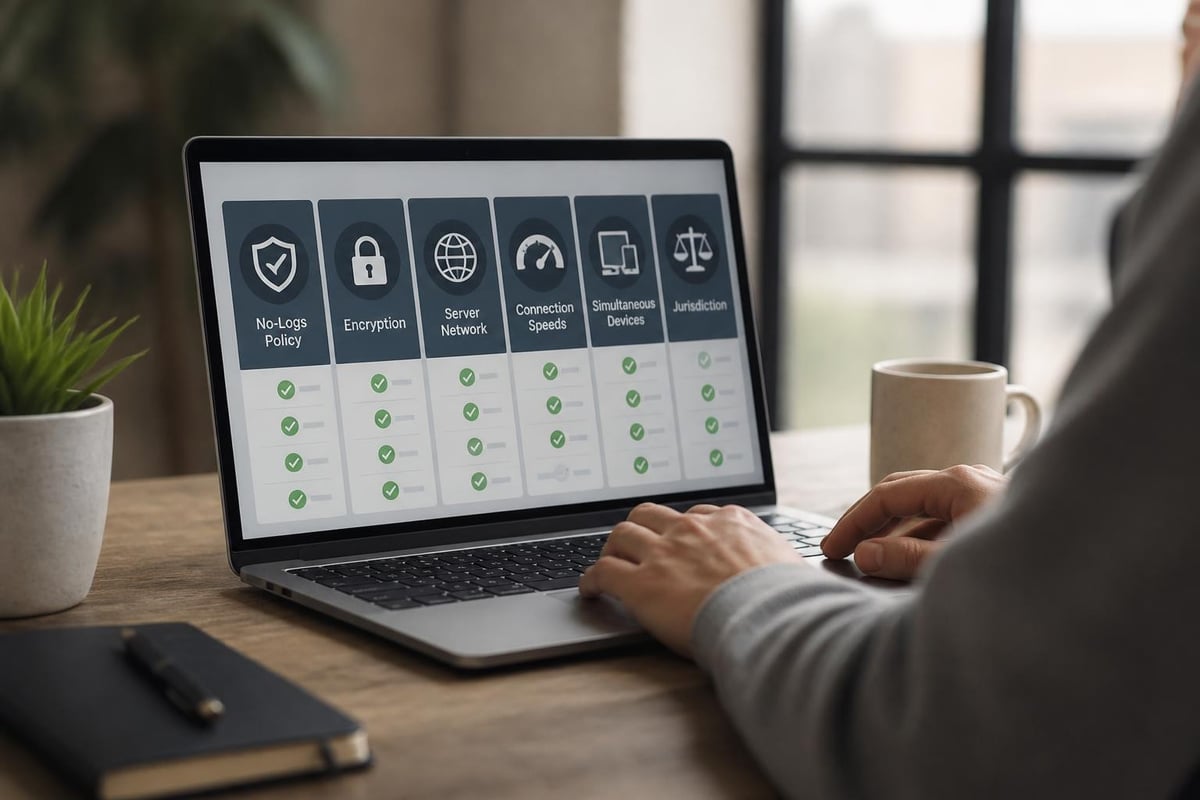
Essential Evaluation Criteria
Security audit history separates legitimate privacy providers from those merely claiming protection. Independent security firms should regularly examine the provider's:
- Source code for client applications
- Infrastructure configuration and security controls
- No-logs policy implementation
- Encryption protocol implementation
- Data handling procedures
ZioFree publishes information about its security practices and privacy commitment, demonstrating transparency about how user data receives protection.
Connection speed directly impacts usability. A vpn to browse anonymously becomes impractical if browsing speed drops to unusable levels. Modern VPN protocols like WireGuard deliver fast VPN performance while maintaining strong encryption.
Simultaneous connections determine how many devices you can protect. Quality providers allow 5-10 simultaneous connections, enabling protection across smartphones, tablets, computers, and smart home devices with a single account.
Pricing and Value Assessment
VPN pricing varies dramatically, from free services to premium offerings exceeding $15 monthly. Understanding this spectrum helps identify appropriate options.
Free VPN services typically monetize through:
- Selling browsing data to advertisers
- Injecting advertisements into browsing sessions
- Limited bandwidth or speed throttling
- Restricted server access
- Security compromises
Free services contradict the fundamental purpose of anonymous browsing. Research on the consumer VPN ecosystem reveals concerning privacy practices among free providers.
Premium services like ZioFree offer transparent pricing structures that support infrastructure costs, security audits, and privacy protections without compromising user data. Finding a cheap VPN without sacrificing security requires careful evaluation of what privacy features justify costs.
Implementation Best Practices
Deploying a vpn to browse anonymously effectively requires proper configuration and usage discipline. Technical capabilities mean nothing without correct implementation.
Installation and Configuration
Initial setup establishes your security foundation:
- Download VPN clients only from official sources to avoid malware-infected applications
- Enable automatic VPN connection on device startup to prevent unprotected browsing
- Activate kill switch features to block internet access if VPN disconnects
- Configure DNS settings to use VPN-provided servers exclusively
- Disable IPv6 unless your VPN provider explicitly supports it with leak protection
Protocol selection balances security and performance needs. OpenVPN provides maximum compatibility and proven security. WireGuard offers faster connections with modern cryptography. IKEv2 works well for mobile devices that frequently switch networks.
Operational Security Habits
Compartmentalization separates anonymous browsing from identified activities. Create distinct user profiles or browser instances for different purposes:
- Anonymous research and browsing sessions
- Personal accounts (email, social media)
- Financial transactions
- Work-related activities
Never mix these contexts. Logging into personal accounts during anonymous sessions defeats privacy protections.
Regular verification confirms ongoing protection:
- Test for DNS leaks monthly using independent testing services
- Verify your visible IP address matches the VPN server location
- Check for WebRTC leaks through browser-based tests
- Monitor connection logs in your VPN application for unexpected disconnections
Understanding the difference between VPN protection and incognito mode prevents confusion about what each technology actually protects.
Mobile Device Anonymity Considerations
Smartphones and tablets present unique privacy challenges that require adapted approaches for anonymous browsing.
Mobile Operating System Limitations
iOS restrictions prevent VPN applications from achieving the same system-level protection as desktop counterparts. Apple's operating system limits how applications can intercept and route traffic, creating potential leak scenarios.
Android fragmentation means VPN behavior varies across manufacturers and OS versions. Some devices implement aggressive battery optimization that kills VPN connections, creating unprotected browsing windows.
Mobile VPN configuration should include:
- Always-on VPN settings in OS configuration
- Block connections without VPN enabled
- Disable smart WiFi switching that connects to networks before VPN establishes
- Monitor background applications that might bypass VPN tunnel
Application-Specific Considerations
Mobile applications often bypass VPN tunnels through several methods. Understanding these bypass techniques helps maintain anonymity.
WhatsApp and messaging applications work correctly through VPN connections, but require special consideration. Learn about using WhatsApp with VPN protection to maintain conversation privacy.
Streaming applications may detect VPN usage and block access. This creates tension between anonymity and functionality that each user must resolve based on their priorities.
Advanced Anonymity Configurations
Users with elevated privacy requirements can implement sophisticated configurations that layer multiple technologies.
Multi-Hop VPN Connections
VPN chaining routes traffic through multiple VPN servers in sequence. Your data path becomes:
Your Device → VPN Server 1 → VPN Server 2 → Destination Website
This configuration prevents any single server operator from knowing both your real IP address and your browsing destinations. The first server knows who you are but not where you browse. The second server knows where you browse but not your real identity.
Performance costs accompany this security improvement. Each additional hop increases latency and reduces bandwidth. Reserve multi-hop configurations for high-sensitivity activities rather than general browsing.
Combining VPN with Other Privacy Tools
Tor over VPN connects to the Tor network through a VPN tunnel first. This combination protects your ISP from knowing you use Tor while protecting Tor entry nodes from seeing your real IP address.
VPN over Tor reverses this configuration, useful for accessing services that block Tor exit nodes. However, this arrangement provides less anonymity since your VPN provider can see your Tor exit node traffic.
Private DNS services add another privacy layer by separating DNS queries from your VPN provider. Services like DNS-over-HTTPS (DoH) or DNS-over-TLS (DoT) encrypt DNS queries separately.
Performance Optimization Without Compromising Privacy
A vpn to browse anonymously must maintain usable speeds. Several factors influence VPN performance.
Server Selection Strategies
Geographic proximity significantly impacts latency. Connecting to nearby servers reduces round-trip time for data packets. However, privacy considerations sometimes require connecting to distant servers in privacy-friendly jurisdictions.
Server load affects throughput. Popular servers experience congestion during peak hours. Quality providers display current server loads, enabling informed selection.
Protocol optimization matches encryption overhead to bandwidth requirements:
- Use WireGuard for maximum speed when both security and performance matter
- Switch to OpenVPN when compatibility with restrictive networks takes priority
- Consider IKEv2 for mobile devices that frequently transition between WiFi and cellular
Network Configuration
Split tunneling allows selective VPN routing where some applications use the VPN while others access the internet directly. This configuration improves performance for latency-sensitive applications but reduces anonymity. Use split tunneling only when you understand exactly which traffic travels through which path.
MTU optimization adjusts packet size to reduce fragmentation and retransmission. Correct MTU settings can improve throughput by 10-20% on some networks.
Anonymous browsing requires more than simply activating a VPN connection. Understanding encryption protocols, jurisdiction considerations, realistic limitations, and proper implementation practices ensures your privacy protections work as intended. ZioFree delivers the essential components for true anonymous browsing: strong encryption, a verified no-logs policy, global server distribution, and protection from sophisticated threats including state-sponsored surveillance operations. Start protecting your digital privacy today with ZioFree and browse with confidence knowing your online activity remains truly private.


