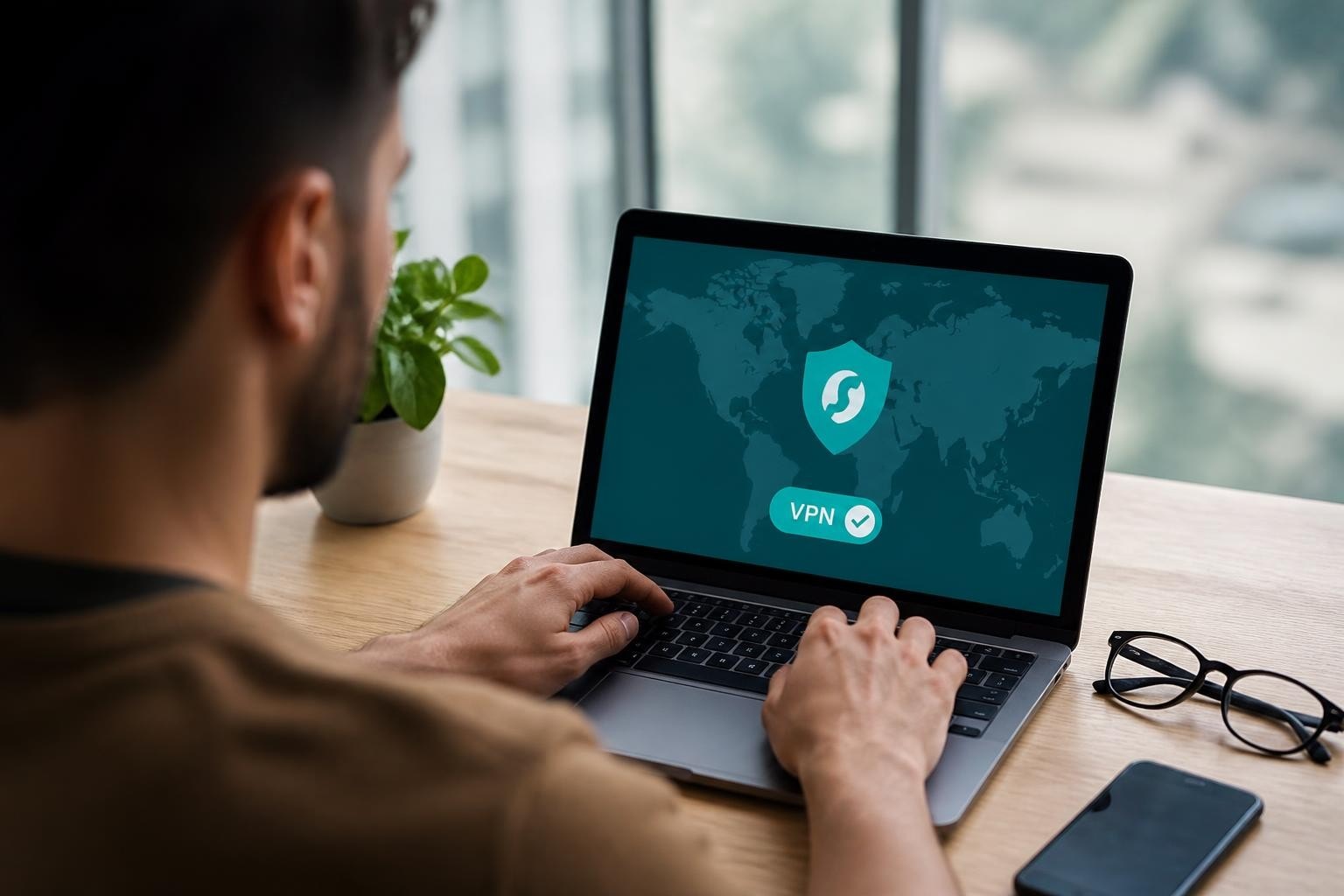





Finding a top VPN in 2026 requires understanding the evolving landscape of digital privacy, security threats, and infrastructure reliability. With governments worldwide implementing new surveillance measures and cybercriminals deploying sophisticated attack vectors, selecting the right virtual private network service demands careful evaluation of technical capabilities, verifiable privacy commitments, and real-world performance. This comprehensive guide examines the essential criteria that separate genuinely secure VPN providers from those making empty marketing promises, helping you make an informed decision based on your specific security needs.
Essential Security Features in a Top VPN
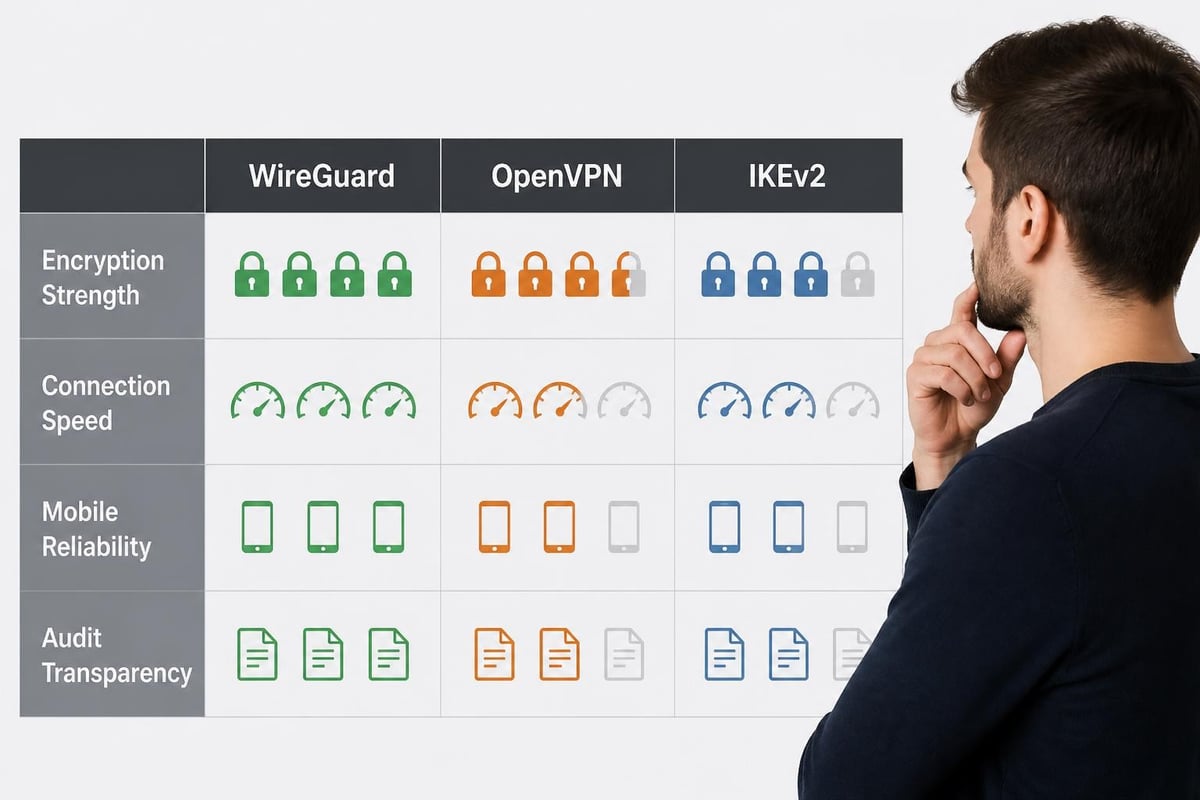
Modern VPN security extends far beyond basic encryption. Advanced protocols like WireGuard and OpenVPN remain the industry standard, offering a balance between speed and cryptographic strength. A top VPN must implement AES-256 encryption at minimum, the same standard used by government agencies and financial institutions worldwide.
Protocol Selection and Implementation
Different VPN protocols serve distinct purposes and threat models. The Electronic Frontier Foundation's surveillance self-defense guide provides excellent context on matching protocols to your specific risk profile.
Key protocol considerations:
- WireGuard: Modern, lean codebase with superior performance
- OpenVPN: Battle-tested, widely audited, highly configurable
- IKEv2/IPSec: Excellent for mobile devices with frequent reconnections
- Proprietary protocols: Require independent audits to verify security claims
The implementation matters as much as the protocol itself. NIST guidance on secure remote access emphasizes that configuration errors and outdated cipher suites create vulnerabilities even when using robust protocols.
Kill Switch and Leak Protection
A reliable kill switch represents non-negotiable infrastructure for any top VPN service. This feature blocks all internet traffic if the VPN connection drops unexpectedly, preventing accidental exposure of your real IP address or unencrypted data.
| Protection Type | Purpose | Risk When Missing |
|---|---|---|
| DNS leak protection | Prevents DNS queries from bypassing VPN tunnel | ISP sees all websites you visit |
| IPv6 leak protection | Blocks IPv6 traffic or routes it through VPN | Your real location exposed via IPv6 address |
| WebRTC leak protection | Prevents browser-level IP disclosure | Websites can detect your true IP despite VPN |
Privacy Policies and No-Logs Verification
Privacy commitments separate marketing hype from legitimate top VPN providers. The phrase "no-logs policy" appears everywhere, but verification requires scrutiny of what data is actually collected, how long it's retained, and whether independent parties have validated these claims.
What "No-Logs" Actually Means
A genuine no-logs policy means the VPN provider does not collect or store:
- Browsing history or DNS queries
- Connection timestamps beyond active sessions
- IP addresses (origin or VPN server assignments)
- Bandwidth usage patterns tied to individual users
- Metadata that could reconstruct user activity
However, minimal operational data collection is standard. Most services retain aggregate statistics, payment information, and email addresses for account management. The FTC's 2023 privacy and data security update highlights how misleading privacy claims expose consumers to serious risks.
Understanding strict no-logs implementation helps identify providers who truly protect your privacy versus those collecting data for advertising or sharing with third parties.
Independent Audits and Transparency Reports
Third-party security audits provide the only credible verification of privacy and security claims. The Mozilla VPN security audit conducted by Cure53 demonstrates how rigorous independent testing examines code, infrastructure, and operational practices.
What to look for in audit reports:
- Scope: Did auditors review server infrastructure, application code, and privacy practices?
- Findings: Were critical vulnerabilities identified, and how were they remediated?
- Frequency: Annual audits show ongoing commitment to transparency
- Public availability: Providers confident in their security publish full audit results
Research from AV-TEST's VPN comparative testing shows significant variance in how VPN services handle encryption, leak prevention, and security updates under real-world conditions.
Server Network Quality and Global Coverage
A top VPN requires extensive, strategically distributed server infrastructure. Raw server count matters less than geographic diversity, connection quality, and ownership model.
Server Ownership vs. Rented Infrastructure
The distinction between owned and rented servers affects both security and performance:
| Ownership Model | Advantages | Considerations |
|---|---|---|
| Physical ownership | Complete control over hardware and security | Higher cost, slower expansion |
| RAM-only servers | Data wiped on every reboot | Requires provider honesty about implementation |
| Rented/virtual servers | Faster global expansion | Datacenter provider has physical access |
Physical server location matters for both latency and legal jurisdiction. Servers in privacy-friendly countries offer better protection against government data requests, while servers near your actual location provide faster connections.
Performance and Speed Testing
Independent testing reveals real-world performance that marketing claims obscure. AV-Comparatives VPN certification reports provide methodology details for evaluating speed claims across different protocols and server distances.
Speed depends on multiple factors:
- Server load: Overcrowded servers create bottlenecks
- Protocol efficiency: WireGuard typically outperforms older protocols
- ISP throttling: Some internet providers deliberately slow VPN traffic
- Geographic distance: Physical distance to server affects latency
Testing your secure VPN performance across multiple servers and times of day reveals whether advertised speeds reflect typical user experience.

Threat Models and Use Case Matching
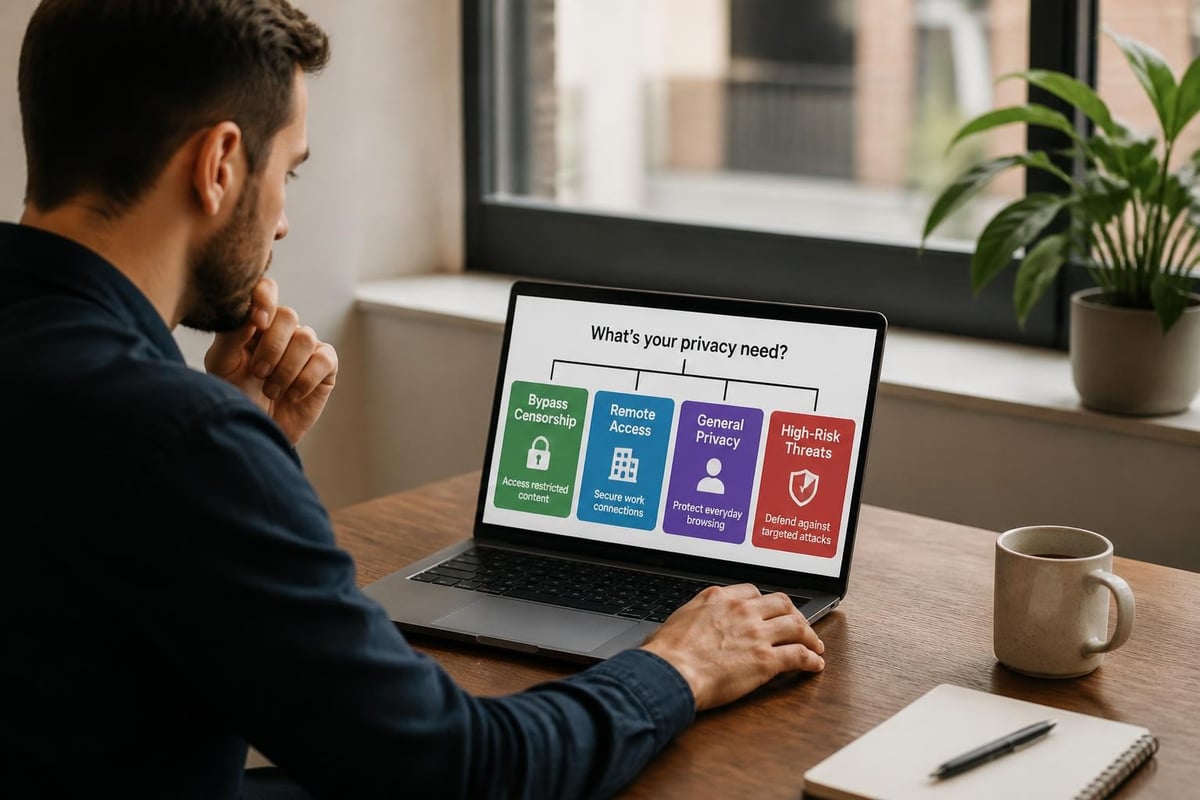
Different users face different threats. A top VPN for a journalist working in an authoritarian state differs from one optimal for general privacy-conscious browsing.
Censorship Circumvention
In countries with aggressive internet filtering, VPN selection becomes a matter of access rather than preference. Freedom House's 2024 Freedom on the Net report documents how governments worldwide employ increasingly sophisticated VPN blocking techniques.
Considerations for high-censorship environments:
- Obfuscation features that disguise VPN traffic as regular HTTPS
- Bridge servers not publicly listed in server directories
- Multiple protocol options when primary protocols are blocked
- Local support and setup guidance in restricted regions
The Tor Project's WebTunnel guidance offers alternatives when conventional VPNs fail against state-level censorship, though with different tradeoffs in speed and usability.
Corporate and Remote Work Security
Enterprise remote access demands different features than personal privacy protection:
- Dedicated IP options for accessing company resources with allowlist restrictions
- Split tunneling to route only work traffic through the VPN
- Multi-factor authentication for account access
- Team management features for IT administrators
Businesses evaluating VPN options for remote teams should prioritize management capabilities and compatibility with existing security infrastructure alongside encryption strength.
Protection Against Advanced Threats
Recent research on session-manipulation attacks affecting VPN deployments reveals sophisticated attack vectors that target VPN implementations rather than cryptographic weaknesses. A top VPN must defend against:
- DNS hijacking that redirects traffic despite VPN encryption
- Traffic correlation attacks analyzing patterns even with encrypted tunnels
- Malicious exit nodes when VPN providers operate compromised infrastructure
- Browser fingerprinting that identifies users regardless of IP masking
Understanding how VPN protection differs from browser incognito mode helps set realistic expectations about what VPNs can and cannot protect against.
Jurisdiction and Legal Framework
Where a VPN company incorporates and operates determines what data it can legally refuse to collect or share with authorities.
Privacy-Friendly Jurisdictions
Countries with strong privacy laws and no mandatory data retention provide better environments for VPN operations:
- Switzerland: Strong privacy protections, not part of intelligence-sharing alliances
- Iceland: Robust free speech laws, limited government surveillance powers
- British Virgin Islands: No data retention requirements, outside major intelligence partnerships
- Panama: No data retention laws, limited international cooperation agreements
Conversely, VPNs based in Five Eyes, Nine Eyes, or Fourteen Eyes countries face potential pressure to log user activity or provide backdoor access. However, jurisdiction matters less than actual operational practices and technical implementation.
Transparency in Government Requests
A top VPN publishes transparency reports detailing government data requests and how the company responded. When a provider operates with genuine zero-knowledge architecture, they have no user activity data to hand over even under legal compulsion.
Examining how services respond to legal pressure reveals their true commitment to user privacy. The only VPN with no connection to Israel represents one approach to avoiding specific jurisdictional concerns, though users should evaluate their personal threat model to determine which geographic risks matter most.
Payment Privacy and Account Security
How you pay for a VPN service affects your anonymity. A top VPN offers payment methods that don't require revealing personal information.
Payment method privacy comparison:
| Payment Type | Anonymity Level | Considerations |
|---|---|---|
| Cryptocurrency | High | Some transaction analysis still possible |
| Cash by mail | Highest | Slow, limited to some providers |
| Prepaid cards | Medium-High | Purchase location may be tracked |
| Credit card | Low | Direct link to identity |
| PayPal | Low | Full identity verification required |
Beyond payment privacy, account security features protect against unauthorized access:
- Multi-factor authentication prevents account takeover even if password is compromised
- Anonymous account creation allows signup without email address
- Simultaneous connection limits alert you to unauthorized device access
- Account activity logs show login locations and devices
Understanding VPN pricing models helps evaluate whether longer commitments offer genuine value or simply lock you into inferior service.
Common VPN Misconceptions and Limitations
Even the top VPN cannot provide complete anonymity or protection against all threats. Understanding these limitations prevents false confidence in your security posture.
What VPNs Don't Protect Against
VPNs encrypt your connection to a VPN server, but they don't:
- Prevent malware infections or phishing attacks
- Protect against threats on the VPN provider's network
- Make you anonymous if you log into personal accounts
- Block browser fingerprinting or tracking cookies
- Secure endpoints (your device or destination server)
The distinction between VPN protection and comprehensive internet security matters when assessing your overall risk exposure.
Free VPN Risks
Free VPN services sustain operations through advertising, data collection, or malicious activity. Ars Technica's reporting on phones and routers swept into proxy services illustrates how some "free" VPNs monetize by routing other users' traffic through your connection without disclosure.
Common free VPN business models:
- Injecting advertisements into web pages you visit
- Collecting and selling browsing data to third parties
- Using your bandwidth for commercial proxy services
- Serving as honeypots collecting intelligence
- Promoting as free trial then charging hidden fees
A legitimate top VPN requires infrastructure investment that free services cannot sustain without compromising user privacy or security.
Evaluating Provider Transparency and Reputation
Long-term reputation and transparent operations separate trustworthy providers from those making unverifiable claims.
Open Source vs. Proprietary Software
VPN client applications built on open-source code allow independent security researchers to identify vulnerabilities and verify privacy claims. Proprietary clients require trusting the vendor's internal development practices.
Benefits of open-source VPN software:
- Security researchers can audit code for backdoors or vulnerabilities
- Community contributions improve stability and features
- Transparent development process builds trust
- Faster identification and patching of security issues
However, open-source code alone doesn't guarantee security. Implementation quality, server infrastructure security, and operational practices matter equally.
Company History and Ownership
Researching VPN company ownership reveals potential conflicts of interest or undisclosed data-sharing relationships:
- Parent company relationships: Some VPNs share ownership with data brokers or advertising firms
- Previous security incidents: How did the provider respond to breaches or vulnerabilities?
- Marketing claim accuracy: Do third-party tests validate advertised speeds and features?
- Customer support quality: Does the company invest in helping users maximize security?
Investigating alternatives to mainstream providers often reveals smaller, privacy-focused companies with stronger track records on transparency and user protection.
Making Your Final VPN Selection
Choosing a top VPN requires balancing multiple factors based on your specific needs, threat model, and budget.
Prioritization Framework
Not every user needs every feature. Rank these factors by personal importance:
- Privacy jurisdiction and legal framework
- Audit frequency and transparency
- Server network size and distribution
- Connection speed and protocol options
- Device compatibility and simultaneous connections
- Customer support quality and availability
- Price and payment flexibility
Users focused on censorship circumvention prioritize different features than those primarily concerned with hiding torrenting activity from their ISP or protecting business communications on public WiFi.
Trial Periods and Money-Back Guarantees
Legitimate top VPN services offer risk-free testing periods:
- Most providers offer 30-day money-back guarantees
- Test performance on your actual network and devices
- Verify leak protection with independent testing tools
- Evaluate customer support responsiveness
- Confirm compatibility with your specific use cases
Understanding whether public WiFi actually poses the risks you think helps determine whether a VPN addresses your actual security concerns or just provides psychological comfort.
Technical Infrastructure That Matters
Behind marketing claims, technical implementation determines whether a top VPN delivers on security promises.
Encryption Cipher Selection
Modern VPNs implement multiple encryption layers:
Control channel encryption (authentication and key exchange):
- RSA-4096 or greater for initial handshake
- Perfect forward secrecy ensuring past session security even if keys are compromised
- Certificate pinning preventing man-in-the-middle attacks
Data channel encryption (actual traffic):
- AES-256-GCM for authenticated encryption with superior performance
- ChaCha20-Poly1305 for mobile devices and processors without AES acceleration
- Periodic key rotation minimizing cryptanalysis opportunities
Comparing OpenVPN implementation approaches reveals how configuration choices affect both security and performance in real-world deployments.
DNS Resolution Security
DNS queries reveal every website you visit, even when other traffic is encrypted. A top VPN must:
- Run proprietary DNS servers rather than relying on third-party resolvers
- Encrypt DNS queries through DNS-over-HTTPS or DNS-over-TLS
- Prevent DNS leaks that bypass the VPN tunnel
- Implement DNSSEC validation to prevent spoofing
Testing DNS leak protection should be part of your initial VPN evaluation and periodic verification afterward.
Selecting a top VPN in 2026 demands careful evaluation of security protocols, verified privacy practices, infrastructure quality, and alignment with your specific threat model. The landscape includes providers making dramatic security claims while collecting extensive user data, alongside transparent services genuinely committed to protecting your privacy and security. ZioFree delivers high-speed VPN access through a global server network with independently verified encryption, a strict no-logs policy, and advanced security protocols designed to protect against sophisticated threats including state-sponsored surveillance attempts. Explore how ZioFree's commitment to transparency and user privacy can secure your internet connection today.