





Accessing Netflix from within mainland China presents unique challenges that most streaming enthusiasts don't encounter elsewhere. The combination of China's sophisticated internet censorship infrastructure, known as the Great Firewall, and Netflix's absence from the Chinese market creates a complex barrier. Using a vpn for netflix in china has become the primary solution for expatriates, travelers, and locals who want to access their favorite shows and movies while navigating these restrictions.
Understanding Netflix's Status in China
Netflix has never officially launched service in mainland China, making it one of the few major markets where the streaming giant has no presence. The company chose to license content to local platforms rather than navigate China's strict media regulations and censorship requirements.
According to scholarly analysis of Netflix's global distribution strategy, the licensing model to Chinese platforms allowed Netflix to monetize content without establishing direct operations. This approach avoided regulatory complexities but left viewers without direct access to the full Netflix library.
The Great Firewall's Role
China's censorship apparatus actively blocks access to Netflix domains and streaming endpoints. Real-time monitoring shows that Netflix.com and related infrastructure remain consistently blocked from mainland China networks. This blocking occurs at multiple levels:
- DNS-level filtering that prevents domain name resolution
- IP address blocking targeting Netflix's server infrastructure
- Deep packet inspection identifying Netflix streaming protocols
- Bandwidth throttling when VPN usage is detected
The sophistication of these controls has increased significantly in recent years, requiring more advanced circumvention tools.

Why Traditional VPNs Struggle with Netflix Access
Not every VPN service successfully delivers a working vpn for netflix in china experience. Netflix actively detects and blocks VPN traffic through multiple detection methods, while China simultaneously works to disrupt VPN connections themselves.
Netflix's VPN Detection Systems
Netflix employs advanced systems to identify VPN usage, primarily focusing on:
IP address reputation databases that track known VPN server addresses across all major providers. When Netflix detects connections from these addresses, it displays the infamous proxy error rather than streaming content.
Connection pattern analysis examines how multiple accounts connect from identical IP addresses, flagging potential VPN usage. Legitimate residential connections rarely show dozens of different accounts from one address.
DNS leak detection checks whether DNS requests match the IP address location, revealing inconsistencies when VPN configurations aren't properly secured.
| Detection Method | How It Works | Effectiveness |
|---|---|---|
| IP Blacklisting | Blocks known VPN server IPs | High |
| DNS Analysis | Compares DNS vs. IP location | Medium |
| Connection Patterns | Identifies multiple users per IP | High |
| WebRTC Leaks | Detects real IP through browser | Medium |
China's VPN Disruption Tactics
Recent reporting from June 2026 documents intensified enforcement against VPN services. Chinese authorities employ several disruption methods that specifically impact VPN reliability for streaming purposes.
Protocol fingerprinting identifies common VPN protocols like OpenVPN and IPSec, allowing selective blocking. Traffic analysis detects the encrypted patterns characteristic of VPN connections, even when obfuscated. Government-mandated network equipment at ISP level provides granular control over connection attempts.
Academic research on China's censorship evolution demonstrates how enforcement has become more sophisticated, targeting both VPN providers and individual users with increasing precision.
Essential Features for a Working VPN for Netflix in China
Successfully streaming Netflix from China requires specific VPN capabilities beyond basic encryption. Choosing a provider with these features dramatically increases your chances of consistent access.
Obfuscation Technology
Standard VPN protocols create recognizable patterns that China's Deep Packet Inspection (DPI) systems easily identify. Obfuscation wraps VPN traffic in an additional layer that makes it appear as regular HTTPS traffic. This technology has become essential for any vpn for netflix in china in 2026.
Modern obfuscation techniques include:
- Obfsproxy which disguises OpenVPN traffic as random data
- Shadowsocks protocols designed specifically for censorship circumvention
- Custom proprietary protocols that avoid known VPN signatures
- TLS tunneling that mimics standard web browsing patterns
Dedicated Streaming Servers
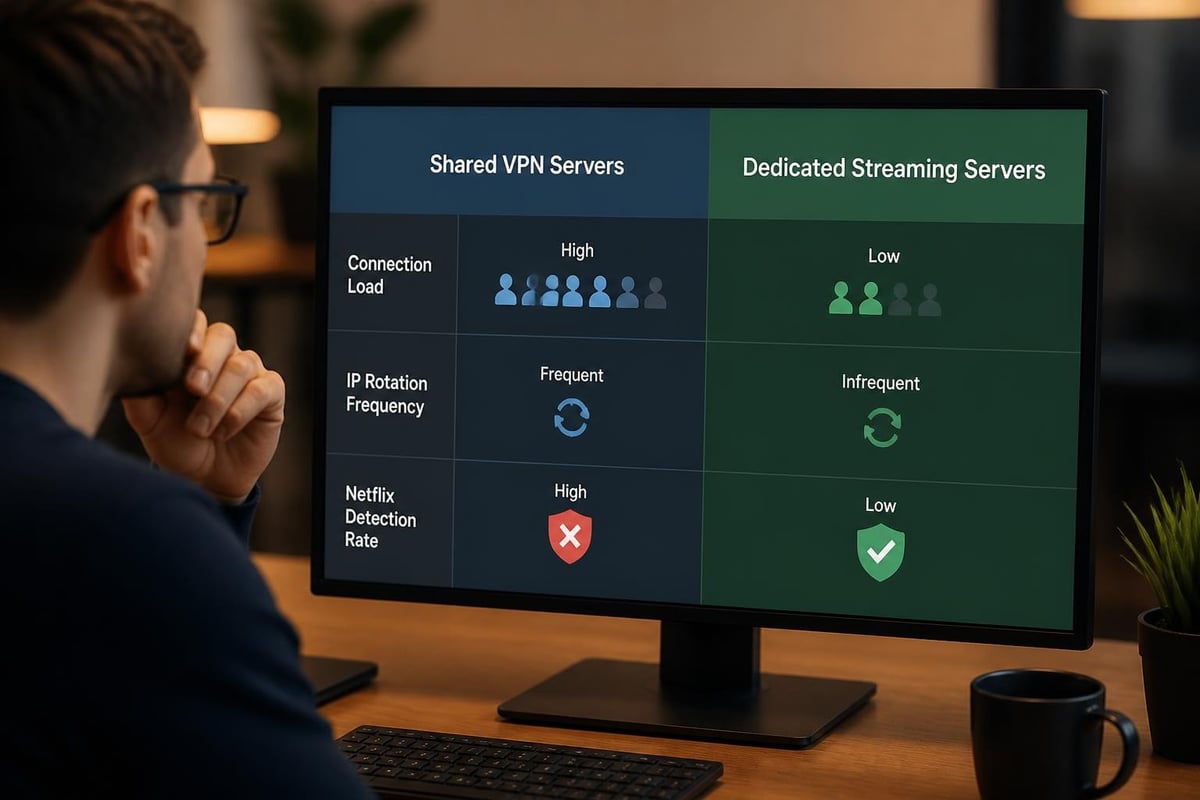
The most effective VPN providers maintain specialized servers optimized for Netflix access. These servers use residential IP addresses or frequently rotate addresses to stay ahead of Netflix's blacklists. Unlike shared VPN servers that hundreds of users connect through simultaneously, dedicated streaming infrastructure supports fewer concurrent connections, reducing Netflix's detection likelihood.
ZioFree's global server network includes optimized nodes specifically configured for streaming services, with regular IP address rotation to maintain access.
Server Location Strategy for Optimal Performance
Geographic server selection significantly impacts both connection speed and content library access when using a vpn for netflix in china.
Proximity Considerations
Japan and Hong Kong servers offer the lowest latency from mainland China, typically providing 40-80ms ping times compared to 150-250ms for North American servers. This reduced latency directly translates to faster buffering and higher quality streaming.
Singapore and Taiwan represent additional nearby options with strong infrastructure and relatively unrestricted internet access, making them reliable intermediaries.
South Korea provides excellent speeds but occasionally faces its own content restrictions that may limit Netflix library access.
Content Library Access
Different Netflix regional libraries contain varying content based on licensing agreements. Choosing your server location determines which library you access:
- United States servers unlock the largest Netflix library with approximately 5,800+ titles
- United Kingdom servers provide strong English-language content with roughly 5,600 titles
- Canadian servers offer a mid-sized library with some unique Canadian content
- Australian servers deliver English content with regional variations
Testing multiple server locations helps identify the optimal balance between connection speed and desired content availability.
Step-by-Step Setup Process
Implementing a functional vpn for netflix in china requires careful configuration beyond simply installing software.
Pre-Arrival Preparation
Download and install your VPN before entering China. The Great Firewall blocks most VPN provider websites, making installation difficult once you're already in-country. Configure your VPN on all devices you plan to use while traveling.
Set up payment methods that work internationally, as Chinese payment restrictions may prevent subscribing to VPN services from within the country.
Document server addresses by noting down specific server IP addresses or hostnames that you can manually enter if the VPN app's server list becomes inaccessible.
Configuration Best Practices
- Enable kill switch functionality to prevent data leaks if the VPN connection drops
- Configure DNS settings to use the VPN provider's DNS servers rather than your ISP's
- Test for DNS leaks using online tools before relying on the connection
- Disable IPv6 to prevent potential leak vectors
- Configure automatic connection on startup for seamless protection
Understanding what makes a VPN secure helps you verify your configuration provides adequate protection.
Troubleshooting Connection Issues
When your VPN connection fails or Netflix displays proxy errors, systematic troubleshooting identifies the problem:
- Switch to a different server in the same region
- Change VPN protocols (try WireGuard, then OpenVPN, then proprietary options)
- Clear Netflix cookies and browser cache
- Disable browser extensions that might leak location data
- Verify no DNS or WebRTC leaks are occurring
- Contact support for updated server recommendations
Legal and Security Considerations
Using a vpn for netflix in china involves navigating both Chinese regulations and Netflix's terms of service.
China's VPN Regulations
Chinese policy documentation shows that VPN usage exists in a regulatory gray area. While China officially requires VPN services to obtain government approval, millions of users continue accessing unapproved VPNs with varying enforcement.
Analysis of China's information control strategies explains how authorities primarily target VPN providers and large-scale commercial users rather than individual consumers using VPNs for personal purposes. However, enforcement patterns shift periodically, especially around politically sensitive events.
Privacy Protection Essentials
Selecting a provider with a verified no-logs policy ensures that even if connection records are requested, no user activity data exists to provide. Independent audits verify these claims, distinguishing trustworthy providers from those making unsubstantiated privacy promises.
Advanced security protocols like AES-256 encryption prevent network-level surveillance from reading your traffic content. Even if the Great Firewall detects VPN usage, proper encryption ensures the data itself remains protected.
ZioFree's commitment to user privacy includes protecting against potential Israeli hacking attempts through reinforced security measures, addressing concerns about state-level surveillance from multiple sources.
Performance Optimization Techniques
Maximizing streaming quality while using a vpn for netflix in china requires optimizing several performance factors.
Bandwidth Management
| Strategy | Impact | Implementation |
|---|---|---|
| Use WireGuard protocol | 15-30% speed increase | Switch protocol in VPN settings |
| Connect during off-peak hours | Reduced congestion | Stream early morning/late night China time |
| Disable unnecessary encryption layers | Slightly faster speeds | Use optimal security, not maximum |
| Choose nearby servers | Lower latency | Prioritize Asia-Pacific locations |
Video Quality Settings
Netflix automatically adjusts streaming quality based on connection speed. When bandwidth is limited, manually controlling quality settings prevents buffering:
- Set data usage to "Low" or "Medium" in Netflix account settings
- Reduce playback quality in the Netflix player when buffering occurs
- Pre-download content when possible (requires Netflix app with download feature)
- Test connection speeds using built-in VPN speed tests before streaming
Implementing a fast VPN service designed for streaming eliminates many performance bottlenecks from the start.

Alternative Approaches and Backup Solutions
Maintaining consistent Netflix access requires backup strategies when primary VPN connections face disruptions.
Multi-VPN Approach
Subscribing to secondary VPN services provides redundancy when your primary provider experiences blocking. Diversifying across providers with different infrastructure reduces the likelihood of simultaneous outages.
Consider maintaining:
- One premium VPN optimized for streaming as your primary service
- One budget-friendly cheap VPN as a backup option
- Access to free trials from multiple providers for emergency situations
Protocol Diversity
Different VPN protocols face varying levels of blocking in China. Maintaining connections using multiple protocols increases reliability:
WireGuard offers exceptional speed but faces increasing fingerprinting in China. OpenVPN remains widely supported but is easily identified without obfuscation. Shadowsocks and V2Ray were specifically designed for censorship circumvention but require more technical setup.
Smart DNS Services
When VPN connections become unusable, Smart DNS services offer a lightweight alternative that doesn't encrypt traffic but masks your location for Netflix access. While less secure than VPNs, they sometimes bypass restrictions when VPNs face blocking.
Mobile Device Specific Considerations
Accessing Netflix through smartphones and tablets while in China presents unique challenges beyond desktop usage.
iOS Limitations
Apple removes VPN apps from the Chinese App Store based on government requirements. Install and configure your VPN on iOS devices before traveling to China, as downloading the app later becomes significantly more complicated.
Workarounds include:
- Changing your Apple ID region to a non-Chinese country to access the App Store
- Installing VPN apps through TestFlight if providers offer beta programs
- Sideloading VPN apps through third-party installation methods (requires technical expertise)
Android Flexibility
Android devices offer greater flexibility through APK sideloading, allowing installation of VPN apps directly from provider websites rather than requiring access to Google Play Store.
Configuration tips for Android:
- Enable "Install from Unknown Sources" before traveling
- Download APK files directly from VPN provider websites
- Keep installation files backed up to cloud storage accessible from China
- Configure always-on VPN settings in Android system preferences
Tablet Optimization
Larger screens consume more data for HD streaming, making bandwidth optimization even more critical on tablets. Reduce Netflix video quality settings specifically for tablet viewing to maintain smooth playback.
Monitoring and Maintenance
Sustaining long-term Netflix access through a vpn for netflix in china requires ongoing monitoring and adaptation.
Regular Testing Schedules
Weekly connection testing identifies issues before they disrupt your viewing. Connect to each of your regular servers and verify Netflix access works properly. This proactive approach reveals blocking before you need to stream.
Monthly security audits should verify no DNS leaks, WebRTC leaks, or IP address exposure occurs. Test your VPN online using leak detection tools to confirm protection remains intact.
Staying Informed About Blocking
GreatFire's monitoring tools provide real-time data about what services face blocking in China. Checking these resources helps you understand when widespread VPN disruptions affect multiple providers versus issues specific to your service.
Subscribe to your VPN provider's status updates and social media channels to receive notifications about server changes, blocking events, and recommended configuration updates.
Software Updates
VPN providers continually release updates addressing new blocking techniques and improving performance. Enable automatic updates when possible, or manually check for updates weekly to maintain optimal functionality.
Server Selection Strategy Matrix
Choosing the optimal server for your vpn for netflix in china needs depends on balancing multiple priorities simultaneously.
For speed-priority users: Select servers in Japan, Hong Kong, or Singapore with the lowest latency. Accept a potentially smaller content library in exchange for superior performance.
For content-priority users: Connect to US servers despite higher latency to access the largest Netflix library. Tolerate some buffering for maximum content selection.
For balanced performance: South Korean or Taiwanese servers often provide the best compromise between reasonable speeds and substantial content libraries.
For privacy-focused users: Choose jurisdictions with strong privacy laws and servers operated by providers committed to private internet VPN principles, even if speeds suffer slightly.
Testing different servers during initial setup establishes baseline performance expectations for each location, informing future selections.
Common Mistakes to Avoid
Even experienced VPN users make errors that compromise their vpn for netflix in china functionality.
Configuration Errors
Failing to enable kill switch protection allows your real IP address to leak if the VPN connection drops, immediately revealing your location to Netflix and potentially to Chinese ISPs monitoring network activity.
Using browser-based VPNs or proxy extensions rather than full system-level VPN applications creates inconsistent protection with frequent leaks that trigger Netflix's detection systems.
Neglecting DNS configuration leaves DNS requests exposed even when your connection is otherwise protected, allowing ISPs to log your activity and Netflix to detect your true location.
Behavioral Patterns
Account sharing across multiple countries simultaneously flags Netflix's fraud detection systems. Avoid logging into your account from both VPN-protected and unprotected connections within short timeframes.
Excessive server switching during a single viewing session appears suspicious to Netflix's monitoring algorithms. Select an optimal server before beginning playback and maintain that connection.
Using public or hotel Wi-Fi without VPN protection before switching to VPN-protected Netflix access creates connection patterns that reveal your actual location despite subsequent VPN use.
Accessing Netflix from China requires understanding both the technical obstacles and practical solutions that make streaming possible despite sophisticated blocking. By selecting VPN services with robust obfuscation, maintaining multiple server options, and following configuration best practices, you can enjoy consistent access to your favorite content. ZioFree delivers the high-speed connections, strong encryption, and global server network essential for reliable Netflix streaming from anywhere, including China, while maintaining your privacy with a strict no-logs policy that keeps your viewing habits secure from surveillance.


