




Selecting a reliable VPN service in 2026 requires careful evaluation of multiple technical and privacy factors. With cyber threats evolving and surveillance capabilities expanding globally, understanding what's a good VPN to use has become essential for anyone concerned about online privacy, security, or unrestricted internet access. This comprehensive guide examines the critical features, protocols, and policies that distinguish trustworthy VPN providers from questionable ones, helping you make an informed decision based on your specific needs and threat model.
Core Security Features That Define Quality VPN Services
When evaluating what's a good VPN to use, encryption standards form the foundation of any serious assessment. Modern VPN services should implement AES-256 encryption, the same standard trusted by governments and financial institutions worldwide for protecting classified information. This military-grade encryption ensures that even if intercepted, your data remains computationally infeasible to decrypt.
Protocol Options and Their Security Implications
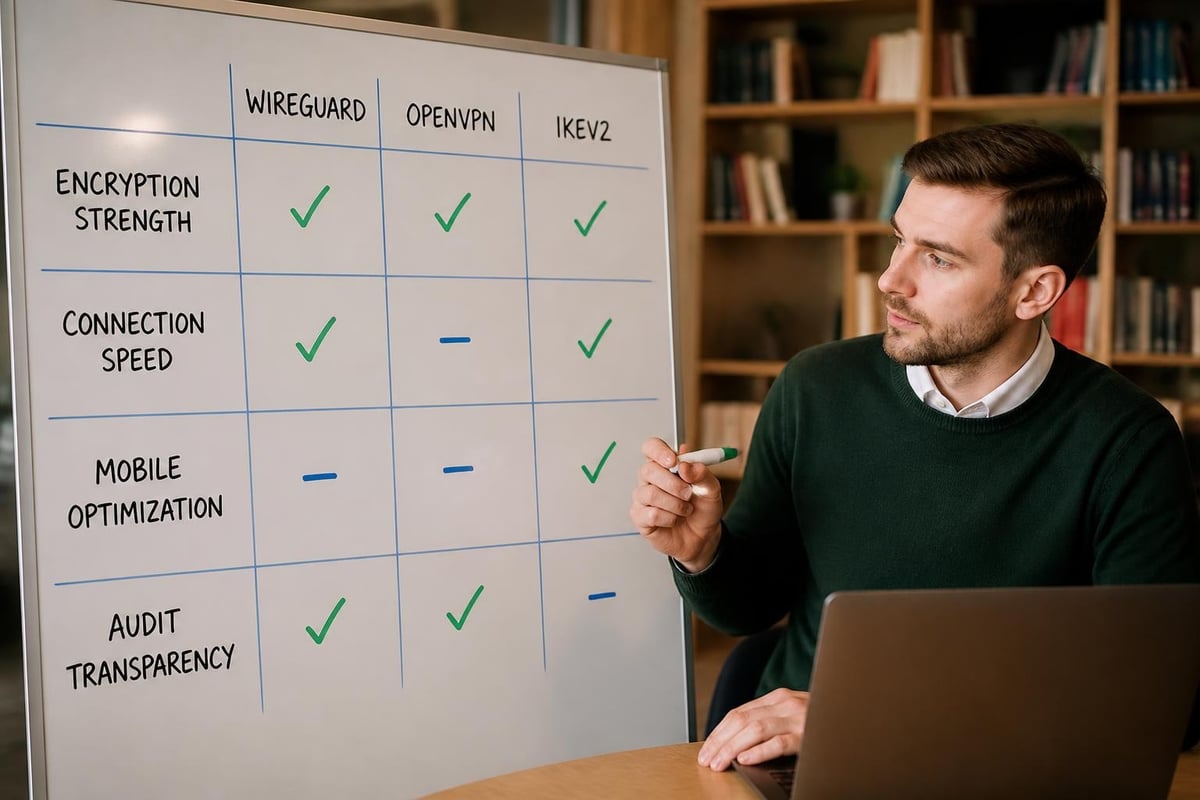
The VPN protocol determines how your data travels between your device and the VPN server. Understanding modern approaches to secure network access helps contextualize these choices:
- WireGuard: Modern, lightweight protocol offering superior speed with strong cryptography
- OpenVPN: Battle-tested open-source protocol with extensive security audits and configuration flexibility
- IKEv2/IPSec: Excellent for mobile devices with seamless network switching capabilities
- Proprietary protocols: Require independent audits to verify security claims
The UK NCSC provides detailed guidance on Virtual Private Networks that compares these protocols from a national security perspective. Quality providers offer multiple protocol options, allowing you to balance speed and security based on your specific use case.
Kill Switch and DNS Leak Protection
A VPN without a kill switch is like a safe with an automatic unlocking mechanism. This critical feature immediately blocks all internet traffic if your VPN connection drops unexpectedly, preventing accidental exposure of your real IP address or unencrypted data.
DNS leak protection ensures that domain name queries route through the VPN tunnel rather than your ISP's servers. Even with strong encryption, DNS leaks can reveal which websites you're visiting. Independent testing platforms like Comparitech regularly evaluate VPN services for these vulnerabilities, providing empirical data on which providers truly deliver leak-proof connections.
Privacy Policies and Jurisdiction Considerations
Understanding what's a good VPN to use extends beyond technical features into the legal and operational framework of the provider itself. The jurisdiction where a VPN company operates determines which laws govern data retention and what information authorities can compel the company to surrender.
No-Logs Policies and Independent Verification
A strict no-logs policy means the VPN provider doesn't record your browsing activity, connection timestamps, IP addresses, or DNS queries. However, marketing claims alone provide insufficient assurance. Look for providers that:
- Publish transparent privacy policies with specific details about what they don't log
- Commission independent security audits from reputable firms
- Have successfully demonstrated their no-logs claims in legal proceedings
- Operate in privacy-friendly jurisdictions outside intelligence-sharing agreements
The EFF's guidance on choosing the right VPN emphasizes understanding what VPNs actually protect and the importance of aligning your threat model with provider capabilities. For users facing sophisticated adversaries, these considerations become especially critical.
| Privacy Feature | What to Verify | Red Flags |
|---|---|---|
| No-logs policy | Independent audit reports | Vague language about "minimal logging" |
| Jurisdiction | Based outside 5/9/14 Eyes alliances | Headquarters in surveillance-friendly countries |
| Payment options | Anonymous methods accepted (cryptocurrency) | Only credit card or PayPal |
| Transparency reports | Regular publication of government requests | No public accountability measures |
ZioFree's commitment to protecting user privacy includes a strict no-logs policy audited by independent security researchers, ensuring that your browsing activity remains completely private.
Server Network and Performance Metrics
The size and distribution of a VPN's server network directly impacts both performance and utility. When considering what's a good VPN to use, evaluate these infrastructure elements carefully.
Global Coverage and Server Diversity
A robust global network provides multiple advantages:
- Reduced latency: Servers closer to your physical location deliver faster connection speeds
- Geographic flexibility: Access region-specific content from various countries
- Load distribution: More servers mean less congestion during peak usage times
- Redundancy: Alternative routing options if specific servers experience issues
Quality providers maintain hundreds or thousands of servers across 50+ countries. However, quantity alone doesn't guarantee quality. Server ownership matters too-providers that own and operate their infrastructure maintain better security control than those relying on third-party data centers.
Connection Speed and Bandwidth
VPN connections inherently introduce some speed reduction due to encryption overhead and routing distance. However, what's a good VPN to use should minimize this impact through optimized server infrastructure and efficient protocols.
Key performance indicators include:
- Download/upload speeds: Should maintain 70-90% of your base connection speed
- Latency: Additional ping time should remain under 50ms for nearby servers
- Unlimited bandwidth: No artificial throttling or data caps
- Consistent performance: Speeds remain stable during peak hours
For users conducting VPN bandwidth tests, establishing baseline measurements helps identify when VPN performance degrades beyond acceptable thresholds.

Advanced Security Features for Enhanced Protection
Beyond fundamental encryption and privacy policies, premium VPN services offer additional security layers that address specific threat scenarios.
Multi-Hop and Obfuscation Technologies
Multi-hop connections (also called double VPN) route your traffic through two separate VPN servers in different locations, adding an extra encryption layer. While this increases latency, it provides enhanced anonymity for high-risk situations.
Obfuscation technology disguises VPN traffic as regular HTTPS traffic, preventing ISPs, governments, or network administrators from detecting VPN usage. This proves particularly valuable in restrictive environments where VPN use itself might trigger scrutiny or blocking.
Split Tunneling and Custom Routing
Split tunneling allows you to route only specific applications or traffic through the VPN while other connections use your regular internet. This offers several advantages:
- Access local network devices while connected to VPN
- Optimize bandwidth for latency-sensitive applications
- Maintain access to region-specific services that block VPNs
Learning about WireGuard split tunneling configurations helps you implement granular control over which traffic receives VPN protection.
Platform Compatibility and User Experience
What's a good VPN to use must function seamlessly across all your devices and operating systems. Comprehensive platform support ensures consistent protection regardless of how you access the internet.
Native Applications and Simultaneous Connections
Quality VPN providers offer dedicated applications for:
- Desktop platforms: Windows, macOS, Linux
- Mobile devices: iOS, Android
- Additional platforms: Browser extensions, router firmware, smart TVs, gaming consoles
The number of simultaneous connections allowed per subscription varies significantly. Leading providers permit 5-10 concurrent connections, while some offer unlimited device support. For households or professionals managing multiple devices, this factor significantly impacts practical utility.
Interface Design and Ease of Use
Even technically sophisticated VPN services should offer intuitive interfaces. Essential usability features include:
- One-click connection to fastest available server
- Favorite servers list for frequently used locations
- Real-time connection statistics (speed, data transferred, connection duration)
- Quick protocol switching without reconnection
- Automatic connection on startup or untrusted networks
For users exploring VPN settings for iPhone or Android devices, the mobile app experience becomes particularly important for maintaining protection during daily activities.
Specialized Use Cases and Provider Capabilities
Different users face distinct requirements when determining what's a good VPN to use. Tailoring your selection to specific use cases ensures optimal results.
Streaming and Geographic Restriction Bypass
Accessing region-locked content requires VPN servers that streaming platforms haven't blacklisted. Not all VPN providers successfully maintain working connections to popular services like Netflix, BBC iPlayer, or Disney+. Providers specializing in streaming unblock content through:
- Dedicated streaming servers optimized for specific platforms
- Regular IP rotation to stay ahead of VPN detection systems
- High bandwidth allocation preventing buffering during HD/4K streaming
Users seeking VPN access for Netflix in restrictive regions need providers with proven track records of maintaining reliable streaming capabilities despite ongoing countermeasures.
Privacy-Focused Browsing and Anonymity
Understanding the relationship between VPN and anonymity helps set realistic expectations. While VPNs significantly enhance privacy, they're not absolute anonymity tools. For maximum privacy:
- Combine VPN use with privacy-focused browsers (Tor, Brave)
- Disable WebRTC to prevent IP leaks
- Use VPN providers accepting anonymous payment methods
- Consider browsing anonymously with additional operational security measures
Privacy International's guide on VPN usage offers practical advice for journalists, activists, and privacy-conscious users facing elevated surveillance risks.
Remote Work and Corporate Security
Businesses and remote workers have distinct requirements when evaluating what's a good VPN to use professionally. Enterprise considerations include:
| Requirement | Consumer VPNs | Business VPNs |
|---|---|---|
| Dedicated IP addresses | Rarely available | Standard offering |
| Team management | Limited | Centralized administration |
| Compliance certifications | Usually none | SOC 2, ISO 27001, GDPR |
| Static IP pools | Shared, rotating IPs | Dedicated ranges |
| Priority support | Email/chat | 24/7 phone support |
For professionals requiring VPN access to remote corporate resources, understanding CISA's guidance on selecting and hardening VPN solutions ensures your choice meets organizational security requirements.
Cost-Benefit Analysis and Pricing Models
VPN pricing varies dramatically, from free services to premium providers charging $10+ monthly. Understanding what you receive at different price points helps identify what's a good VPN to use within your budget.
Free vs. Paid VPN Services
Free VPNs typically monetize through:
- Advertising and tracking user behavior (defeating privacy purpose)
- Selling bandwidth to third parties
- Limiting data allowances, speeds, or server access
- Compromising security through outdated encryption or logging
Research on free VPN software for Android reveals that most free services impose significant restrictions or privacy compromises. The security risks frequently outweigh any cost savings.
Subscription Tiers and Value Optimization
Paid VPN services structure pricing around commitment length:
- Monthly subscriptions: $10-13/month, maximum flexibility
- Annual plans: $4-7/month, balance of cost and commitment
- Multi-year contracts: $2-4/month, significant savings for long-term users
Many providers offer money-back guarantees (typically 30 days), allowing risk-free testing before committing to longer subscriptions. When comparing options, calculate the effective monthly cost across the subscription period rather than focusing solely on the advertised discount percentage.
For budget-conscious users, exploring the cheapest VPN options that maintain security standards provides affordable protection without compromising essential features. ZioFree's transparent pricing reflects a commitment to accessible security for all users.
Security Audits and Transparency Measures
What's a good VPN to use demonstrates its security claims through independent verification rather than relying on marketing statements alone. Third-party audits provide objective assessment of provider capabilities and vulnerabilities.
Types of Security Audits
Comprehensive VPN providers commission multiple audit types:
- Infrastructure audits: Verify server configurations, encryption implementation, and network security
- Application audits: Examine client software for vulnerabilities or data leakage
- No-logs policy audits: Confirm that logging practices match published policies
- Protocol audits: Assess custom protocol implementations for cryptographic weaknesses
The academic research on VPN security assessment and evaluation provides frameworks for understanding how these audits should be conducted and interpreted.
Transparency Reports and Bug Bounty Programs
Leading VPN providers publish regular transparency reports disclosing:
- Government data requests received and responses provided
- DMCA takedown notices and compliance actions
- Security incidents and remediation measures
- Infrastructure changes and expansion updates
Bug bounty programs incentivize security researchers to responsibly disclose vulnerabilities rather than exploiting them or selling them on black markets. Providers offering substantial rewards demonstrate confidence in their security posture and commitment to continuous improvement.
Threat-Specific VPN Selection
Different adversaries require different defensive approaches. Tailoring your VPN selection to your specific threat model maximizes protection efficiency.
Protection Against ISP Surveillance and Throttling
Internet Service Providers can monitor, log, and throttle your internet activity. A quality VPN addresses these concerns by:
- Encrypting all traffic so ISPs see only encrypted data flowing to VPN servers
- Preventing bandwidth throttling based on content type or destination
- Hiding browsing history from ISP logging and potential data sales
For users primarily concerned with hiding their IP address, even basic VPN services provide effective protection against ISP-level surveillance.
Defense Against Advanced Persistent Threats
State-sponsored attacks and sophisticated hacking operations require enhanced security measures beyond standard VPN capabilities. Users facing these threats should prioritize:
- Providers with no connections to adversarial jurisdictions
- Multi-hop routing through diverse geographic regions
- RAM-only servers that don't retain any data after power cycling
- Regular security audits by specialized cybersecurity firms
ZioFree specifically addresses concerns about Israeli hacking attempts by operating only VPN infrastructure with no connection to Israel, providing additional security for users targeted by specific nation-state actors.
Public Wi-Fi Security
Unsecured public Wi-Fi networks present significant risks through man-in-the-middle attacks, packet sniffing, and rogue access points. Recognizing the signs that public Wi-Fi isn't safe helps identify when VPN protection becomes essential.
Securing your connection on public Wi-Fi requires automatic VPN activation when joining untrusted networks, preventing even momentary exposure before manual connection.
Evaluating VPN Provider Reputation
Beyond technical specifications, a provider's reputation within security and privacy communities offers valuable insights into what's a good VPN to use.
Community Trust and Expert Recommendations
Trustworthy indicators include:
- Positive assessments from privacy advocacy organizations (EFF, Privacy International, Access Now)
- Technical community endorsement on forums like Reddit's r/VPN and r/privacy
- Journalist and activist usage in high-risk environments
- Absence of controversies regarding data sharing, breaches, or misleading claims
Reporters Without Borders' guidance on preventing data tracking contextualizes VPN selection within broader operational security frameworks for high-risk users.
Red Flags and Warning Signs
Avoid providers exhibiting these characteristics:
- Unrealistic promises (100% anonymity, complete security)
- Vague or contradictory privacy policies
- History of security breaches without transparent incident response
- Aggressive affiliate marketing prioritizing commissions over user privacy
- Ownership structures hiding ultimate beneficiaries
- Free services without clear, privacy-respecting business models
Comparing established providers like those discussed in top VPN reviews helps establish baseline expectations for legitimate services.
Technical Implementation and Configuration
Understanding how to properly configure and use your chosen VPN maximizes its protective capabilities. Poor implementation can undermine even the most secure VPN service.
Initial Setup Best Practices
When first configuring your VPN:
- Verify encryption settings match provider recommendations (usually AES-256)
- Enable kill switch functionality before first connection
- Configure DNS settings to use VPN-provided DNS servers
- Test for leaks using multiple online leak-testing tools
- Configure automatic connection on untrusted or public networks
For users setting up OpenVPN servers or exploring free OpenVPN server options, proper configuration determines whether the implementation provides genuine security or creates new vulnerabilities.
Ongoing Maintenance and Updates
VPN security requires continuous attention:
- Regular application updates patch vulnerabilities and improve performance
- Periodic leak testing confirms configuration remains secure
- Protocol evaluation as new options become available
- Server rotation prevents connection fingerprinting over time
Users should familiarize themselves with their provider's FAQ resources to understand optimal configuration for their specific use case and threat model.
Selecting what's a good VPN to use requires balancing technical security features, privacy policies, performance capabilities, and alignment with your specific threat model and use cases. Prioritizing providers with strong encryption, verified no-logs policies, robust infrastructure, and transparent operations ensures your VPN delivers genuine protection rather than false security. ZioFree combines all these essential elements with high-speed global servers, military-grade encryption, and a strict no-logs policy audited for transparency, providing comprehensive protection tailored to users facing sophisticated threats while maintaining the performance needed for everyday browsing, streaming, and remote work.